And today is .......

The Royal Queensland Show (Ekka) starts on Saturday, August 8.

Across Australia, all six Australian states host an annual Royal Show. These major agricultural and cultural exhibitions are coordinated by the Royal Agricultural Society (or equivalent) in each state's capital city.

But this one is all about the Banana Benders, north of the border, and is the “biggie” up north.

The Royal Queensland Show (Ekka) is Queensland's largest and most loved annual event, attracting more than 428,000 people. Run by the RNA and staged at its original birthplace, the Brisbane Showgrounds, the Ekka brings the country and city together for a true celebration of agriculture.

And this year is special: In 2026, the Ekka celebrates an incredible milestone - 150 years of bringing Queenslanders together for the state’s biggest and most loved event.

For 150 years, the Ekka has brought more than 35 million Queenslanders together, creating traditions and memories cherished across generations. It attracts and unites more than 400,000 people each year.

The Ekka showcases the very best of Queensland, annually attracting more than 21,000 competition entries from woodchop to giant vegetables, 10,000 animals from beef cattle to cats and dogs, world-class live entertainment, award-winning food and wine, carnival rides and showbags, family shopping, educational activities and much more.

The iconic show has been running since 1876 and is full of traditions, a unique atmosphere and childhood memories that have been passed down through generations of families.

Running for nine days in August at the historic Brisbane Showgrounds, it features blue-ribbon animals, carnival rides, the famous Strawberry Sundaes, and hundreds of showbags.

Ekka brings the country and city together for a true celebration of agriculture. With hundreds of free activities and things to see, including animal adventures, agriculture competitions, rides, live music, show bags, cookery and garden displays, children's entertainment, fireworks displays and so much more!

No trip to the Ekka is complete without indulging in the event's iconic culinary traditions. Each year, crowds devour over 140,000 Strawberry Sundaes (which help fund the Prince Charles Hospital Foundation), over 32,000 cheese toasties, and more than 180,000 Dagwood Dogs. Beyond the food, the Courier-Mail Showbag Pavilion is a massive attraction, offering hundreds of different novelties and confectionery showbags.

Well, if you’re local, what’s stopping you.
It’s time to party, EKKA-style.


Fun Facts about the EKKA:
  • The name "Ekka" is simply Queensland slang. It’s an abbreviation of the original name, the "Brisbane Exhibition."
  • The first ever showbag was a bag of coalThe famous Ekka strawberry sundae was introduced in 1950 by Paul’s dairy company.
  • The Ekka is a massive operation that generates over $220 million for the Brisbane economy and relies on more than 1,500 volunteers to run.


"It's showtime, and there's something for everyone to enjoy"

"Bring the country to the city each year, the Ekka is more than just a show - it is Queensland, on show”

"Where else can you cuddle a baby lamb, eat a Dagwood Dog, and ride a Ferris wheel in a single afternoon"

"Showbag Pavilion: Where time and money magically disappear”



1786140846456.png


1786140863699.png


1786141164145.png


1786141200429.png
 
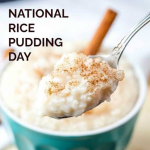
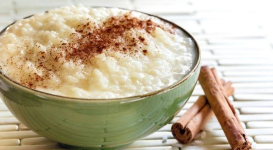
Rice Pudding Day spoons onto our calendars each August 9. All we want to do it dive spoon-first into a big bowl of homemade rice pudding. Maybe give rice pudding a gourmet twist with a hint of vanilla and a crunchy brulee topping. Today is the day.

Rice pudding's popularity in Australia stems from its legacy as a cheap, warm British comfort food that seamlessly fits the country's agricultural abundance.

Rice pudding. It’s sweet, creamy and carby: the ultimate trifecta for a winter dessert.

A traditional baked rice pudding is one of the simplest desserts to make, consisting of rice, milk, cream, sugar, eggs and whatever spices you love (we think cinnamon and nutmeg are top tier, though).

Signature of a classic rice pudding is the ever-so-dividing skin that forms on top. It’s always satisfying to puncture through it to get to the gorgeous gloop below.

It hits the spot because it perfectly pairs the comforting chew of soft, starchy rice with a rich, velvety milk or cream base. When gently simmered, the rice releases its natural starches to create a custard-like texture, delivering a deeply satisfying, warming sweetness.

Over the years, it became a staple in school canteens and households cementing it as a nostalgic comfort food for generations of Australians.

Australia's Riverina region in New South Wales produces some of the world's highest-quality, disease-free short and medium-grain rice. Because these varieties naturally release starch and thicken, they are ideal for creating a creamy pudding.

The Australian preference for quick convenience is met by commercially produced canned "creamed rice" (such as Heinz Creamed Rice or supermarket private labels). It is 99% fat-free, long-lasting, and easily consumed cold or warmed up on chilly winter nights.

Australia's multicultural population has embraced the dessert in various forms. For instance, the Greek variation (rizogalo) is incredibly popular and commercially successful, with locally made products like House of Rizs frequently winning national dairy awards.

Rice pudding can be a healthy, comforting choice when eaten in moderation. A typical 1/2-cup serving contains around 150 calories and provides calcium, iron, and protein. However, because it is calorie-dense and often made with added sugar, its overall healthiness depends heavily on how it is prepared.

A rice pudding's nutrition reveals that the creamy dessert isn't such a bad choice. While it does contain a fair amount of sugar, it also offers some nutrients. Calling rice pudding “healthy” may be a bit of a stretch, but it certainly offers some good nutritional qualities, including calcium, iron and protein.

It is ideal for those with a small appetite and it's also easier to digest. It's a good source of fibre, which helps with regular bowel movements and reduces the risk of constipation. Plus, it's easy to prepare. Rice pudding will last in the fridge for 3 to 5 days when stored properly. Because it contains dairy and rice, it spoils quickly and should never be left at room temperature for more than 2 hours.


Home-made or shop bought, rice pudding is always a crowd pleaser.
Just hits that spot.
Now just one more question.
With ice cream or plain?


Fun Facts about Rice Pudding:
  • In Sweden, rice pudding is a popular dish at Christmas. An almond is traditionally hidden inside the pudding, with the person who eats it believed to get married the next year.
  • Rice puddings are found in nearly every area of the world. Recipes can greatly vary even within a single country.
  • Cuisines all over the world have been jazzing it up in different ways for years. The Danish version is risalamande, flavoured with almond and a warm cherry sauce; the Greeks add egg yolks; the Turkish make it with cinnamon and serve it cold; and in India it’s infused with cardamom and rose water, and known as kheer. All YUMM!


“Keep it rice and simple”

“Rice pudding is like a hug in a bowl”

“Nostalgia in a bowl”

“Life happens. Rice pudding helps”


1786227142462.png


1786227166142.png


1786227186009.png
 
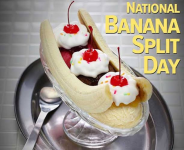
Banana Split Day peels onto our calendars each August 10.

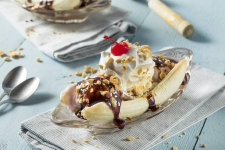
This is easily one of the best days of the year for those with a sweet tooth, with a serving of healthy fruit thrown in. Even the name is appealing. It is called a banana split because the foundational step of the dessert is taking a peeled banana and cutting (or "splitting") it in half lengthwise down the middle. The two long halves are laid flat against the sides of a boat-shaped dish to cradle the scoops of ice cream and various syrups nestled between them.

Most people have either tried or at least heard of the banana split at some point. It's one of those classic desserts that never goes out of style. Famous and beloved for its perfect combination of flavor and texture, it's a treat enjoyed by both kids and adults alike.

Who can resist a delightful trio of creamy scoops of ice cream, crowned with a medley of toppings that create a harmonious blend of flavours and textures, all brought together under an umbrella of bananas. Maybe even add maraschino cherries, strawberries, hot fudge, and anything else you want. This is a dessert to delight the senses!

While bananas may be covered in ice cream and a few other sweet temptations, bananas themselves offer a number of different health benefits. This can make you feel better about eating a banana split! Bananas, for example, are an excellent source of vitamin B6. Vitamin B6, in turn, provides several great benefits.

This helps us to maintain a healthy nervous system, remove unwanted chemicals from your kidneys and liver, metabolize amino acids, metabolize fats and carbohydrates, turning them into energy, and produce red blood cells.

The good news does not end there. There are a few more benefits that are associated with bananas. This includes potassium, which meets around 10 percent of your potassium intake. It also contains manganese, which helps to protect your skin through the creation of collagen, as well as protecting other cells from free radical damage.

Bananas are also a great source of vitamin C. Vitamin C supports brain health through the production of serotonin, which impacts our moods, sleep cycle, and experiences of pain and stress. Vitamin C helps your body produce collagen, absorb iron better, and protect your body against tissue and cell damage.

We Aussies love our bananas and enjoy the classic banana split as a nostalgic treat.

Over 90% of Australian households buy bananas, making banana-based desserts naturally appealing. Going back in time, we might have enjoyed a ginormous banana split at The Big Banana Fun Park as a rite of passage.

These days, mass-market ice cream brands like Peters regularly release banana-split-flavoured tubs to tap into local demand for the flavour profile.

Retro milk bars, and dessert parlours across the country still feature the traditional glass boat dish with ice cream, whipped cream, and syrup. Any visit to the Paragon Café in Goulburn, for example, would have their tempting Banana Split high on their menu.

And bringing this dessert into the minds and tummies of Gen X, even Tik Tok is obsessed with an air fryer banana split recipe/video where it turns the banana split into the ultimate "healthy" air fryer dessert. And young ones, ever up for a challenge, have joined the "banana split challenge", putting their own spin by adding ice cream and other toppings. Banna splits are back, big time.

It’s time to peel back and enjoy the fruits and the ice cream and any topping that you fancy.

Now.


Fun Fact about Banana Split:
  • The world's longest recorded banana split measured 8,040 meters (26,377 feet 11.4 inches / 8.04 kilometres). It happened on March 25, 2017, by the Feast of the Senses festival committee and local volunteers in Innisfail, Queensland, Australia. It used 40,000 bananas, 2,500 litres of ice cream, 2000 litres of topping with purpose of the creation being to procure funds to aid/support local farmers and celebrate community recovery after severe weather damage.


“I'm not monkeying around; this is the top banana of desserts”

“I came for one scoop and stayed for three”

“Going bananas today, maybe with a scoop or three of ice cream too”

“Banana believe it”


1786316999557.png


1786317019034.png


1786317037289.png
 
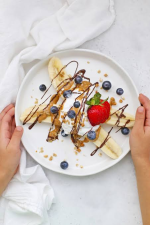
Waffle Day drizzles onto our calendars each August 11.

Comfort on a plate, tasty like nothing else, this generational dessert is loved by young and old alike.

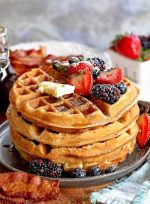
A waffle is a tasty cooked food. It's made from a mix called a batter, which usually has flour, water, baking powder, oil, and eggs. Waffles get their special grid look because they are cooked between two hot metal plates in a machine called a waffle iron. They are cooked until they turn golden-brown and become crispy on the outside, but still soft inside. People often eat waffles for breakfast or as a dessert, usually with sweet sauces or toppings.

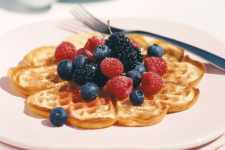
Australians love waffles because they fit right into the booming cafe brunch culture, serving as a crispy and fluffy canvas for sweet toppings like local berries and ice cream, or caramel sauce with ice cream, as well as trendy savory options. Waffles work equally for relaxed weekend brunches, festival street food and summer desserts, matching Australians’ café-centric social habits.

They’re a “something different for a change” food. For breakfast we’d have some nice lower fat toast, for dessert we’d have some nice cold ice cream. But when out for brunch we might order the berries and cream waffles sometimes if we get sick of the avocado toast.

Specialty brunch venues across Sydney, Melbourne, Brisbane and Adelaide commonly feature Belgian-style Liege and Brussels waffles, often plated with fruit, mascarpone, maple syrup, ricotta, yoghurt, or fried chicken.

We love the contrast of a crispy outside and fluffy inside, making them great for both sweet maple-and-fruit stacks and savory fried chicken, or bacon and egg combos.

Ice‑cream parlours and patisseries serve hot waffles topped with soft‑serve, sauces, and elaborate garnishes.

Waffle cones, bubble waffles, and portable hand-held waffles (often called “street waffles”) are staples at night markets, laneways and festivals.

Bubble waffles (Hong Kong–style) and savoury waffle sandwiches, waffle burgers, and gluten‑free / vegan waffles reflect Australia’s multicultural and health-aware trends.

Younger diners and food influencers have amplified waffle trends - Instagrammable presentations and viral menu items fuel demand.

Asian and European immigrant food cultures have introduced variants (e.g., bubble waffles, taiyaki‑style fillings), expanding the waffle repertoire beyond classic Belgian styles.

Of course, we can always make them at home; modern kitchen appliances have made whipping up fresh waffles an easy task with a great ending! Frozen waffles and ready mixes are widely available in supermarkets; home waffle irons are common enough that DIY waffles are part of weekend routines for many households.

There are many commercial options to make life easier. Of these, The Australian Waffle Company is Australia's largest waffle manufacturer, making a variety of Belgian Style Liege waffles, Brussels waffles and Homestyle toasting waffles. Reputable and popular waffle brands are widely available at all major supermarkets.

It’s always a good to have a waffle break, add your topping preference, and simply sit back and let the good times waft away.
Waffles are simple to create, smell inviting and are just so easy to demolish.
Waffle + maple syrup + cream = brilliant breakfast.
Waffles = instant comfort, anytime.


Fun Facts about Waffles:
  • Waffles inspired Nike’s first pair of sneakers. They were called the Waffle Trainer. Bill Bowerman was watching his wife use their waffle iron one morning in 1971 when he was suddenly struck by the honeycomb shape of the waffle. He realized it would be the perfect shape for the sole of an athletic sneaker. Then, Bowerman actually used a waffle iron to create the first Nike sneaker sole.
  • A shortage of cups and a surplus of waffles inspired the ice cream cone. When a Missouri ice cream vendor at the St. Louis World Fair ran out of ice cream cups in 1904, he asked the nearby waffle vendor to help him out. The ice cream vendor folded the waffles and used them to make the first ever ice cream cones.


"If you love me, pass the syrup"

"Dare to be a waffle in a world full of pancakes"

"I like hashtags because they look like waffles"

"The only thing I'll wake up early for is waffles"


1786395484770.png


1786395513959.png


1786395554185.png
 
International Youth Day 2026 is celebrated today, August 12.

There are more than 4.5 million young Australians.

So it is a BIG Day for our great Aussie youth across this nation.

International Youth Day is an annual observance initiated by the United Nations (UN) to raise awareness about the diverse needs and issues affecting young people worldwide. The day promotes the importance of investing in youth, ensuring that they have access to quality education, healthcare, and employment opportunities. By focusing on the challenges faced by global youth and celebrating their achievements, International Youth Day aims to empower the younger generation to take action and contribute to the development of their communities. Today raises awareness of the challenges and opportunities facing young people around the world and celebrates their role as essential partners in achieving sustainable development.

The observance provides a platform for governments, youth organizations, United Nations entities, civil society, academia, and other stakeholders to promote dialogue, strengthen partnerships, and showcase youth-led initiatives that contribute to more inclusive, peaceful, and sustainable societies.

Today recognizes that while young people’s lives are shaped by different national and local realities, their aspirations are remarkably similar. Across countries and communities, young people seek dignity, opportunity, meaningful participation, decent work, quality education, and a sustainable future.

In Australia, particularly, today focuses on youth-related issues and celebrates the achievements of young people.


Discussions and events will centre around:
  • Global Solidarity - Sustainable development and youth development are shared responsibilities. This sub-theme highlights the importance of international cooperation, partnerships, and equitable access to opportunities and resources that enable young people everywhere to thrive.
  • Shared Challenges - Young people across countries increasingly face interconnected challenges related to education, employment, climate change, digital inclusion, and mental well-being. This sub-theme encourages dialogue and collective responses informed by young people's lived experiences.
  • Youth Innovation - Young people are developing practical and creative solutions to local and global challenges. From climate action and digital entrepreneurship to community-led initiatives and social innovation, youth continue to demonstrate leadership even in resource-constrained settings. This sub-theme celebrates their contributions while promoting opportunities for collaboration and knowledge sharing.

How it is Observed in Australia:
  • Government Alignment: Key statutory bodies like the Australian Mental Health Commission feature the day on their annual agenda to drive awareness around youth mental health and well-being.
  • Spotlighting Talent: Agencies and bureaus like ICMI Speakers Bureau leverage the day to promote prominent young Australian trailblazers who are actively driving community action.
  • Local Activism: Youth-led groups like UN Youth Australia host climate consultations, digital advocacy workshops, and leadership conferences throughout July and August to capture the Australian youth perspective.
  • Educational Activities: Australian schools and community centres use educational materials from platforms like Twinkl Australia to run dialogue circles and poster campaigns focused on youth empowerment.

10 Facts for International Youth Day 2026 in Australia:
  • The 2026 observance prioritizes a new, designated United Nations theme specifically chosen to guide global policy discussions and drive actionable initiatives regarding contemporary youth development.
  • International Youth Day serves as a pivotal opportunity for Australian government bodies and community organizations to amplify the voices of young people, ensuring their perspectives influence national policy development.
  • The day functions as a global platform to highlight the vital contributions young people make to the economic, cultural, and social fabric of Australia, moving beyond simple recognition to foster genuine engagement.
  • Established by the United Nations via Resolution 54/120, this observance remains a cornerstone for raising awareness about the systemic challenges—such as mental health, education, and employment barriers—that young people navigate daily.
  • Across Australia, various sectors utilize the day to host workshops, forums, and community events that encourage intergenerational dialogue and provide platforms for youth to share innovative solutions to societal problems.
  • The event traces its origins back to the 1991 World Youth Forum of the United Nations System in Vienna, where young participants first proposed a dedicated international day to bring youth issues to the forefront of global attention.
  • A key objective of the observance is to promote the World Programme of Action for Youth, a comprehensive policy framework designed to improve the situation of young people and empower them as active partners in society.
  • The day emphasizes the essential role of youth in achieving the Sustainable Development Goals (SDGs), encouraging young Australians to act as leaders in localizing these global ambitions within their own communities.
  • Organizations across Australia, including government departments and non-profits, leverage this date to advocate for the rights of young people and to foster inclusive environments where they can exercise agency and make meaningful decisions.
  • Digital innovation and the rapid adaptability of today’s youth to technological change remain central, recurring topics of interest that highlight how young people use technology to address complex global issues and drive progress.
Everyone has a role to play in supporting young people and creating opportunities that allow them to thrive.

Reach out and help out if opportunity comes knocking.


1786483730757.png


1786484048406.png
 
Left Handers Day palms onto our calendars each August 13.

From scissors to knives, from can openers to cork screws, and a zillion other “normal” activities, Left Handers just face a different way to do life.

As the old saying goes - right handed people use the left side of the brain, while left handed people use their right side of the brain; meaning, only left handed people are in their right mind. Maybe true …….

Left-handed people struggle with everyday items built for right-handed users including some of these examples:

Writing and Stationery
  • Smudged ink: Hands drag across fresh writing, staining the side of the hand and the paper.
  • Spiral notebooks: Metal or plastic coils dig painfully into the wrist and palm.
  • School desks: Single-arm tablet desks curve only for right-handed students.
Kitchen and Tools
  • Can openers: Turning the crank and gripping handles requires awkward contortions.
  • Scissors: Standard blades block the line of sight and fail to cut because the shearing action goes the wrong way.
  • Measuring tapes: Numbers are upside down or backwards when pulled out with the left hand.
Public Spaces and Tech
  • Dining tables: Elbows constantly bump into the person sitting on the right side.
  • Swipe machines: Credit card readers and ticket gates have slots and pens awkwardly placed on the right.
  • Power tools: Safety guards and circular saw blades vent exhaust and debris toward the body.
Here in Australia, approximately 10% of the population in Australia is left-handed, which matches the global average. Recent large-scale genetic and demographic studies confirm this steady rate across the country. So today is a BIG one for so many of us.

Research indicates that males are slightly more likely to be left-handed (around 55%) compared to females. This research shows that architects and artists/creative professionals boast the highest rates of left-handedness. While only roughly 10% of the general population is left-handed, certain studies and industry surveys have reported that up to 20% to 30% of professionals in these design and creative fields are lefties.

Did someone say “talent?”
Studies have shown that left-handed individuals tend to have a more developed right brain hemisphere, which is associated with creativity and artistic abilities. This may explain why a significant number of artists, musicians, and writers are left-handed.

The non-suitability of so many ordinary gadgets and appliances, such as they are made to cater for “righties,” has created a retailer which solely caters for goods suitable for Left Handers:

Lefty's Left-Handed Products is Australia's largest dedicated mail-order and online shop for left-handers, operating since 2003 and stocking over 300 specialized items like scissors and kitchen tools.

But sometimes life is just not fair (to lefties) – so they have to adapt.

Left-handed people share distinct physical, brain-based, and behavioural traits, making up about 10 percent of the world's population.

Physical and Sports Traits
  • Sports advantage: Left-handers often have an edge in interactive sports like tennis, fencing, and boxing because opponents are used to right-handed players.
  • Reaction times: Some studies show left-to-right brain connection speeds can slightly enhance fast-paced reflex tasks.
  • Mirror writing: Left-handed individuals find it easier to write letters backward or right-to-left.
Brain and Cognitive Differences
  • Brain connection: Left-handed people often use both sides of the brain more evenly for language and tasks.
  • Creative thinking: Many lefties excel in spatial reasoning, music, and art.
  • Daily adjustment: Living in a world built for right-handed tools shapes problem-solving skills.
Left handers seem to rise to the top of their chosen fields. These include:

Entertainment and Arts
  • Hugh Jackman: Famous actor known for playing Wolverine.
  • Nicole Kidman: Academy Award-winning Hollywood actress.
  • Judy Davis: Acclaimed stage and screen actress.
  • Natalie Imbruglia: Pop singer and actress.
  • Curtis Stone: Internationally acclaimed chef
  • Bruce Woodley: Former member of The Seekers who also wrote many of their hit songs.
Sports
  • Rod Laver: Tennis legend who won 11 Grand Slam singles titles.
  • Adam Gilchrist: Iconic Australian cricket wicketkeeper and batsman.
  • Matthew Hayden: Opening cricket batsman powerhouse.
  • Mitchell Starc: Fast-bowling international cricketer.
  • Allan Border: Cricket legend
  • Wayne Gardner: Motor Racing champion on 2 and/or 4 wheels.
  • Tony Roche: Tennis legend
  • Ben Simmons: Basketball legend

Cacky-handers, lefties and southpaws – UNITE!
So in the age of “What’s the new NORMAL?” – be kind to the one who uses the other hand.
Not sure?
If you’re naturally right handed, just swap hands and see what happens!


Fun Facts about Left Handers:
  • Kangaroos, polar bears, and cats often show a strong preference for their left side.
  • All Australian sulphur-crested white cockatoos are left-footed.
  • About 25% of the Apollo moon astronauts were left-handed, which is much higher than the normal 10% rate.
  • The English word "left" comes from an old Anglo-Saxon word, lyft, meaning weak or broken.
  • Lefties often do very well in one-on-one sports like tennis, boxing, and video games because right-handed opponents are not used to the different angles.
  • Left-handed people often adjust to seeing clearly underwater faster than right-handers.


“Being left is alright”

“Only the greatest overcome being born right-handed”

“When things aren’t going right – think left”

“I may be left-handed, but I am always right”


1786568260292.png


1786568279922.png


1786568299567.png
 
Back
Top