And today is .......

I do love a good toastie, they are one of my comfort foods. Brings back memories of cold rainy winter afternoons & coming in from school to a dry set of clothes waiting & my dear mum making them to warm us up. It’s the littlest things that can make the years roll away. ❤️
 
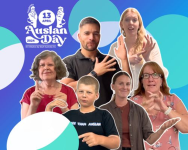
Auslan Day is celebrated annually on 13 April to recognize Australian Sign Language, its history, and deaf culture, marking the 1989 publication of the first Auslan dictionary.

(The date commemorates the 13th of April 1989, when the first Auslan dictionary was published. This milestone officially gave the language its name (an acronym for Australian Sign Language) and led to its recognition as a community language in 1991.)

Auslan is a visual form of language that relies on hand gestures, facial expressions, and body movements to convey meaning. Auslan is a complex and nuanced language that has its own grammar, syntax, and vocabulary - it is not simply a visual representation of spoken English or any other spoken language.

Auslan is uniquely Australian. Just like different languages are spoken around the world, people who are deaf use different sign languages depending on where they come from (it's estimated there are 130 sign languages around the world).

Auslan Day is an annual celebration of the history, culture, and language of the Australian Deaf community and recognises Auslan (Australian Sign Language) as the preferred language of many Deaf Australians and highlights its importance in communication, inclusion, and cultural identity.

Auslan Day also provides an opportunity for the wider community to learn more about the language and to appreciate the richness and diversity of Deaf culture in Australia.

In 2026, events include community gatherings by Deaf Connect, a campaign launching on April 13th, and special activities, with celebrations promoting inclusion and language awareness nationwide.

This year’s focus is to celebrate the history, culture, and language of the Australian Deaf community.

There is also a Digital Campaign - "My Auslan Story" video campaign launching 13 April 2026, on the Deaf Connect News page.

Organisations like Deaf Connect and Deaf Australia are hosting a variety of events across the country:
  • Brisbane: A special Auslan-interpreted tour of the Cosmic Skydome shows at the Sir Thomas Brisbane Planetarium from 9:00 am – 10:30 am.
  • Sydney: A Deaf-led art class in Parramatta guided by artist Angie Goto, from 9:30 am – 12:30 pm.
  • Perth: A guided tour exploring native flora at Kings Park & Botanic Garden, meeting at 10:15 am.
  • Darwin: Auslan-interpreted tours of Territory life and contemporary art exhibitions at the Museum & Art Gallery of the NT from 11:00 am – 1:45 pm.
  • Adelaide: An afternoon of "Auslan Bingo" and afternoon tea at the Mile End office of Deaf Connect from 1:30 pm – 4:00 pm.
  • Cairns: A morning on the Esplanade (opposite McKenzie St) to learn about Deaf dogs with Leone and "Hank the Deaf Dog" from 10:00 am – 12:00 pm.
  • Melbourne: An "Art, Auslan and Activism" workshop in South Melbourne at 11:00 am focusing on creative mediums like collage and zines.
Businesses can download a free Auslan Day Workplace Kit which includes posters, social media tiles, and tips for inclusive communication.

Educational Resources: Teachers can use themed resources from Twinkl to teach the Auslan alphabet or simple signs in the classroom. Many schools have introduced the Auslan alphabet and teach basic signs as part of an evolving awareness program exploring why inclusive communication matters.

Teachers teach the Auslan alphabet, encourage students to practise simple signs, and incorporate Auslan into everyday classroom routines such as greetings or weather discussions. Schools may also choose to hold an assembly highlighting Deaf culture or support an Australian Deaf charity, helping students develop respect, empathy, and appreciation for the Australian Deaf community.

Auslan Day is a celebration for all! Whether you are a member of the Deaf community or not, there are many ways to participate in and honour this special day, and information is readily available on the net.

Sometimes you just have to see the “signs.”


Fun Facts about Auslan:

  • To sign "Hello, my name is" in Auslan, wave your hand for "hello," touch your chest for "my," tap your forehead with two fingers for "name," then fingerspell your name. It is a visual language using hand shapes and facial expressions.
  • Australian Sign Language Interpreter' Association - national peak body representing Auslan/English Interpreters and Deaf Interpreters. Services cost from approximately $110 per hour for face-to-face Auslan Interpretation, however there is often a minimum booking of 2-hours.
  • With 38 hand shapes, and 28 variants, Auslan is a visual symphony.


"Auslan is a language that needs to make sense, visually.

"Sign language: The only time it’s polite to talk with your hands”
"More than just hand movements, Auslan is a language of the heart and mind"

"Turn your volume down and your vision up"


1776031785955.png


1776031807849.png


1776031826145.png
 
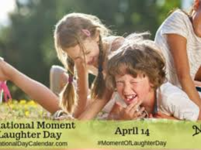
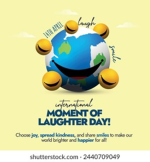
On April 14, stop, smell the roses, and laugh a little (or a lot), because it is International Moment of Laughter Day.

Today is all about FUN and laughter to encourage people to set aside the stress of daily life and embrace the healing power of a good laugh as we try to shift perspectives from pessimistic to optimistic and motivate people to find positivity despite life's anxieties.

Laughter is ancient, primitive and instinctual, and a fundamental part of everyday life - something most of us indulge in naturally. There are comedy channels on TV, comedy festivals and our favourite funny friend who's sure to get our giggle on. And of course there’s even a thread here at WTF which deals in humour: “Things that make you laugh” - hint! hint!

While the phrase "laughter is the best medicine" is a popular old adage, modern science increasingly backs it up as a legitimate tool for improving physical and mental health. Originating from biblical proverbs, specifically Proverbs 17:22, which states "a merry heart doeth good like a medicine," the concept has evolved into a field of study called gelotology.

Laughter acts as a powerful, free, and accessible medicine by reducing stress hormones like cortisol and epinephrine. It increases endorphins (feel-good chemicals), stimulates organs, lowers blood pressure, and boosts immunity. While not a substitute for medical treatment, it enhances mood and helps manage difficult situations.

However, while the ability to laugh is innate, the decision to activate and use it to its full ability is a choice. When life gets stressful, illness creeps in, relationships are put to the test or we're struggling financially, there's rarely much to laugh about. So, we don't.

Yet tuning into the lighter, more humorous side of life and activating one's "laughter self" is critical to mental health. Rather than waiting for something funny to happen or for life to be a bed of roses, we can transform our emotional state by tapping into our laughter and humour resource. This helps create distance between us and our pain, and improve mood and resilience to stress.

And wait, there’s more (aka the healing power of laughter):

  • Reduced Stress: Decreases cortisol and epinephrine while increasing endorphins, which act as natural pain relievers. Even a single session of laughter can reduce cortisol (the primary stress hormone) levels by approximately 32% to 37%.
  • Physical Stimulation: Enhances intake of oxygen-rich air, stimulates heart and lungs, and relaxes muscles.
  • Improved Mood & Immune System: Enhances emotional well-being and can boost immunity. Laughter increases the production of infection-fighting antibodies and activates natural killer (NK) cells, which help the body defend against viruses and even cancer cells.
  • Pain Relief: It triggers the release of endorphins, the body's natural painkillers, which can increase pain tolerance and decrease overall intensity.
  • Heart Health: A "mini-workout" for the heart, laughter increases blood flow and improves the function of blood vessels, which can lower the risk of heart disease and stroke.
  • Weight Management: Intense laughter can burn up to 40 calories in 10 to 15 minutes, which researchers estimate could lead to a weight loss of about 1.8kg (4 lbs) per year.
  • Mental Resilience: Humour doesn't deny negative experiences; rather, it reframes them, making challenges seem less threatening and easier to endure.
  • Longevity: Studies have suggested that people with a strong sense of humour may live up to 7 years longer than those who laugh less frequently.
  • Therapeutic Laughter: Clown Doctors Australia work in hospitals, using laughter and humour to help patients.
  • Enhanced Social Bonding: Shared laughter releases endorphins that support the formation and maintenance of strong social bonds.
This topic of laughing, some would say, is no laughing matter.

Actually, the healing power of humour and laughter assists personal and professional resilience, performance and wellbeing.
No joke.


Fun Facts about Laughter:
  • The brain cannot always distinguish between fake and real laughter; "forcing" a laugh can still trigger the same beneficial hormone releases.
  • The Laughing Kookaburra, a native Australian bird, is famous for its call that sounds like human, raucous laughter, often heard at dawn and dusk.
  • Human babies usually start to laugh when they are only 3 to 4 months old, often before they can even talk.
  • You are much more likely to laugh when you are with other people than when you are alone. When you hear someone else laugh, your brain gets ready to join in.
  • Laughing 10 to 15 minutes a day can burn up to 40 calories! It works out your stomach muscles and increases your heart rate.
  • Children laugh hundreds of times a day, but adults only laugh about 15 to 20 times a day – let’s all find our “inner child.”


"Laughter is the shortest distance between two people"

“We don’t laugh because we’re happy. We are happy because we laugh”

“He who laughs at himself, never runs out of things to laugh at”

“Laugh often. Live longer”


1776114637186.png


1776114657252.png


1776114671411.png


1776114695259.png
 
Last edited:
On April 15, 1955, visionary innovator Ray Kroc opened his first McDonald’s Restaurant in Des Plaines, Illinois, marking the birth of what would become the modern McDonald's Corporation.

He began to build the business by granting franchises to local entrepreneurs. By 1960, he'd opened 200 restaurants throughout the USA. In 1961 he bought the McDonald brothers' share of the business for $3 million and in 1965 the company became the McDonald's Corporation.

Today, McDonald’s has more than 36, 000 restaurants in over 119 countries.

In 1971, as part of its overseas expansion, McDonald’s opened their first restaurant in the Sydney suburb of Yagoona. Today there are over 970 McDonald's restaurants across Australia and they employ more than 100,000 people across their restaurants and management offices.

These days, close to two million customers come through their restaurants every day.

McDonald's marketing mix is built around its product, price, place, and promotion strategies. Each element works together to strengthen its global presence. The main factors are adapting menus to local tastes and offering flexible pricing.

Here’s their commercial milestones in Oz:

  • 1981. Australia's first Ronald McDonald House opens at the Royal Alexandra Children's Hospital, Camperdown NSW.
  • 1993. The world’s first McCafé opens in Melbourne, Victoria.
  • 1999. McDonald’s Australia’s flagship burger 'The McOz™' arrives on the menu.
  • 2000. McDonald's is the Official Restaurant of the Sydney 2000 Olympic Games, serving more than 1.2 million meals to athletes, officials and spectators.
  • 2001. McDonald's celebrates its 30th Birthday Down Under, and the 20th birthday of Ronald McDonald House Charities in Australia. The McFamily rallies to support those affected by the 11th September events through donations of food, services and money. RMHC is named one of the top 100 charities by Worth Magazine.
  • 2004. The Happy Meal celebrates 25 years (1979 - 2004). Nutrition labelling is introduced to packaging on McDonald’s core menu items - a Quick Service Restaurant Industry First.
  • 2005. McDonald's celebrates its 50th Anniversary on 15 April. McDonald's Australia raised more than $715,000 for CARE Australia through its restaurants to provide immediate and long-term assistance to those affected by the Tsunami.
  • 2015. McDonald’s Australia introduced All-Day Breakfast as well as online platform Our Food Your Questions to answer customers’ questions about Macca’s.
  • 2021. Transitioned our signature cheese to natural flavours, natural colours and no added preservatives.

We Aussies have a deep-seated affection for McDonald’s—famously nicknamed "Macca's" - due to a unique combination of high-quality local ingredients, a world-leading coffee culture, and a brand identity that has successfully "spoken Australian" for decades.

Why Aussies Are "Lovin' It" - Local Ingredient Obsession: More than 90% of ingredients used in Australian stores are sourced locally. This includes 100% Aussie beef, RSPCA-Approved chicken, and produce like lettuce and tomatoes grown in Australian "backyards".

However, the “biggie” is the nickname "Macca's" which is so ingrained in the culture that the company officially changed the signage on several stores to reflect it.

For many, the "Macca's run" is considered a rite of passage for teenagers.
For me, I’ve come to love their brekky on the run.
What about you?


Fun Facts about Maccas:
  • It took nearly 10 years for McDonald's to become profitable in Australia, as Aussies were slow to adopt the American fast-food model in the 1970s.
  • The soft serve with a Cadbury Flake is one of the most popular late-night desserts in Australia.
  • In 2023, the Hash Brown was crowned the most ordered item in Australia.
  • In 2021, to celebrate 50 years, the Yagoona store was reopened with a 1970s retro theme.


"I didn't invent the hamburger. I just took it more seriously than anyone else."

“Some people meditate. I McFlurry”

“I’m McDone with diets.”

"Because life is too short to skip the fries."


1776202660385.png


1776202682091.png


1776202700293.png


1776202719595.png
 

Latest posts

Members online

Back
Top