And today is .......

6 December


National Microwave Oven Day, held on December 6, celebrates the incredible appliance that has transformed kitchens worldwide.

This day highlights the microwave’s role in making cooking faster and more convenient. The microwave oven is a staple in many households, from reheating leftovers to preparing full meals. This special day recognizes microwave ovens’ convenience and versatility to everyday life.

Initially, microwave ovens were large and expensive, but technological advancements made them more affordable and compact over time. Its ability to save time and effort in meal preparation has made it an essential tool for busy families, students, and professionals alike.

And by the 1970s, they had become common household appliances, significantly changing how people prepared and cooked food. Easier and quicker – just all round more efficient if time is prime the factor.

Today especially highlights the microwave’s role in modern culinary practices, from quick reheating to cooking complete meals. A kitchen make-over for all cooks!

But beware, there’s a few no nos when coking in a microwave oven: Don’t ever cook anything made of or containing steel, iron, copper or other hard metals – these should never go in your microwave.

Anyways, get home, raid the freezer and fire up your trusty microwave; Dinner is served. Quick eh!?


Fun Fact about microwave ovens (1):
The microwave oven was invented by accident (as so many inventions have been). While testing magnetrons (the vacuum tubes that produce microwave radiation) in 1945, engineer Percy Spencer noticed that the candy bar in his pocket had started melting. After testing out other foods, including popcorn kernels (more on that later), Percy's discovery was official: Microwave radiation could indeed cook food. The invention was patented soon after. His discovery was later converted to domestic use in 1967.

Fun Fact about microwave ovens (2):
Ice doesn't melt quickly in a microwave because the rigid structure of ice, held together by strong hydrogen bonds, prevents its water molecules from rotating freely, which is how microwaves heat food.

Fun Fact about microwave ovens (3):
Sanyo once hired Dynasty diva/actor Joan Collins to act like she had no idea what cooking was in a TV commercial for its microwave. "It's so amazing, I almost feel the urge to cook," the diamond-adorned actor says at the end of the spot: “I’m sure it will pass."


Fun Fact about microwave oven (4):
Turns out those drab microwaved meals that fliers are always complaining about haven't ever been inside a microwave at all. In most cases airlines aren't allowed to use microwaves at 36,000 feet, and instead reheat pre-cooked food using convection ovens that blow hot, dry air over the food. Still tastes “tres ordinaire!”


"Everything for an easier life."

"Popty ping" is the Welsh word for microwave, but I'm pretty sure it's just the sound it makes when it's working correctly.

"Smart ideas for your home."

“Just nuke it for 60 seconds!”


View attachment 30600


View attachment 30601


View attachment 30602
Anyone follow Nat's What I Reckon? He calls them "tucker ........s" 🤭
 
Nana BF bought the first one in our family in the early 80’s off a door in door salesman. He sold it as a bake dinner machine, and those first few baked dinners were scary, last few were worse.
Our first one was 1983 I think. It didn't even have a turntable 🤣 you had rotate what you were cooking halfway through!
 
8 December


National Crossword Solvers Day is observed each year on December 8 and celebrates the enjoyment and mental stimulation that crosswords provide to millions of people.

Surveys have revealed that approximately 1.4 million Australians engage in some form of puzzle, including crosswords, each month, whether from a newspaper, an online source, or a dedicated app.

Crosswords can be done solo, or with a friend or family member where two heads can be better than one – ultimately, it's a great way to bond over problem-solving.

The difficulty of crosswords often increases throughout the week, with Mondays being the easiest and Saturdays the most challenging. It’s recommended we find one which suits your skill level, before challenging yourself with a harder one.

If you get stuck, look up the answer. This can be a fun way to expand your general knowledge and vocabulary. This is not cheating; it’s part of the learnings in doing a crossword – win/win, you get it right and learn all at the same time. That feeds into the survey findings that Crossword puzzlers had higher verbal IQ compared to non-puzzlers at baseline even as both groups had comparable years of education.

Latest medical research found that participation in cognitively stimulating leisure activities such as crossword puzzles may delay onset of the memory decline in the preclinical stages of dementia, possibly via its effect on improving cognitive reserve. It’s thought that crosswords are good for your brain because they exercise complex thinking, memory, and knowledge, as well as improving visual and spatial reasoning skills. They require focus and can help build cognitive reserve, which may delay memory decline, and have even shown benefits over digital games in some studies.

So have fun, learn lots, and keep the grey matter sound too.

Serious Aussie crossword players even have their own Face Book Page under the name “Australian Crossword Club” which currently has 520 people in its public group. All players are welcome to join.

And as a relationship expert once said: “Don’t have any cross words (except of the puzzle type).”


Fun Fact about crosswords: A lover of crosswords called a cruciverbalist.


“Every answer is a small victory.”

“I speak fluent Across and Down.”

“Clueless? Perfect—you’re qualified.”

“Crossword mood: 80% confident, 20% clueless.”


1765142517881.png


1765142540210.png


1765142558986.png
 
6 December


National Microwave Oven Day, held on December 6, celebrates the incredible appliance that has transformed kitchens worldwide.

This day highlights the microwave’s role in making cooking faster and more convenient. The microwave oven is a staple in many households, from reheating leftovers to preparing full meals. This special day recognizes microwave ovens’ convenience and versatility to everyday life.

Initially, microwave ovens were large and expensive, but technological advancements made them more affordable and compact over time. Its ability to save time and effort in meal preparation has made it an essential tool for busy families, students, and professionals alike.

And by the 1970s, they had become common household appliances, significantly changing how people prepared and cooked food. Easier and quicker – just all round more efficient if time is prime the factor.

Today especially highlights the microwave’s role in modern culinary practices, from quick reheating to cooking complete meals. A kitchen make-over for all cooks!

But beware, there’s a few no nos when coking in a microwave oven: Don’t ever cook anything made of or containing steel, iron, copper or other hard metals – these should never go in your microwave.

Anyways, get home, raid the freezer and fire up your trusty microwave; Dinner is served. Quick eh!?


Fun Fact about microwave ovens (1):
The microwave oven was invented by accident (as so many inventions have been). While testing magnetrons (the vacuum tubes that produce microwave radiation) in 1945, engineer Percy Spencer noticed that the candy bar in his pocket had started melting. After testing out other foods, including popcorn kernels (more on that later), Percy's discovery was official: Microwave radiation could indeed cook food. The invention was patented soon after. His discovery was later converted to domestic use in 1967.

Fun Fact about microwave ovens (2):
Ice doesn't melt quickly in a microwave because the rigid structure of ice, held together by strong hydrogen bonds, prevents its water molecules from rotating freely, which is how microwaves heat food.

Fun Fact about microwave ovens (3):
Sanyo once hired Dynasty diva/actor Joan Collins to act like she had no idea what cooking was in a TV commercial for its microwave. "It's so amazing, I almost feel the urge to cook," the diamond-adorned actor says at the end of the spot: “I’m sure it will pass."


Fun Fact about microwave oven (4):
Turns out those drab microwaved meals that fliers are always complaining about haven't ever been inside a microwave at all. In most cases airlines aren't allowed to use microwaves at 36,000 feet, and instead reheat pre-cooked food using convection ovens that blow hot, dry air over the food. Still tastes “tres ordinaire!”


"Everything for an easier life."

"Popty ping" is the Welsh word for microwave, but I'm pretty sure it's just the sound it makes when it's working correctly.

"Smart ideas for your home."

“Just nuke it for 60 seconds!”


View attachment 30600


View attachment 30601


View attachment 30602
Certainly changed our lives. Good Onya microwave !
 
9 December


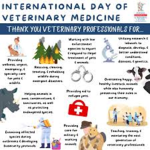
The International Day of Veterinary Medicine, celebrated annually on December 9th, recognizes and appreciates the vital work done by veterinarians worldwide, as all pet lovers know and appreciate beyond words.

This day shines a light on the important role veterinarians play not only in animal health but also in human health and welfare.

Veterinarians do more than just take care of our pets; they’re involved in groundbreaking medical research that benefits both animals and humans, work tirelessly to improve animal welfare, and are key players in managing public health concerns.

Their expertise spans a wide range of areas, from shelter medicine and parasitology to complex fields like epidemiology and zoonotic diseases. The day encourages us to show gratitude for their hard work and dedication.

The International Veterinary Outreach organizes this day to highlight the importance of veterinary medicine. It’s a call to action for better awareness and support for veterinarians worldwide, recognizing their often-unnoticed contributions to society.

It’s a moment to acknowledge that healthy animals lead to healthier communities and that the well-being of animals and humans is deeply interconnected.

Veterinarians are often on the front line when it comes to animal welfare. They make recommendations to improve the welfare of animals in the wild, in conservation organizations and rescues, and in homes.

All these things are worth celebrating, and much of the grunt work goes unnoticed by many people. Veterinarians also provide tangible and widespread benefits to the communities that they serve, but often with much less recognition of this fact. Today is about them and how grateful the communities are that they serve.

Hoping that your dear pets never need the attention and care of your local vet, but should you need their services, today’s a great day to pay-it-forward.


“Anything’s paws-able at the vets.”

“Bone to be wild, but my vet keeps me tame.”

“Vets are the purr-fect prescription for pet problems.”

“Vets: the only people who love your pet as much as you do.”


1765223998073.png


1765224019868.png


1765224039098.png
 
9 December


The International Day of Veterinary Medicine, celebrated annually on December 9th, recognizes and appreciates the vital work done by veterinarians worldwide, as all pet lovers know and appreciate beyond words.

This day shines a light on the important role veterinarians play not only in animal health but also in human health and welfare.

Veterinarians do more than just take care of our pets; they’re involved in groundbreaking medical research that benefits both animals and humans, work tirelessly to improve animal welfare, and are key players in managing public health concerns.

Their expertise spans a wide range of areas, from shelter medicine and parasitology to complex fields like epidemiology and zoonotic diseases. The day encourages us to show gratitude for their hard work and dedication.

The International Veterinary Outreach organizes this day to highlight the importance of veterinary medicine. It’s a call to action for better awareness and support for veterinarians worldwide, recognizing their often-unnoticed contributions to society.

It’s a moment to acknowledge that healthy animals lead to healthier communities and that the well-being of animals and humans is deeply interconnected.

Veterinarians are often on the front line when it comes to animal welfare. They make recommendations to improve the welfare of animals in the wild, in conservation organizations and rescues, and in homes.

All these things are worth celebrating, and much of the grunt work goes unnoticed by many people. Veterinarians also provide tangible and widespread benefits to the communities that they serve, but often with much less recognition of this fact. Today is about them and how grateful the communities are that they serve.

Hoping that your dear pets never need the attention and care of your local vet, but should you need their services, today’s a great day to pay-it-forward.


“Anything’s paws-able at the vets.”

“Bone to be wild, but my vet keeps me tame.”

“Vets are the purr-fect prescription for pet problems.”

“Vets: the only people who love your pet as much as you do.”


View attachment 30761


View attachment 30762


View attachment 30763
Thanks to all the vets from everyone of us who has pets !
 
December 10


December 10 is a world-first where our Government activates:

The Online Safety Amendment (Social Media Minimum Age) Act 2024.


The Australian Government passed a new law called the Online Safety Amendment (Social Media Minimum Age) Bill 2024 on 28 November 2024. This law introduces a mandatory minimum age of 16 for accounts on certain social media platforms. It will take effect on 10 December 2025, and parents cannot give their consent to let under-16s use these platforms.

From today, the government is legally protecting young Australians at a critical stage of their development, through world-first social media age restrictions. These restrictions aim to protect young Australians from pressures and risks that users can be exposed to while logged in to social media accounts. These come from design features that encourage them to spend more time on screens, while also serving up content that can harm their health and well-being.

The social media platforms that have already complied (prior to 10 December) and others (including exemptions) are in the news services for clarification.

From today, anyone under 16 in Australia won’t be able to keep or make accounts on social media apps like TikTok, Instagram, YouTube, Snapchat, X, Facebook and more.

The Government says the social media ban is needed to protect the mental health and well-being of Australian children and teens. They believe the risks of social media, such as cyber-bullying, harmful content, and online predators, outweigh the positives. It’s said that the law is necessary to protect children from harmful content and algorithms that can promote it to users.

Anyone under 16 in Australia won’t be able to keep or make accounts on social media apps like popular platforms such as TikTok, Instagram, YouTube (but not You Tube Kids), Snapchat, X, Facebook and more. The rule doesn’t punish young people or their families, instead, social media companies must stop under-16s from having accounts or risk serious fines (up to about $50 million). The new law is meant to make things safer online, but it is believed the real fix should be improving social media safety, not just delaying access.

Currently, the platforms the ban will apply to are YouTube, X, Facebook, Instagram, TikTok, Snapchat, Reddit, Twitch and Kick. Tech companies that own these platforms could face fines of up to $50 million if they don’t take reasonable steps to stop under-16s from having accounts.

Apps like Messenger Kids, WhatsApp, Kids Helpline, Google Classroom and YouTube Kids are expected to not be part of the ban.

In short, the "ban" is not exactly a ban. This amendment to the Online Safety Act will force some (but not all!) social media companies to prevent (or try to prevent!) under-16s from holding an account on their platforms (but not from using them!). It’s the next few months that will reveal the success or otherwise of the actual success of the “ban” as played out between the young Australians/families, the media platforms and the government.

Parents can check the eSafety Commissioner website for information about the new social media ban, including which platforms are affected and how to prepare.

The OAIC also provides a parent and carer resource explaining the new rules.

Other resources for support include the Raising Children Network, Beyond Blue, and helplines like Kids Helpline


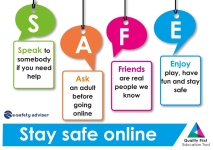
“Think before you click.”

"Nothing goes away on the internet"

"Ask a grown-up before you go on the internet,"

“If you don’t know the sender, it might be a pretender"


1765307849854.png


1765307869031.png


1765307888886.png
 
Back
Top