Every dog has its day – and this is it!
International Dog Biscuit Appreciation Day tail wags onto our calendar each year on 23 February. Happy dogs go nuts with canine glee when their owners serve up unusual or home-made doggy snacks to mark the occasion.
Every canine in the world knows the best way to celebrate this important day!
In Australia, owners primarily give dog biscuits to strengthen the bond with their pets and reinforce positive behaviour during training. With nearly 4.2 million dogs in the country, the pet treat sector is a significant industry, reflecting the common view of dogs as "family members" rather than just watchdogs.
And wait. There’s just not one dog biscuit variety. Today is when all dog owners must seek out and feast their dogs with delicious and nutritious treats.
Top-rated dog biscuit treats in Australia feature locally sourced, natural ingredients, often oven-baked for crunch and dental health. Popular brands include Blackdog Biscuits (beef, liver, or charcoal), SavourLife (kangaroo), Huds and Toke (gourmet), and Bonza (chia seed). Options range from everyday crunchy biscuits to specialised dental and grain-free treats, with many available at PETstock, Petbarn, or local independent pet stores.
Dog biscuit varieties might be functional (Charcoal biscuits for digestion/gas (e.g., Black Dog); or Protein Specific (Kangaroo, Beef, Lamb, and Chicken flavours are common, often using Australian meats); or Grain-Free/Sensitive (Options available for dogs with allergies or dietary sensitivities); or Gourmet Festive-type treats (Iced biscuits and decorated shapes).
Australian dog owners primarily give biscuit treats to reinforce positive behaviour during training, reward good behaviour, and strengthen the human-animal bond.
These biscuits are also used for dental health (reducing plaque), enrichment, and simply to show affection, with many owners viewing their dogs as family members.
Key reasons for giving dog biscuit treats in Australia (and especially today!) include:
Dog food (and the dog biscuits as treats) plays a pivotal role in strengthening the bond between owner and dog, serving as a primary daily expression of care, trust, and routine. While dogs love food, research shows they often value human interaction and praise just as much, or more. Creating a consistent, positive feeding ritual nurtures this emotional connection.
This routine of giving the dog his treats is simply loved too by the dog. Our dogs generally love their dog biscuits because they are designed to be highly palatable, offering enticing, intense flavours (like meat) and a satisfying, crunchy texture that differs from their daily diet. These treats are popular (as mentioned) for training, rewarding good behaviour, providing mental stimulation, and helping with dental health by reducing plaque.
Like their owners enjoying their food choices, dogs are drawn to the strong, enticing aromas of biscuits; and the crunchiness provides enjoyment and aids in cleaning teeth; and the dog biscuits offer an exciting change from mundane kibble.
Our dogs are special to all of us as owners. They respond with their wagging tails and deep eyes just loving the moments that bring dog and owner closer. And if dogs could talk, they’d all agree: dog biscuits are tops, anytime!
Fun Facts about Dog Biscuits:
"Crunchy, delicious, and the key to a happy tail."
"Dog biscuits: The fastest way to turn a crazy pup into a sitting angel."
“Pawfection in every bite”
“I only fetch snacks, sorry not sorry.”
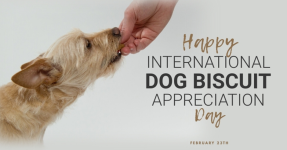


International Dog Biscuit Appreciation Day tail wags onto our calendar each year on 23 February. Happy dogs go nuts with canine glee when their owners serve up unusual or home-made doggy snacks to mark the occasion.
Every canine in the world knows the best way to celebrate this important day!
In Australia, owners primarily give dog biscuits to strengthen the bond with their pets and reinforce positive behaviour during training. With nearly 4.2 million dogs in the country, the pet treat sector is a significant industry, reflecting the common view of dogs as "family members" rather than just watchdogs.
And wait. There’s just not one dog biscuit variety. Today is when all dog owners must seek out and feast their dogs with delicious and nutritious treats.
Top-rated dog biscuit treats in Australia feature locally sourced, natural ingredients, often oven-baked for crunch and dental health. Popular brands include Blackdog Biscuits (beef, liver, or charcoal), SavourLife (kangaroo), Huds and Toke (gourmet), and Bonza (chia seed). Options range from everyday crunchy biscuits to specialised dental and grain-free treats, with many available at PETstock, Petbarn, or local independent pet stores.
Dog biscuit varieties might be functional (Charcoal biscuits for digestion/gas (e.g., Black Dog); or Protein Specific (Kangaroo, Beef, Lamb, and Chicken flavours are common, often using Australian meats); or Grain-Free/Sensitive (Options available for dogs with allergies or dietary sensitivities); or Gourmet Festive-type treats (Iced biscuits and decorated shapes).
Australian dog owners primarily give biscuit treats to reinforce positive behaviour during training, reward good behaviour, and strengthen the human-animal bond.
These biscuits are also used for dental health (reducing plaque), enrichment, and simply to show affection, with many owners viewing their dogs as family members.
Key reasons for giving dog biscuit treats in Australia (and especially today!) include:
- Training & Behaviour Management: Treats are highly effective for training and encouraging positive, rewarded behaviour.
- Bonding & Affection: Treats are used to show love and strengthen the bond between the owner and the dog.
- Dental Health: The crunchy texture of many biscuits helps clean teeth and reduce plaque buildup.
- Convenience & Reward: Biscuits are easy to store and serve as a quick reward for good behavior.
- Enrichment: Treats can provide mental stimulation and act as a distraction.
Dog food (and the dog biscuits as treats) plays a pivotal role in strengthening the bond between owner and dog, serving as a primary daily expression of care, trust, and routine. While dogs love food, research shows they often value human interaction and praise just as much, or more. Creating a consistent, positive feeding ritual nurtures this emotional connection.
This routine of giving the dog his treats is simply loved too by the dog. Our dogs generally love their dog biscuits because they are designed to be highly palatable, offering enticing, intense flavours (like meat) and a satisfying, crunchy texture that differs from their daily diet. These treats are popular (as mentioned) for training, rewarding good behaviour, providing mental stimulation, and helping with dental health by reducing plaque.
Like their owners enjoying their food choices, dogs are drawn to the strong, enticing aromas of biscuits; and the crunchiness provides enjoyment and aids in cleaning teeth; and the dog biscuits offer an exciting change from mundane kibble.
Our dogs are special to all of us as owners. They respond with their wagging tails and deep eyes just loving the moments that bring dog and owner closer. And if dogs could talk, they’d all agree: dog biscuits are tops, anytime!
Fun Facts about Dog Biscuits:
- Australians spend roughly $342 million to $366 million annually on dog treats.
- The #1 best-selling dog treat in Australia is Greenies, which are often used for dental health.
- Due to the "pet parenting" trend, many Australians treat their dogs like children, fuelling a boom in high-quality or gourmet treats.
- More than half of dog treat brands in Australia do not include calorie information on their packaging, making it hard to track your dog's intake. So be disciplined as owners to watch your dogs’ diet.
"Crunchy, delicious, and the key to a happy tail."
"Dog biscuits: The fastest way to turn a crazy pup into a sitting angel."
“Pawfection in every bite”
“I only fetch snacks, sorry not sorry.”