It's time to take the fight back to HBG

Court bid launched to blow up Wests Tigers power base​

Chris Barrett

Chris Barrett
October 17, 2026 — 5:00am


Explosive new legal action against the owner of Wests Tigers is attempting to dismantle its power base and hand rank-and-file members effective control of the joint-venture team.

The case has been launched by ousted director Tony Andreacchio and his wife Denise against Western Suburbs Leagues Club, otherwise known as Holman Barnes Group, and threatens to bring two years of conflict behind the scenes into court.
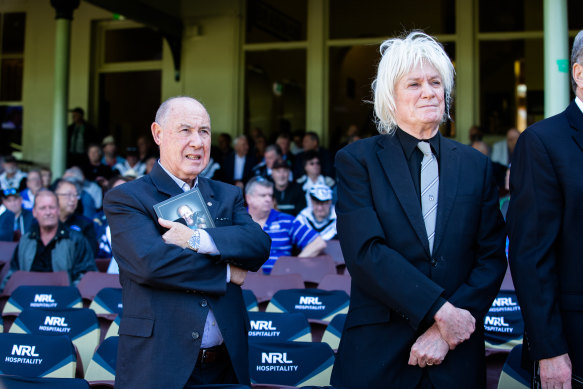
Tony Andreacchio (left), pictured with Holman Barnes Group chairman Dennis Burgess, in 2021.

The $100 million licensed club operation is the 90 per cent shareholder of the Tigers and has the majority on the team’s board, giving it ultimate say in the destiny of the perennial NRL also-rans.

The NSW Supreme Court proceedings are seeking to overthrow HBG’s decades-old governance model, which hands the reins of the poker machine empire – and by extension, the Tigers – to an exclusive group of 20 so-called debenture holders.

The structure, established in the 1950s, reserves five of the organisation’s seven board seats for debentures, while the other two are elected by members.

The action brought by the Andreacchios describes the system as “oppressive” and “unfairly discriminatory” against members.

Wests Tigers fans gather last December to protest the sacking of the club’s independent directors.

They are bidding to have the debenture-holding directors’ positions declared vacant by the court and for a new election to be called, at which club members would vote for all seven spots on the board.

HBG chairman Dennis Burgess is named as a defendant along with the club itself, as are the 19 other debentures individually. They include two Tigers board members – former Wests Magpies fullback Leo Epifania and Michael Liubinskas.


The matter is set to be heard in court on October 26.

HBG declined to comment.

Tony Andreacchio, a former Tigers director, was one of three HBG directors banned for a combined 15 years in 2024.

This masthead reported at the time that he was cast out for six years for behaviour which allegedly included yelling at a fellow HBG director and calling him a “f---ing suck” and saying to a board member after the Tigers 2024 season launch words to the effect of: “You f---ing softie”.

According to documents filed with the court, Andreacchio is asking the court to declare a finding of unreasonable conduct against him as “void and of no effect” and that his expulsion was “designed to entrench the debenture holders’ control of the board”.

He is pursuing damages, reinstatement as a financial member of the club and for his sacking as a director and the stripping of his membership to be rendered invalid.
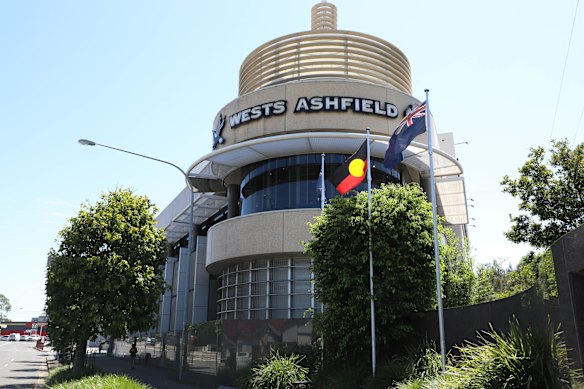
Wests Ashfield Leagues Club is the power centre behind the Tigers.

Wests Ashfield Leagues Club is the power centre behind the Tigers.Alamy Stock Photo
His wife is a party to the claim because she remains a club member.

Fellow HBG directors Rick Wayde and David Gilbert, the former Test cricketer, were suspended at the same time as Andreacchio, and there was more upheaval when chair Julie Romero was deposed last year. Wayde took legal action to challenge his eight-year ban before settling with the club last December.

Andreacchio, Wayde and Gilbert had instigated a review of the Tigers’ operations, which led to an independent board being put in place at the football club in January 2025.

HBG reassumed power less than a year later in a takeover that led football club chief executive Shane Richardson to resign.
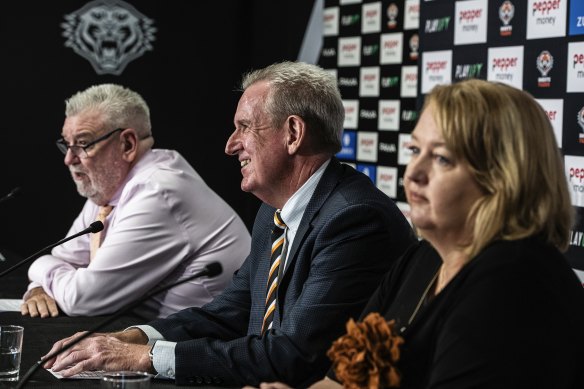
Former Wests Tigers chief executive Shane Richardson (left) pictured with Tigers chairman Barry O’Farrell and independent director Michelle McDowell in 2025.

Former Wests Tigers chief executive Shane Richardson (left) pictured with Tigers chairman Barry O’Farrell and independent director Michelle McDowell in 2025.Steven Siewert
The Tigers’ independent chairman Barry O’Farrell was also briefly dismissed before being reinstated at the behest of Australian Rugby League Commission chair Peter V’landys.

One of HBG’s first moves after reassuming control of the Tigers board was to extend the contract of coach Benji Marshall by three years until the end of the 2030 season.

Its debenture system is the subject of an ongoing Liquor and Gaming NSW investigation following a series of complaints.

Questions have also been asked whether HBG’s shift into soccer in the past 15 months runs counter to its obligation to support rugby league.

The club bought a stake in APIA Leichhardt FC and took charge of the Central Coast Mariners women’s team in the A-Leagues while long-time soccer official Frank Primerano has become the most influential figure at HBG, becoming deputy chairman last year and joining the Tigers board in December. Former APIA Leichhardt president Tony Raciti was also made a debenture holder.

The club’s constitution compels it to “assist generally in the promotion, conduct and propagation of rugby league football” in western Sydney and elsewhere.
 
I don’t disagree there are significant structural and governance flaws within the Tigers set-up. It’s clear HBG are the major issue and problem.

However that doesn’t excuse SM’s public praise of HBGs decision to invest in the Mariners and divert more funds away from the club.

Name one other NRL club CEO that would openly praise a decision that is detrimental to their club.
Its a bold strategic move on shaun behalf lets hope and back him he can be as bold and strategic for wests tigers. Give him time then sharpen the knife if he fails in a couple of seasons

But he simply hasn't had the time as of yet
 
Cool. This could drag on for a couple of years with appeals.
Another cloud over the joint.
Really feels like all people involved would rather rule over the ashes of the WTs. the debenture system isn't illegal so interesting how this is going to play out.
 
Interesting L&G are still investigating.
Wasnt aware of that.
Thought they cleared everything.

This great to hear, maybe the Tony Andreacchio lawsuit will influence the L&G findings, being just another example, amongst others of how restrictive the system is.

It might help speed it up as well?
 
Cool. This could drag on for a couple of years with appeals.
Another cloud over the joint.
Really feels like all people involved would rather rule over the ashes of the WTs. the debenture system isn't illegal so interesting how this is going to play out.
Almost like you want the last 15 years of failure to continue unchecked.....

Whilst not illegal dose it not strike you that the Holman Barnes group is the only licensed club in NSW that uses a Debenture System.

Seems very strange to me...Surely if it was best practice many other licensed clubs would use it too.....
 
Last edited:
Almost like you want the last 15 years of failure to continue unchecked.....

Whilst not illegal dose it not strike you that the Holman Barnes group is the only licensed club in NSW that uses a Debenture System.

Seems very strange to me...Surely if it was best practice many other licensed clubs would use it too.....
No other established club could switch to a debenture system because the members would never vote for such an undemocratic governance system.

The only way HBG debentures have managed to hold unchallenged (and unchallengable) control of the organisation is because it was in place from day one at Wests Ashfield.
 
No other established club could switch to a debenture system because the members would never vote for such an undemocratic governance system.

The only way HBG debentures have managed to hold unchallenged (and unchallengable) control of the organisation is because it was in place from day one at Wests Ashfield.
It’s mind boggling that a system like this is still allowed really. It’s unbelievably antiquated and has kept power residing in the hands of the same people and their relatives since the 1950’s.

The only other leagues club that had a debenture system in place was St George and they changed that structure in the 60’s because it wasn’t fit for purpose back then.
 
The history of debenture systems in New South Wales (NSW) registered clubs dates back to the early-to-mid 20th century. Originally a critical mechanism for grassroots funding, the system has evolved into a controversial tool for long-term board security and corporate governance.

1. The Post-War Capital Inception (1920s–1960s)

Before the introduction of poker machines in 1956, local community, golf, bowling, and rugby league clubs struggled to secure bank loans due to their lack of underlying assets and uncertain revenues.
• Crowdfunding Communities: To purchase land and construct clubhouses, clubs turned to their members. Members were issued "debentures"—effectively an unsecured loan or certificate backed by a fixed interest payment or equity stake in the club.
• Mandatory Take-Ups: For many early clubs, subscribing to a debenture was a prerequisite for joining. For instance, Cronulla Golf Club in 1927 required members to buy debentures, and Mounties Group (originally Mt Pritchard Workers Club) relied on debentures in the early 1960s to purchase land and secure ex-government huts to use as their initial clubhouse.

2. Transition into Governance Anchors

As poker machine revenues exploded in the 1960s and 1970s, clubs achieved immense financial self-sufficiency, meaning they no longer needed new capital injections from members. However, instead of phasing out debentures entirely, a few select clubs transitioned the system into a mechanism for elite governance and constitutional protection.
The most famous modern survival of this is the Western Suburbs Leagues Club (now Holman Barnes Group).
• The 1955 Structure: In 1955, 20 founding members each provided $100 to get the Ashfield Leagues club off the ground, secured via debentures.
• Board Control: Under the club’s constitution, these 20 select "Debenture Holders" retained the right to hand-pick five of the seven directors on the board. The general pool of over 28,500 everyday members could only vote on the remaining two spots.

3. Modern Scrutiny and Dissolution (1990s–Present)

As corporate standards modernized, the lack of transparency, inability to transfer debentures, and democratic deficit within these structures drew public scrutiny.
• Phasing Out: Many private and leisure clubs, such as the Sydney Ski Club, proactively repurchased and cancelled outstanding debentures by the late 1990s to streamline their assets.
• Regulatory Challenges: For clubs maintaining the system, statutory investigations became more frequent. While Liquor & Gaming NSW historically ruled that these long-standing debenture systems were legal under the Registered Clubs Act 1976, internal pressure mounted.
• The Supreme Court Battles: The tension peaked in late 2023 through 2026, when the Holman Barnes Group (owners of the Wests Tigers NRL team) engaged in a bitter legal and boardroom fight. Long-term debenture holders themselves publicly called to "blow up" the 70-year-old framework, labeling it an archaic, out-of-date power structure that disenfranchised everyday fans and members.
Il
 
Back
Top