Navigation
Install the app
How to install the app on iOS
Follow along with the video below to see how to install our site as a web app on your home screen.
Note: This feature may not be available in some browsers.
More options
Style variation
You are using an out of date browser. It may not display this or other websites correctly.
You should upgrade or use an alternative browser.
You should upgrade or use an alternative browser.

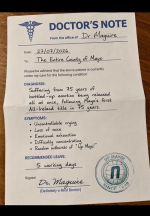
Mayo beats Kerry to win All-Ireland football crown, ending 75-year 'curse'
Mayo wins All-Ireland title, ending 75-year 'curse'
A huge Gaelic football upset sees Mayo beat GAA giants Kerry in the All-Ireland football final and one of the stars of the team that ended a 75-year "curse" is headed to the AFL.
 www.abc.net.au

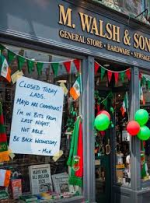
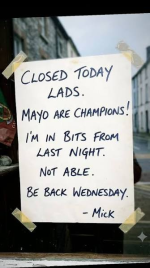
And weren't the locals happy ...
Last edited:

Leck
Well-known member
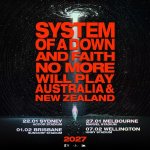
Not a fan of System of a Down, too much nu-metal wank for me.
I love Faith No More, though. The only thing that would have improved that lineup is Rage Against the Machine.
Leck
Well-known member
I had the privilege of working for Ken West (RIP) and alongside the incredible team at Big Day Out.
After eight years with the festival, this was, without a doubt, the best Big Day Out I experienced. Having Daft Punk headline made it an unforgettable event and a fitting highlight of an amazing journey.
After eight years with the festival, this was, without a doubt, the best Big Day Out I experienced. Having Daft Punk headline made it an unforgettable event and a fitting highlight of an amazing journey.
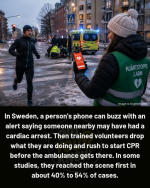
This technology is now used in Australia and I saw it saved a life recently
And here is a very recent example (which I hadn't previously been aware of - although you were champion @Dr_Ice) .....This technology is now used in Australia and I saw it saved a life recently
Billy President GoodSAM CPR response

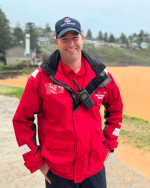
On Sunday morning, our Bilgola President, Greg Woods, received a GoodSAM alert at 2.30am.
A neighbour 500m away was having a heart attack. Greg acknowledged the alert, ran to the neighbour’s house, joining a student paramedic and Ambulance NSW, providing CPR on the man for 45 minutes before he was transported to Hospital.
More than 9,000 people experience an out-of-hospital cardiac arrest in NSW every year. For every minute a person in cardiac arrest doesn’t receive chest compressions (CPR), their chances of survival fall by 7 to 10%.
The NSW Ambulance GoodSAM app helps improve outcomes by alerting nearby volunteers to provide early chest compressions before paramedics arrive. Surf Lifesavers are identified as potential volunteers, with many signing up including Greg.
For more information check out GoodSAM via NSW Ambulance & join this worthy volunteering cause.
Last edited:

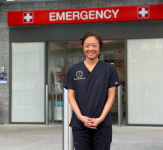
Royal North Shore Hospital emergency medicine specialist Dr Davina Julliard was watching her own child play football when she was alerted that a 15-year-old player had collapsed on a nearby field.
Davina rushed to help, joining an off-duty paramedic and other bystanders who had already started CPR and prepared an AED.
Together, they continued CPR and delivered several shocks before NSW Ambulance paramedics arrived.
The player, Ivy Thrussell, was later diagnosed with Wolff–Parkinson–White syndrome and is now recovering, with a full recovery expected.
Davina said the incident highlighted just how important access to an AED can be.
“Having access to an AED is absolutely critical to surviving, and surviving with a meaningful outcome as well,” she said.
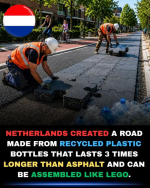
The Netherlands has pioneered PlasticRoad, an innovative modular road system made from recycled plastic waste, including discarded plastic bottles, packaging, and cups. Unlike traditional asphalt, the prefabricated road sections are lightweight, hollow, and designed to interlock like LEGO blocks, allowing them to be installed much faster while providing space underneath for drainage, cables, and utility pipes.
The first PlasticRoad bike paths were installed in the Dutch cities of Zwolle and Giethoorn as pilot projects. Developers estimate the system can last up to three times longer than conventional asphalt, while reducing maintenance needs and cutting construction time by as much as 70%. Its modular design also makes damaged sections easier to replace without rebuilding the entire road.
Following successful trials, the technology has expanded to projects such as roads and parking areas at Amsterdam Schiphol Airport. Researchers and engineers continue to evaluate its long-term performance, durability, and environmental impact, but PlasticRoad is widely seen as a promising example of circular infrastructure that transforms plastic waste into practical, sustainable transportation solutions.
The first PlasticRoad bike paths were installed in the Dutch cities of Zwolle and Giethoorn as pilot projects. Developers estimate the system can last up to three times longer than conventional asphalt, while reducing maintenance needs and cutting construction time by as much as 70%. Its modular design also makes damaged sections easier to replace without rebuilding the entire road.
Following successful trials, the technology has expanded to projects such as roads and parking areas at Amsterdam Schiphol Airport. Researchers and engineers continue to evaluate its long-term performance, durability, and environmental impact, but PlasticRoad is widely seen as a promising example of circular infrastructure that transforms plastic waste into practical, sustainable transportation solutions.
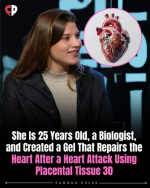
Pilar Ferrer is a 25-year-old Argentine biologist working on an injectable hydrogel designed to support heart tissue after a heart attack.
A heart attack can leave part of the heart muscle damaged and replaced by scar tissue, reducing the organ’s ability to contract efficiently.
Researchers are exploring biomaterials that can be delivered directly to the affected area and create a supportive environment for healing.
Pilar’s work uses extracellular material obtained from human placental tissue, which is normally discarded after childbirth when it is not donated for research or medical use.
The tissue is processed to remove cells while preserving a biological framework containing proteins and structural components.
That material can then be transformed into a gel and studied as a possible way to support damaged cardiac tissue.
Pilar graduated from Favaloro University and has worked within a research team developing and testing the approach.
The project remains scientific research, not an approved treatment currently available to patients.
Its promise lies in the possibility of turning donated biological material into a tool that could one day help the heart recover more effectively.
The work also shows why early-career scientists matter.
Pilar Ferrer is contributing to a field that combines biology, engineering, medicine, and regenerative science.
A heart attack can leave part of the heart muscle damaged and replaced by scar tissue, reducing the organ’s ability to contract efficiently.
Researchers are exploring biomaterials that can be delivered directly to the affected area and create a supportive environment for healing.
Pilar’s work uses extracellular material obtained from human placental tissue, which is normally discarded after childbirth when it is not donated for research or medical use.
The tissue is processed to remove cells while preserving a biological framework containing proteins and structural components.
That material can then be transformed into a gel and studied as a possible way to support damaged cardiac tissue.
Pilar graduated from Favaloro University and has worked within a research team developing and testing the approach.
The project remains scientific research, not an approved treatment currently available to patients.
Its promise lies in the possibility of turning donated biological material into a tool that could one day help the heart recover more effectively.
The work also shows why early-career scientists matter.
Pilar Ferrer is contributing to a field that combines biology, engineering, medicine, and regenerative science.
The Queen single “Don’t Stop Me Now” passed the 1 billion views mark on the band’s official YouTube account last week (July 29).
In the 1 billion club for Queen, it joins “Bohemian Rhapsody”, which is the most-viewed song released before the MTV era and is one of the most-viewed songs from the 20th century.
Queen now have more songs with a billion views than the Beatles, the Rolling Stones and Led Zeppelin combined.

In the 1 billion club for Queen, it joins “Bohemian Rhapsody”, which is the most-viewed song released before the MTV era and is one of the most-viewed songs from the 20th century.
Queen now have more songs with a billion views than the Beatles, the Rolling Stones and Led Zeppelin combined.