@Buttface
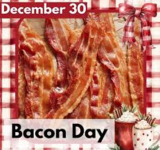
30 December
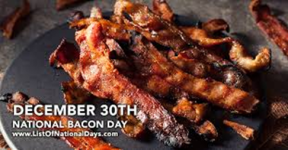
National Bacon Day is a biggie for food lovers everywhere and is celebrated on each 30 December.
Older readers will remember the phenomenon of “Beatle–mania” when the English band turned music on its head in the Swinging Sixties. Well, as big as that was, just think about this: “Bacon-mania” was huge before them; was huge too also back then; and is still top of the foodie charts everywhere to this very day!
Wow, I’m not wanting to say anything rash but I can smell the bacon cooking even now …..
Fry up a crispy, meaty treat for every meal of the day or try weird or whatever crispy creation that appeals, and life just gets better 100%.
Admittedly, there are very few things in this world that don’t taste better when paired with a bit of bacon.
Whether it’s bacon on your burger, cheeseburger, with eggs for brekkie, on a sambo with sauce (or without sauce), everyone’s a winner as the song goes. It’s hard to deny that bacon is a delicious, tasty treat anytime.
Christmas has gone; New Years is almost here: and there’s just a tinsy space to sit back and salivate – because today’s all about the bacon!
A great start would be by going to an all-you-can-eat breakfast place that has bacon on the menu. These do exist and they are great!
Then, later in the day, head on out to a favourite lunch place and get a club sandwich or some other bacon-y treat. Some might prefer a cheeseburger with extra bacon! Whatever bacon-y goodness is chosen, be sure to share it with friends and loved ones so they, too, can enjoy National Bacon Day!
And we Aussies are ever so lucky when it comes to the bacon we enjoy. Local Australian bacon is different from overseas bacon due to its cut (more loin/less belly), a hot-curing/smoking process (making it chewier and drier/more like ham before cooking) and often containing more water, resulting in a firmer, pinker, less fatty product. It’s all in the eating. Our bacon can be 'rind on' or 'rindless' (the rind is the skin of the pig, also seen as crispy crackling on roast pork).
Bacon rind on = YUMM.
Rindless bacon = also YUMM.
There’s even a healthier type of bacon to satisfy our porky wants. Nitrate-free bacon is now widely available in Australia where the manufacturing process cures (celery salt, salt, sugar) or dry-cures for authentic flavour without synthetic nitrates/nitrites; this marvellous, tasty option can be found at specialty butchers, farmers' markets, and online grocers. These options offer a bacon with a rich, smoky taste, with a less pink hue, using free-range or organic pork for a healthier choice.
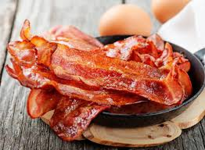
Whatever you choose ,the results in your tummy just spell out: “More please!” Maybe a classic bacon & egg roll, or pan-fried, maybe a BLT, or in an air fryer for crispy results, or used in everything from sandwiches to dips. YUMM!!
Oh, did I mention that irresistible smell that only bacon has? (Translated, that smell says: “come to me”)
OK, stop reading now – just get out and start cooking!
Fun Fat about bacon
:
"Bringing Home the Bacon" – Going back to 12th-century England, a side of bacon was given to couples who hadn't argued in a year, making "bringing home the bacon" a sign of a good marriage.
“That’s too much bacon.” - No One Ever
“Love is in the air. No wait, that’s bacon.”
“Don’t go bacon my heart”
“Flip it, fry it, love it.”
View attachment 31826
View attachment 31827
View attachment 31828
View attachment 31825