And today is .......

December 25


At about 3:30 AM on Christmas Day 1974, Cyclone Tracy made landfall in Darwin.

It was one of the most destructive storm cells ever recorded in Australia. Cyclone Tracy killed 66 people, injured more than 600 people and devastated about 70% of Darwin’s houses.

In the days and weeks following the disaster, most of the traumatised population left the city.

On 28 February 1975, the Whitlam government established the Darwin Reconstruction Commission, which effectively rebuilt the city within three years.

Darwin’s near complete destruction led to the introduction of improved building codes across Australia.


View attachment 31623


View attachment 31625


View attachment 31624


View attachment 31626
That's the first major news story I remember.
 
December 26


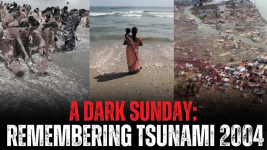
Today, we remember the Boxing Day Tsunami when, on Sunday morning 26 December 2004 at 00:58:53 UTC, a massive earthquake measuring 9.1 on the Richter scale struck off the west coast of Sumatra, Indonesia. The epicentre was 30 kilometres under the seabed and approximately 250 kilometres south to south-west of Banda Aceh. The earthquake generated a series of towering waves which could travel at 80 km/h in shallow water, with the largest impact felt in Indonesia and Sri Lanka. In the nine hours following the earthquake, 14 aftershocks with magnitudes between 5.7 and 7.3 occurred along the arc from Sumatra towards Nicobar and the Andaman Islands.

Within 15 minutes of the earthquake, waves began striking the coasts of northern Sumatra and the Nicobar Islands. Waves of up to 30 metres were recorded as the tsunami swept through Aceh, the hardest hit region of Indonesia. Around two hours after the earthquake struck, waves reached Sri Lanka, India and Thailand. An hour later they reached the Maldives, and, more than seven hours after the initial quake, the tsunami was observed in Mauritius and along the east coast of Africa.

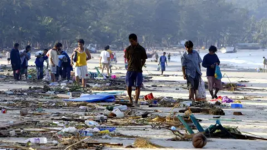
The tsunami waves caused widespread death and injuries, displaced thousands, destroyed towns, homes, livelihoods, infrastructure, and wrecked coastal areas.

Twenty-six Australians lost their lives.

Due to the scale of destruction estimates for total lives lost vary, according to the United Nations approximately 227,000 people were killed in fourteen countries. Data published by the Tsunami Evaluation Coalition indicated at least 275,000 people were killed. Across the region there are still people believed to have been swept away who have never been accounted for. Measured in lives lost, this makes it one of the 10 worst earthquakes in recorded history, as well as the single worst tsunami in history.

The Prime Minister of the day, John Howard, pledged A$1 billion over five years to rebuild tsunami-hit areas of Indonesia in "the single largest aid contribution ever made by Australia." The Australian government also pledged aid to other affected countries, while public and corporate donors contributed hundreds of millions of dollars to those affected.

Subsequently, the tsunami prompted the largest Australian peacetime overseas operation for relief and recovery, and led to major investment in a national tsunami warning system - Joint Australian Tsunami Warning Centre - to protect our own coastlines from similar events, though Australia experienced only minor coastal impacts like strong currents in WA and small wave heights in Sydney Harbour.

Today, we remember.

Those who were lost.

And the amazing Australians who joined other amazing relief and support humanitarian services in the recovery and restoration works to enable all affected to regain some normality in the aftermath of one of the worst natural disasters ever.


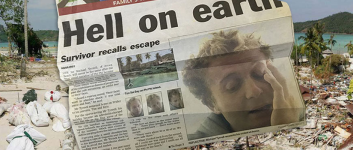
"Worse than a war movie"

“Help. Help.”

“A wake-up call for humanity."

"There will always be the time before the tsunami, and after the tsunami"


1766696779865.png


1766696814187.png


1766696836470.png
 
December 27


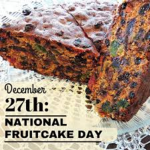
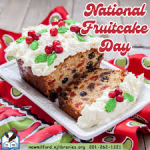
National Fruitcake Day is celebrated on December 27 when we can indulge in variations of this classic cake, popular all over the world.

Today is a fun annual observance dedicated to celebrating the rich, historic, and often debated holiday treat made with dried fruits, nuts, and spices, sometimes soaked in spirits, encouraging people to share, enjoy, or even make their own versions.

Where once a fruitcake symbolized prosperity and celebration., the fruitcake today is simply popular as a treat, to enjoy on its own or as an aside to a cup of tea or coffee. Iced or plain, and one of a zillion recipe variations, the proof is always in the eating.

This day, strategically placed between Christmas and New Year's Day, provides a perfect post-Christmas moment to savour this dense, festive dessert and taper down after all the rich festive treats.

Much like many foods that enhance the Christmas period, the humble fruit cake symbolizes tradition, family, and festivity, shared and pivotal in family and friends “breaking cake” and being together for all the right reasons. Some families celebrate by slicing into a fruitcake they’ve been saving for the occasion, while others use the day to bake their own fruitcakes, experimenting with recipes and adding personal touches.

Every cook and baker has “their” recipe for a fruitcake, with it also being common to be handed-down from generation to generation. However common to most is a combination of dark brown sugar, spices, and sometimes a hint of cocoa, contributing to a moist, dense cake that's rich in taste yet subtle enough to let the fruits shine. There again, individual bakers will not generally share their own little cooking tricks!

These days, in a typical refrigerator freezer, fruitcake can usually be stored for at least six months. Similar to regular storage, it needs to be wrapped in plastic wrap, then wrapped in foil, and placed in an airtight container, and in the freezer. But mostly, fruitcakes are cooked and eaten just about straight away, so wonderful is the inviting cake aroma!

A slice?

Yes please!


Fun Fact: The chemical composition of a traditional fruitcake makes it possible to keep for a 100 years. Indeed, its density prevents bacteria and mould from proliferating, and its alcohol content makes it more sanitized, which also has an impact on its conservation. (The best alcohol for aging fruitcake is strong spirits with high alcohol content, such as brandy, rum, whiskey, or bourbon, because they preserve the cake and enhance its flavour.)


"Fruitcake is the answer, no matter the question."

"Fruitcake is not just a food, it's a shared emotion."

"Slicing into the holiday spirit."

"Fruitcake is a celebration of life."


1766783972836.png


1766784162619.png


1766784188542.png
 
December 28


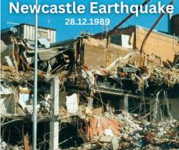
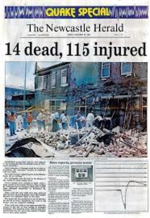
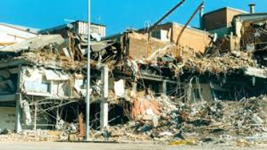
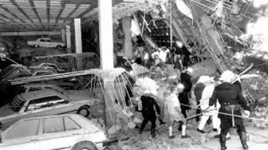
December 28 in Australian history is notable for remembering the 1989 Newcastle Earthquake, our country's only fatal earthquake, which killed 13 people and injured 160.

At 10.27am on that Thursday morning, Newcastle was devastated by a 5.6 (on the (Richter scale) earthquake. This was one of the most significant natural disasters in Australia's history.

  • The epicentre was approximately 15 km SW of the Newcastle CBD (near Boolaroo) and the focus was calculated to be at a depth of about 11 km
  • The mid-morning quake lasted only six seconds.
  • The earthquake claimed 13 lives: nine people died at the Newcastle Workers Club, three people were killed along Beaumont Street in Hamilton, and one person died of shock
  • 300,000 people were affected and 1,000 were made homeless
  • 50,000 buildings were damaged (approximately 35,000 of these were homes)
  • 300 buildings were demolished
  • 160 people required hospitalization, while the Royal Newcastle Hospital was evacuated
  • It left a damage bill estimated over $4 billion (Insurance Council of Australia) - normalized to 2017 values
  • 100os of tradesmen, insurance assessors, structural engineers and other support professionals moved temporarily into the Newcastle area to undertake the enormous and widespread restoration of Newcastle and its environs. (Because of the damage in the city centre, all “visitors” were required to not enter a 7 kilometre safety buffer zone, unless with approved authority.)
  • The effects were felt over an area of about 200,000 sq. km, with isolated reports of shaking felt up to 800 km from Newcastle
  • Damage to buildings and facilities occurred over a 9000 sq. km region, an area equivalent to over 160 times the size of the Sydney Harbour
  • The damage was most severe on soft sediments from the Hunter River, with shaking intensity observed at many locations
  • One aftershock registering 2.1 was recorded on 29 December 1989
This event proved to be Australia's deadliest earthquake, killing 13 people (mostly at the Workers Club) and injuring 160, damaging 50,000 buildings, and shocking the nation by proving disastrous earthquakes could happen in Australia, especially hitting older buildings on soft soil like river sediment, leading to major building code changes and lasting impacts.

Before the 1989 Newcastle earthquake, it was a bustling Australian city with historic buildings and normal life, but it had underlying coal mining subsidence issues ("the creep"); after, it was a disaster zone with 13 deaths, 160 injuries, massive damage (especially the Workers Club), widespread homelessness, and a total rebuild, leading to stricter building codes, but it showcased incredible community resilience and recovery, forever changing the city's landscape and infrastructure.

(In 2009, it was determined that a major contributing cause of the earthquake was due to the 200 years of coal mining that has been done close to an existing fault.)

However, as time passed and with the resilience and application of the old-fashioned Aussie spirit, Newcastle slowly recovered and remains one of this country’s most valued and beautiful places to live, enjoy and explore.


"We thought a truck had hit our building at first."

"I saw the road move like a wave had rippled across."

"The earth lifted me up and down and our house shook like a tree."

“We heard sirens in the panic”


1766870452080.png


1766870469163.png


1766870484682.png


1766870511010.png
 

Latest posts

Back
Top