January 2
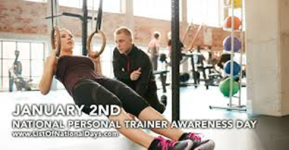
National Personal Trainer Awareness Day happens annually on January 2. Today aims to raise awareness about the value of professional guidance in fitness, particularly for preventing injuries and maintaining long-term motivation.
If we are lucky, we can get fit with a pro by our side, cheering us on and pushing us to be our best! Our goals become their goals! And timing is everything. One of the most common New Year’s resolutions is to lose weight, go to the gym and get fit; though many of these aspirations fall a little short! As such, January is often one of the busiest periods for personal trainers!
National Personal Trainer Awareness Day is to highlight not only how busy trainers are during January, but also to highlight how much more chance you can have of sticking to your exercise and weight loss routines if you retain a personal trainer, and show some love and appreciation to all the personal trainers out there that have helped us change our lives for the better and make resolutions reality!
Over the festive period, we tend to over-indulge, and so January is the month whereby we try to get back in shape again.
Personal trainers play a pivotal role in this, as they help us to achieve our health and fitness goals in a safe manner. They also keep us motivated and they make sure that the workouts we do are right for our objectives.
There are so many benefits that are associated with hiring a personal trainer, and so it is only right that we thank these men and women for having such a positive influence on our lives. Whether you see your personal trainer several times per week or once a month for a catch-up, they can help to ensure you are on the right path by monitoring your progress and putting together a personalized plan that is suited to your needs.
Personal trainers also help add variety to our exercise regime, challenge us to do better, educate us on exercising the right way to reduce injuries, and hold us accountable when we’re slacking.
Personal training has also developed considerably over the years, and those in the industry have had to overcome challenges that have risen within their profession. The recent Internet boom is a prime example of this. The rise of the Internet has caused personal trainers to completely rethink the way they provide their service. You can get online personal trainers now, meaning you do not even have to meet up in person. However, a lot of people still prefer one-on-one training sessions.
Personal trainers manage their clients online nowadays too, arranging catch-up calls and using online management systems. They also regularly post workout videos online for their followers and members to follow. A lot of people would agree that they get more value from their personal trainer today than they would have a decade ago. Accessibility and extra services are better than they ever have been.
Personal trainers are certified fitness professionals who design customized workout plans to suit their individual client needs, teach proper exercise technique, provide motivation, and offer accountability to help clients safely achieve their health and fitness goals, acting as coaches and educators to build lifelong healthy habits. They assess needs, create tailored programs, ensure correct form to prevent injury, and track progress for individuals with varying fitness levels and objectives, from weight loss to sports performance or rehabilitation.
This side-by-side attention also brings a mentor and motivator who will ensure we keep on the right track in our fitness journey, even at the hardest times. The PT offers encouragement, sets realistic goals, and keeps clients consistent and accountable. And goals met!
The “new you” is already there. It just takes a Personal Trainer to help you find your “new you.”
“The only bad workout is the one you skip.”
"Better than yesterday."
"Sweat. Smile. Repeat."
“Fit is not a destination; it is a way of life.”
View attachment 31994
View attachment 31995
View attachment 31996