
This is a day that I can truly appreciate & encourage. 😴
Follow along with the video below to see how to install our site as a web app on your home screen.
Note: This feature may not be available in some browsers.



More importantly Today is Game day!
The start of the season for Wests Tigers and hopefully the first win of a season of many wins and a vastly improved Wests Tigers. Let’s go !!!
waited so long, and honestly, it's better than legoMore importantly Today is Game day!
The start of the season for Wests Tigers and hopefully the first win of a season of many wins and a vastly improved Wests Tigers. Let’s go !!!



















Only just saw this but what a beautiful story. Warnie was a larrikin but with a good heart. Good old fashioned Aussie !

Was the husband at home at the time?Only just saw this but what a beautiful story. Warnie was a larrikin but with a good heart. Good old fashioned Aussie !
RIP Shane, we’re still talking about you !
Yes, it seems he was project manager for the pond whilst his missus was the labour!Was the husband at home at the time?












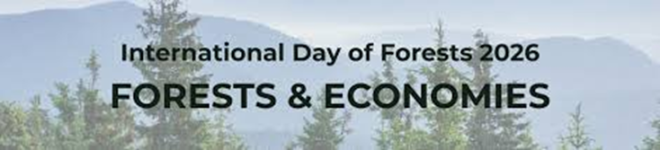
When is international Bush Day? 😎International Day of Forests on 21 March is a global day created by the United Nations General Assembly in 2012 to celebrate and raise awareness of the importance of all types of forests.
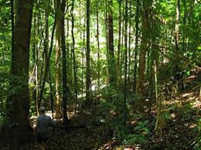
A forest is an ecosystem characterized by a dense community of trees. Hundreds of definitions of forest are used throughout the world, incorporating factors such as tree density, tree height, land use, legal standing, and ecological function.
Countries around the world are encouraged to organise activities involving forests and trees. These activities can be local, national and international efforts. The Secretariat of the United Nations Forum on Forests (UNFF) in collaboration with the Food and Agriculture Organization (FAO), supports countries and organisations to host these activities.
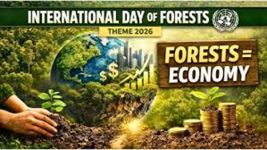
Forests and economies is the theme of the 2026 International Day of Forests, celebrating the essential roles of forests in driving economic prosperity. These roles go well beyond income and jobs from forest production and the trade of renewable raw materials and foods: forests also sustain family and community agriculture, enhance agricultural productivity, and safeguard healthy watersheds.
With many countries seeking to move toward a sustainable bioeconomy, forest products offer nature-based solutions as replacements for carbon-intensive materials while generating new economic opportunities. Forests are indispensable for healthy economies, today and for future generations.
Australia has a total of 133.6 million hectares of forest, which is equivalent to 17% of Australia's land area. Of this total forest area, 131.5 million hectares (98%) are Native forests, 1.82 million hectares are Commercial plantations and 0.24 million hectares are “Other Forest.”
Rainforests occur in all states and territories except South Australia and the Australian Capital Territory. Queensland has the largest area (57% of all rainforests), followed by Tasmania (18%), New South Wales (15%) and the Northern Territory (9%).
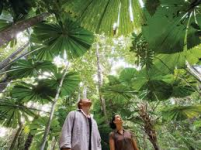
The largest rainforest in Australia, the Daintree Rainforest is over 1,200 square kilometres and is home to many animal and plant species not found anywhere else in the world.
Australian Action (as part of the global collective) is supported by Landcare Australia and Forestry Australia, with activities often focusing on local community engagement, Highlighting forests as vital for business, supplying products, and fostering innovation in sustainability.
Fun Facts about Forests:
- Forests are home to over 80% of all land-based species of animals, plants, and insects.
- Forest therapy is a real thing, with studies showing that walking among trees reduces blood pressure, lowers stress, and improves immunity.
- Australia's Daintree rainforest is home to the idiot fruit (Idiospermum australiense), a rare, ancient flowering plant.
- It takes roughly 450 mature trees to offset the annual carbon emissions of one person.
- Around 750 million people live inside forests worldwide, including 60 million indigenous people.
"The creation of a thousand forests is in one acorn"
"Someone's sitting in the shade today because someone planted a tree a long time ago.
“In nature, nothing is perfect and everything is perfect”
“The best time to plant a tree was 20 years ago. The second best time is now”
View attachment 35472
View attachment 35476
View attachment 35473
View attachment 35474
View attachment 35475


