And today is .......

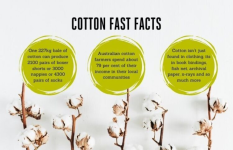
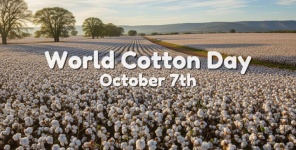
World Cotton Day sews onto our calendars each October 7, highlighting a crop that touches nearly every part of our daily lives.

Cotton is a natural fibre like no other.

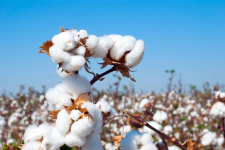
Cotton grows in warm fields across the globe, then travels into the shirts we wear, the sheets we sleep on, and the products we use.

Its journey supports millions, especially in farming communities. Small growers depend on it to feed their families and send their children to school. In some regions, it’s not just a plant—it’s a way to survive and move forward.

The day brings attention to the tough road many cotton farmers face. Markets can be unfair, and low prices often make hard work feel unrewarding. Groups like the United Nations and others push for better deals, smarter farming, and fair pay.

Their work aims to keep cotton farming alive and improve lives in the process. Behind each fluffy boll, there’s a human story, full of effort, hope, and the promise of something better.

This year’s WCD theme is "Cotton for Good", mirroring the international focus on trade, transformation, and partnership.

  • Local Engagement: Led by Cotton Australia, the day highlights the contributions of local growers, sustainability milestones, and textile innovations across New South Wales and Queensland.
  • Industry Impact: The Australian sector represents roughly 1,500 farms, contributing significantly to regional employment and sustainable farming practices (including major reductions in water and insecticide use over recent decades).
  • New South Wales grows the most cotton in Australia, producing roughly two-thirds of the national crop. Major growing regions include the Gwydir, Namoi, Macquarie, Lachlan, Murrumbidgee, and Murray river valleys.
  • Queensland (QLD): Accounts for the remaining 33% (one-third) of production. Major growing regions include the Darling Downs, St George, Dirranbandi, and the Central Highlands. (The biggest cotton farm in Australia is Cubbie Station, located near Dirranbandi in south-west Queensland.)
  • It takes about 5 to 6 months (roughly 150 to 180 days) for a cotton plant to grow from a planted seed and produce harvestable cotton.
  • A standard ginned lint bale of cotton in Australia is currently worth between AUD $640 and $650+ per bale.
  • Prices have rebounded significantly after sitting below a recent multi-year average of roughly AUD $529 per bale.
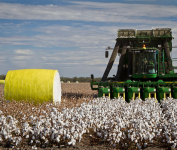
  • An Australian cotton bale has a standard industry weight of 227 kg. When harvesting, a single modern round module typically yields around 4 to 4.25 ginned lint bales, bringing the total raw value of one round module to approximately AUD $2,500 to $2,750.
  • Globally, it’s a poverty-alleviating crop in some of the least developed countries in the world, providing sustainable and decent employment to people across the globe. The ICAC estimates that each tonne of cotton lint provides full-time, year-round income to about five people.
  • A whopping 43% of cotton farmers worldwide are women, providing them with a much-needed source of income to support their families.
  • Cotton sequesters carbon! During production, cotton generates about 1.7 kg of greenhouse gases - but it absorbs 2.2 kg, meaning cotton literally removes carbon from the atmosphere as it grows.
  • It biodegrades quickly compared with synthetic alternatives, decreasing the amount of plastics entering our waterways and helping to keep our oceans clean.
  • It provides fibre but also food, for both humans and livestock.
  • As a crop that grows in arid climates, it thrives in places no other crop can.

Cotton is still central to major apparel categories, including T-shirts and trousers. But other fibres are growing faster. Cotton's share of global fibre demand has fallen from around 68% in 1960 to 21% in 2025, while synthetics now make up about 72%. Demand for cotton hasn't disappeared. The question is whether it can keep pace with a growing market.

Why we love cotton fabric:
  • Cotton is gentle on the skin and lets air circulate, which helps on warm, humid days. It also tends to drape rather than cling, so it feels relaxed and easy to wear. At night, breathable cotton sleepwear can help you stay comfortable while you sleep.
  • One of cotton's greatest strengths is its versatility. It can be found across our wardrobes and homes, from everyday clothing and towels to workwear. Good cotton garments are made to be lived in. They're durable and easy to care for, and they handle regular wear and washing, so you can enjoy them season after season.
  • Australian cotton is grown by farming families across the country, drawing on generations of knowledge and innovation. Choosing products made with Australian cotton helps create demand for locally grown fibre and supports the growers who produce it.
  • So as you refresh your wardrobe for spring and summer, take a moment to look beyond the style and check the fabric. Look for natural fibres like cotton, and keep an eye out for the Australian Cotton Mark, a simple way to spot products made with Australian cotton.

This spring and summer, choose Australian cotton and support the growers behind the fibre.


Fun Facts about Cotton:

  • It gets stronger when wet: Unlike paper or silk, which weaken in water, cotton fibres increase in strength when wet because water molecules form extra bonds with the plant's cellulose.
  • Not all cotton is white: Natural wild varieties can grow in striking colours like chocolate brown, red, green, and even tiger-stripe or leopard-spotted patterns.
  • Cotton plants grow fruit: After pollinating, cotton flowers turn into hard pods called bolls. When ripe, these bolls split open to reveal the fluffy white fibres.
  • Zero waste production: Every part of the harvested plant is utilized. The lint goes to textiles, seeds are pressed for oil or fed to livestock, and stalks are tilled back into the earth.


“Life is better when it's soft as cotton”

“Keeping it soft, natural, and classic”

“Stay fluffy, stay happy”

“Cotton chic, always stylish”


1791318754694.png


1791318778542.png


1791318798986.png


1791318837518.png
 
108 years ago, on October 5, 1918 at 6:05am, the Battle of Montbrehain, the last battle for the Australian Imperial Force on the Western Front, began.

Since August 8,1918, the First Australian Imperial Force had been under repeated attack as they moved from positions just east of Villers-Bretonneux, across the uplands of the Somme, participating in the capture of Peronne, then east to the storming of the Hindenburg Outpost Line near Bellenglise and finally to the breaking of the Hindenburg Line itself. At this late stage of the war, the 21st and 24th Battalions could only manage 240 riflemen in units which once boasted 1,000 rifles.

Following the successful breaching of the main Hindenburg Line between September 29 and October 1, the exhausted and depleted 3rd and 5th Australian divisions which took part in that attack were relieved by the 2nd Australian Division under Major General Charles Rosenthal. On October 4, the 2nd Australian Division, along with the 46th British Division was set the task of breaking through the final network of defences called the Beaurevoir Line.

The Beaurevoir Line was the last of a series of German defensive lines known collectively by the Allies as the Hindenburg Line. It was approximately eight kilometres to the rear of the main Hindenburg Line and consisted of thick barbed wire entanglements and machine and anti-tank gun bunkers. The Australians were to seize the village of Beaurevoir and the British the small village of Montbrehain. The Australian attack was a success but was stopped short of the village due to insecure flanks. The British captured Montbrehain but were unable to hold it.

At 6.05am on October 5, 1918, Australian troops of the 6th Brigade attacked Montbrehain. The objective was to establish a line running to the north and east of the town, which would secure the newly won Beaurevoir Line and act as a springboard for further attacks. Aggressive German resistance resulted in heavy casualties as the Australians advanced. Within three hours, the men of the 21st and 24th Battalions and the 2nd Pioneer Battalion had achieved their objectives but as they tried to consolidate their positions, they were subjected to heavy shelling and uncoordinated counter-attacks from three directions.

The Australians were pushed nearly 360 metres back through Montbrehain and many posts were driven to the north of the town but by mid-afternoon the front had stabilised at the boundaries, just short of the objective line to the north. The Australians suffered nearly 430 casualties, while inflicting hundreds of losses upon the enemy and capturing over 600 prisoners.

At the going down of the sun and in the morning,we will remember them.
🌺


1791360706469.png


1791360727497.png


1791360758447.png
 
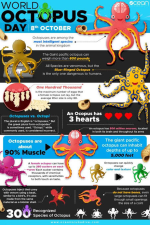
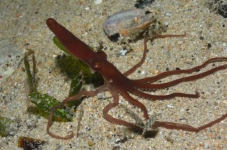
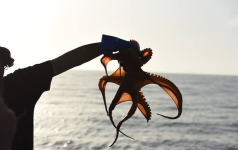
World Octopus Day sucks onto our calendars each October 8.

Australia's vast coastline is home to a diverse and fascinating range of octopuses. Like all octopuses, the species found in Australia are highly intelligent invertebrates.

An Octopus is a mollusc with eight limbs that lives in the ocean. They are related to squid and cuttlefish, as they are all cephalopods.

Octopuses have soft bodies and can alter their shape to squeeze through small gaps and hide from predators. Octopuses also have the incredible ability to change the colour and texture of their skin, so they can blend into their environment for camouflage.

Using their eight limbs, octopuses can either 'walk' across the ocean floor or swim through the water by sucking water into their bodies and shooting it out of a tube called a siphon. This can allow the octopus to move at fast speeds very suddenly, so they can escape from predators.

An Octopus has two eyes and a beak, and they have very good eyesight. Octopuses are also known for their intelligence, in fact they are one of the most intelligent invertebrates in the world as they demonstrate many behaviours.

Octopuses are some of the coolest, smartest creatures in the Australian ocean! They are famous for having eight long arms, three hearts, and blue blood. Because they have absolutely no bones in their bodies, they are super stretchy and can squeeze into tiny rock gaps like underwater acrobats.

Body Style: An octopus has a round, bag-like head and no bones at all. Because it is completely squishy, it can squeeze through a tiny hole as small as a coin.

Eight Arms: It has eight long arms covered in sticky suction cups. These suction cups do not just grab things—they also help the octopus taste and feel its food!

Three Hearts: Instead of one heart like us, an octopus has three hearts to pump its blue-coloured blood all around its body.

Magic Colour-Changing Skin:

An octopus can change its colour and texture in a split second. It blends in with rocks, sand, or coral so other animals cannot see it. This is called camouflage.

Inky Escape Pods: If an octopus gets scared by a bigger fish or a shark, it squirts a dark cloud of ink into the water. This acts like a magic smoke screen, confusing the enemy while the octopus swims away fast.

Nine Brains: Octopuses have one main central brain in their head, but they also have a mini-brain inside each of their eight arms! This means their arms can taste, feel, and move all on their own.

Super Smart: Scientists have watched octopuses solve puzzles, figure out mazes, and even unscrew jars to get their dinner.

Our more common octopus species are:
  • Blue-Ringed Octopus: Tiny (around 10–12 cm) yet notoriously venomous, carrying tetrodotoxin that can be fatal to humans, found in tidal pools and shallow reefs across Australia. They display brilliant, flashing blue rings only when threatened. While shy and non-aggressive, they carry a neurotoxin that is deadly to humans, meaning they should never be handled.
  • Pale Octopus: A temperate shallow-water species common in southern waters like Victoria.
  • Maori Octopus: The largest octopus species in Australia, with arms that can reach up to 3 meters in length. They are powerful predators found in the southern, cooler waters of the continent.
  • Common Sydney Octopus: Found on intertidal rocky shores and in the ocean. It is more commonly associated with rocky reef habitats during the breeding season but tend to spend a considerable portion of their life in soft-sediment habitats. This species grows up to an 80 cm body length and a 2-metre arm span.
  • Southern Sand Octopus: Found along the southern coast, this unique species is an expert at rapidly burrowing into the sand to hide from predators.

They mainly eat crabs and crayfish. The female octopus produces one egg mass and dies soon after the eggs have hatched. They explore with their arms and suckers. The suckers can taste the difference between sweet, sour and bitter, and can feel if something's rough or smooth. They are closely related to squid and cuttlefish, but are considered the most intelligent of the bunch. For camouflage they can change both their texture and colour.

They can be found across intertidal rocky shores, shallow reefs, seagrass beds, and soft-sediment ocean floors.

Sites in Jervis Bay (such as Octopolis and Oclantis) show that Gloomy Octopuses gather in groups of 2 to 15 around piles of shells and rocks to mate and interact, revealing more social behaviour than previously understood.

Like other cephalopods, they possess extraordinary problem-solving skills, remarkable camouflage abilities (changing both colour and texture), and decentralized nervous systems where two-thirds of their neurons reside in their arms.

Our Aussie octopuses are carnivores and nocturnal hunters that primarily feed on crabs, shrimp, small fish, and sea snails. They use a hard beak - hidden right in the middle of their arms - that looks just like a parrot's beak to crack open crunchy crab shells!

They are masters of disguise, able to change both their skin colour and texture in seconds to blend in with seaweed or rocks.

Most species only live for about 1 to 2 years, with females passing away shortly after their eggs hatch.

We’re so lucky to have octopuses as part of our amazing sea-life.


Fun Facts about Octopus:
  • The Main Heart Stops When Swimming: The central circulating heart stops beating when they swim, which is why they prefer crawling along the ocean floor.
  • No Bones: With zero bones in their bodies, an octopus can squeeze through any opening as long as its hard, parrot-like beak can fit through.
  • Taste with Suckers: Each sucker on an octopus arm is covered in chemo-receptors, letting them "taste" whatever they touch.


"I'm not hiding, I'm strategically camouflaged"

“Ink-redible”

“Hug like an octopus, laugh like a human”

“Ink before you leap”


1791405358015.png


1791405372776.png


1791405387182.png
 
International Beer and Pizza Day serves up on our calendars each October 9, that glorious day when we highlight that meant-to-be-combo of a hot, cheesy pizza in tow with a cold, refreshing brew.

It’s pure food science! The bubbles and crispness in beer act as a fantastic palate cleanser, cutting through the rich cheese and savory toppings of the pizza with every sip. Sometimes the malt sweetness in many beers perfectly complements the sweetness of the tomato sauce and the toasted flavour of the pizza crust. Occasionally, the bitterness from hops in beers like an IPA provides a wonderful contrast to the saltiness of pepperoni, sausage, or extra cheese. They don’t just coexist; they make each other better!

Pizza and beer; a match made in heaven, that many weekends revolve around. Casual catch-ups, footy matches, and backyard hangs call for food that doesn't require cutlery or plates.

And this always-winning combo fits perfectly into our laid-back social and pub traditions, and not just because you can eat pizza with one hand, leaving the other hand free for beer

Ordering delivery pizza and grabbing cold beers from the fridge requires minimal effort and compared to dining out at upscale restaurants, sharing a few pizzas and some beers offers a budget-friendly way to feast with friends.

Grab a slice, take a bite, grab your coldie, take a sip, and repeat. There is no greater pleasure.

Why They Taste Good Together:
  • Palate Cleanser: The bubbles and carbonation in beer wash away the heavy grease and cheese from the pizza.
  • Shared Yeast: Both pizza dough and beer use yeast, which gives them natural, matching flavours.
  • Refreshing each bite: This constant palate cleansing makes every new slice taste as fresh and flavourful as the first.
  • Flavour Balance: The bitter and crisp taste of beer cuts through the rich, salty food.
  • Aiding digestion: The bubbles and carbonation in an ice-cold beer stimulate your oesophagus and help your body digest heavy dairy.
Flavour and Ingredients:
  • Shared roots: Both pizza dough and beer are made from cereal grains (wheat and barley), meaning they share bready, toasted, and caramelized flavour notes.
  • Flavour contrasts: The crisp bitterness of an IPA, for example, counters toppings like spicy pepperoni, while malt sweetness matches the baked crust.
  • Umami boost: The savory umami in tomato sauce and melted cheese blends with the fermented depth of beer for a deeply satisfying taste.
Today’s a great day to maybe try some classic pairings. Think of it as a flavour adventure, like ….

The Classic Pepperoni + IPA: The bold, hoppy bitterness of an IPA stands up to the spicy, savory flavor of pepperoni, creating a powerful and satisfying taste combination.

The Elegant Margherita + Pale Ale or Pilsner: A crisp, clean pilsner or a balanced pale ale won't overpower the fresh basil, mozzarella, and tomato. The malt in the ale beautifully complements the pizza's toasty crust.

The Meaty Supreme + Stout or Porter (or even your home-brew!): A dark, rich stout or porter with notes of coffee and chocolate provides a robust backdrop for hearty toppings like sausage, bacon, and mushrooms.

Pick up a slice of Mary Had a Little Lamb pizza, topped with house Napoli sauce, mozzarella, braised lamb shoulder, Meredith goats’ cheese, spinach, onion and pine nuts; or huge cheesy stuffed crust New York pizza with salami, washed down by a James Squire One Fifty Lashes Pale Ale.

Grab an icy brew like Sicilian Messina Lager, paired with the Locale special pizza – San Marzano, fior di latte, salami, gorgonzola and mascarpone; or perhaps Rustica, with potato, Italian sausage, rosemary, gorgonzola and truffle oil.

Regina Margherita, with cherry tomatoes, buffalo mozzarella, basil, Parmesan and olive oil, on a white base may entice; or perhaps say buon appetito to a slice of Sofia Loren – prawns, fior di latte, olive oil, rocket and shaved Parmesan, on a tomato base.

How about frutti di mare on a pizze rosse base, with prawns, calamari, mussels, tomato, mozzarella and parsley?

Don't drink alcohol? No problem! The world of non-alcoholic craft beers has exploded, offering fantastic IPAs, stouts, and lagers that provide the same pairing power without the alch-buzz.

Sydney’s beer and pizza scene, (like just about anywhere across our great southern land), ranges from heritage pubs with massive craft tap walls to trendy transit-hub slice shops hidden in sandstone arches.

Because the "best" combination depends entirely on what kind of vibe, crust, and brew you are chasing, personal preference, or just being with your mates, wins out every time.

Yeppers, today is all about a proper Aussie tradition.
As they say: "Everyone's a winner!"
What’s not to love??


“In Crust We Trust – but trust more with your favourite pour”

"Pizza alone won't fill the emptiness of your soul. You'll also need beer"

"To-do list: 1. Get pizza. 2. Get beer. 3. Forget the rest of the list"

“Dare I say it, this slice can't be topped but it can be washed down”


1791489971783.png


1791489986320.png


1791490001460.png


1791490018140.png
 
International Beer and Pizza Day serves up on our calendars each October 9, that glorious day when we highlight that meant-to-be-combo of a hot, cheesy pizza in tow with a cold, refreshing brew.

It’s pure food science! The bubbles and crispness in beer act as a fantastic palate cleanser, cutting through the rich cheese and savory toppings of the pizza with every sip. Sometimes the malt sweetness in many beers perfectly complements the sweetness of the tomato sauce and the toasted flavour of the pizza crust. Occasionally, the bitterness from hops in beers like an IPA provides a wonderful contrast to the saltiness of pepperoni, sausage, or extra cheese. They don’t just coexist; they make each other better!

Pizza and beer; a match made in heaven, that many weekends revolve around. Casual catch-ups, footy matches, and backyard hangs call for food that doesn't require cutlery or plates.

And this always-winning combo fits perfectly into our laid-back social and pub traditions, and not just because you can eat pizza with one hand, leaving the other hand free for beer

Ordering delivery pizza and grabbing cold beers from the fridge requires minimal effort and compared to dining out at upscale restaurants, sharing a few pizzas and some beers offers a budget-friendly way to feast with friends.

Grab a slice, take a bite, grab your coldie, take a sip, and repeat. There is no greater pleasure.

Why They Taste Good Together:
  • Palate Cleanser: The bubbles and carbonation in beer wash away the heavy grease and cheese from the pizza.
  • Shared Yeast: Both pizza dough and beer use yeast, which gives them natural, matching flavours.
  • Refreshing each bite: This constant palate cleansing makes every new slice taste as fresh and flavourful as the first.
  • Flavour Balance: The bitter and crisp taste of beer cuts through the rich, salty food.
  • Aiding digestion: The bubbles and carbonation in an ice-cold beer stimulate your oesophagus and help your body digest heavy dairy.
Flavour and Ingredients:
  • Shared roots: Both pizza dough and beer are made from cereal grains (wheat and barley), meaning they share bready, toasted, and caramelized flavour notes.
  • Flavour contrasts: The crisp bitterness of an IPA, for example, counters toppings like spicy pepperoni, while malt sweetness matches the baked crust.
  • Umami boost: The savory umami in tomato sauce and melted cheese blends with the fermented depth of beer for a deeply satisfying taste.
Today’s a great day to maybe try some classic pairings. Think of it as a flavour adventure, like ….

The Classic Pepperoni + IPA: The bold, hoppy bitterness of an IPA stands up to the spicy, savory flavor of pepperoni, creating a powerful and satisfying taste combination.

The Elegant Margherita + Pale Ale or Pilsner: A crisp, clean pilsner or a balanced pale ale won't overpower the fresh basil, mozzarella, and tomato. The malt in the ale beautifully complements the pizza's toasty crust.

The Meaty Supreme + Stout or Porter (or even your home-brew!): A dark, rich stout or porter with notes of coffee and chocolate provides a robust backdrop for hearty toppings like sausage, bacon, and mushrooms.

Pick up a slice of Mary Had a Little Lamb pizza, topped with house Napoli sauce, mozzarella, braised lamb shoulder, Meredith goats’ cheese, spinach, onion and pine nuts; or huge cheesy stuffed crust New York pizza with salami, washed down by a James Squire One Fifty Lashes Pale Ale.

Grab an icy brew like Sicilian Messina Lager, paired with the Locale special pizza – San Marzano, fior di latte, salami, gorgonzola and mascarpone; or perhaps Rustica, with potato, Italian sausage, rosemary, gorgonzola and truffle oil.

Regina Margherita, with cherry tomatoes, buffalo mozzarella, basil, Parmesan and olive oil, on a white base may entice; or perhaps say buon appetito to a slice of Sofia Loren – prawns, fior di latte, olive oil, rocket and shaved Parmesan, on a tomato base.

How about frutti di mare on a pizze rosse base, with prawns, calamari, mussels, tomato, mozzarella and parsley?

Don't drink alcohol? No problem! The world of non-alcoholic craft beers has exploded, offering fantastic IPAs, stouts, and lagers that provide the same pairing power without the alch-buzz.

Sydney’s beer and pizza scene, (like just about anywhere across our great southern land), ranges from heritage pubs with massive craft tap walls to trendy transit-hub slice shops hidden in sandstone arches.

Because the "best" combination depends entirely on what kind of vibe, crust, and brew you are chasing, personal preference, or just being with your mates, wins out every time.

Yeppers, today is all about a proper Aussie tradition.
As they say: "Everyone's a winner!"
What’s not to love??


“In Crust We Trust – but trust more with your favourite pour”

"Pizza alone won't fill the emptiness of your soul. You'll also need beer"

"To-do list: 1. Get pizza. 2. Get beer. 3. Forget the rest of the list"

“Dare I say it, this slice can't be topped but it can be washed down”


View attachment 44940


View attachment 44941


View attachment 44942


View attachment 44943

Another reason to thank Europe for its wide and wonderful history.
 
Back
Top