Marella Jube
Active member
I understand HBG, as majority owners, can do as they please but they should also be open to challenge given the lack of success in their tenure to date.
Follow along with the video below to see how to install our site as a web app on your home screen.
Note: This feature may not be available in some browsers.

see u made it on the board , congratsHBG showed their hand, they are all in now with the board named & have more than just external power on the Wests Tigers decisions.
If we get success they will deserve credit but if we don’t then fully expect heads to roll at the top especially as the majority decision makers.
Shows the true motives of the initial decision made and Daniel’s media stunt was just that a stunt.
He’s a politician. They always target a lesser issue to distract from a bigger problem. Seems like they are doing something.PVL totally missed the mark in terms of what he thought the main issue with the fanbase was, he stated that wests and Balmain will always be a part of Wests Tigers fabric. We don't really give a rats about either of them. The issue is the ownership and their missmanagement of the club. So when PVL went in, he may very well have gone in to fix a non issue.

Not sure what you mean. The funding is coming from government, not Wests Tigers.hmm, did you just out a forum member?
Anyway, yes it has been on the agenda for ages.
What I suspect may have surprised Burgess and HBG would be the pricetag
The board committed to 30m? (combined) funding for Leichaert.
Campbelltown though came in at 50m.
I suspect HBG would have thought Ctown would be the minor stadium and they baulked at paying that much (with a stack of that money subsidsed by the government).
Ultimately...
The whole stadium thing sucks. Campbelltown has Raby, Airds, Claymore and a stack of poor suburbs and infrastructure needs. I back the Tigers, but we don't need 2x stadiums. That money could be way better spent, but people need to be re-elected so we waste it here.
Stuff the upgrades, go back to hills and ovals!
We have to bite the bullet and have 1 stadium and tbh a new shared stadium makes sense. The NRL should show some guidance and make a ruling as to new or upgraded grounds standards and expectations.hmm, did you just out a forum member?
Anyway, yes it has been on the agenda for ages.
What I suspect may have surprised Burgess and HBG would be the pricetag
The board committed to 30m? (combined) funding for Leichaert.
Campbelltown though came in at 50m.
I suspect HBG would have thought Ctown would be the minor stadium and they baulked at paying that much (with a stack of that money subsidsed by the government).
Ultimately...
The whole stadium thing sucks. Campbelltown has Raby, Airds, Claymore and a stack of poor suburbs and infrastructure needs. I back the Tigers, but we don't need 2x stadiums. That money could be way better spent, but people need to be re-elected so we waste it here.
Stuff the upgrades, go back to hills and ovals!

I thought it wasn't all Government. <could be wrong>.Not sure what you mean. The funding is coming from government, not Wests Tigers.
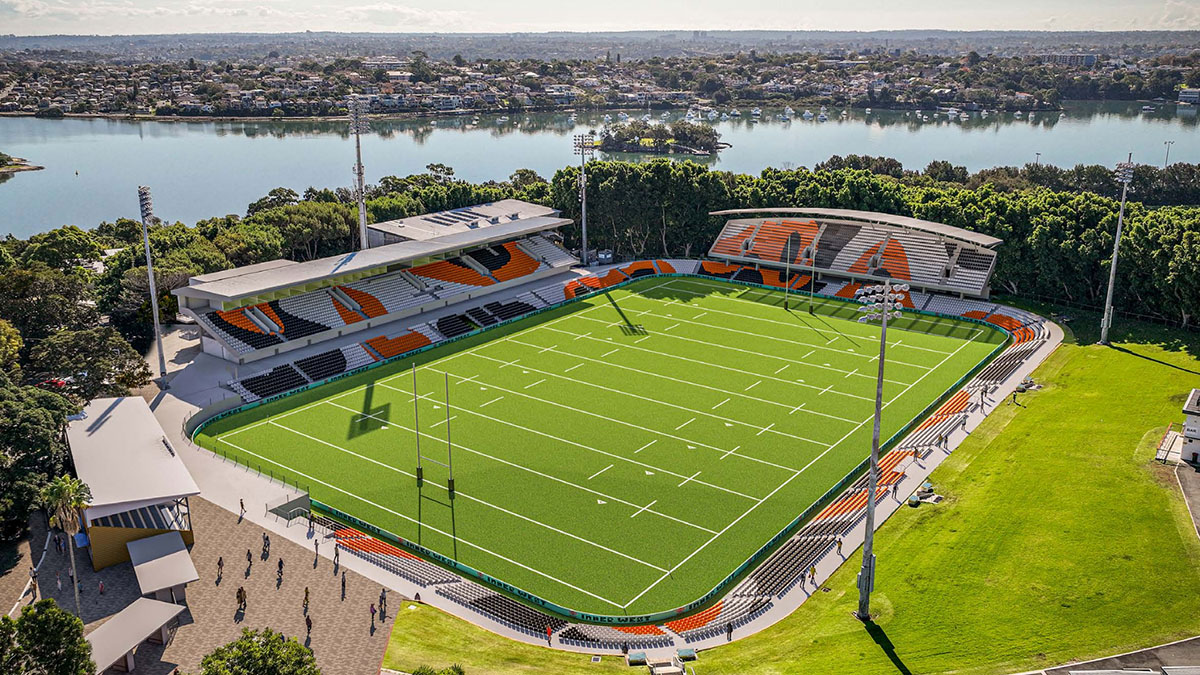
 www.austadiums.com
the stadium gripe was about Richo doing 15 year lock ins ,I thought it wasn't all Government. <could be wrong>.
Let me check.
Right, we pay nothing. 40m from federal/state government and 10m from the council.
Final designs revealed for Leichhardt Oval upgrade | Austadiums
The final designs for the long-awaited redevelopment of Leichhardt Oval have officially unveiled, with work to commence following the 2026 season.
...
My god how petty can these guys be.
Why is that dumb?the stadium gripe was about Richo doing 15 year lock ins ,
thats really dumb
Looks the same as it is nowI thought it wasn't all Government. <could be wrong>.
Let me check.
Right, we pay nothing. 40m from federal/state government and 10m from the council.
Final designs revealed for Leichhardt Oval upgrade | Austadiums
The final designs for the long-awaited redevelopment of Leichhardt Oval have officially unveiled, with work to commence following the 2026 season.
...
My god how petty can these guys be.
did they think about incoming future sponsorships. Liability's etcWhy is that dumb?
If you’re stumping up that much cash you’d want a commitment to achieve a return on your investment I would have thought.
Unfortunately I think HBG “do as they please” but the HBG WT board members are obligated to make decisions in the best interests of Wests Tigers, something they have proven incapable of over a number of years and identified by the successful outcomes of the independent board over the last 12 months.I understand HBG, as majority owners, can do as they please but they should also be open to challenge given the lack of success in their tenure to date.



Great post.1. What directors of a JV legally owe
Once someone sits on the board of a joint venture company, they owe duties to the JV itself, not to whoever appointed them.
Under Australian law (Corporations Act + general law), directors must:
Act in the best interests of the JV
Act for a proper purpose
Avoid misuse of position or information
Manage conflicts appropriately
That duty does not change just because:
They are an employee of a shareholder, or
They were nominated by the parent company
So you’re absolutely right on the principle:
> If acting in the parent’s interests conflicts with the JV’s interests, the director must put the JV first.
---
2. Does that mean employee-directors are “in conflict”?
Technically: yes, a structural conflict exists
Because:
As employees, they owe duties to their employer
As directors, they owe duties to the JV
Those interests will not always align
This is often called a “potential” or “situational” conflict, not an automatic breach.
Practically: this is extremely common
Most JVs are set up exactly like this:
Each shareholder appoints directors
Many of those directors are senior employees
Everyone knows they bring a shareholder perspective
Courts and regulators accept this reality — as long as it’s managed properly.
---
3. How this conflict is usually managed (and made lawful)
Well-drafted JV structures rely on several safeguards:
a) Disclosure
Employee-directors must:
Disclose their employment relationship
Disclose specific conflicts when they arise (e.g. a contract between JV and parent)
b) Recusal
When there’s a direct conflict (e.g. pricing, disputes, enforcement of shareholder rights):
The conflicted director may need to abstain from discussion or voting
c) Shareholder agreement protections
JV agreements often:
Explicitly allow nominee directors
Acknowledge their dual roles
Define when they can receive/share information with the parent
Set reserved matters requiring shareholder (not board) approval
d) Board composition balance
Having:
Independent directors, or
Equal representation from JV partners
reduces the risk that the board becomes a proxy battleground for parents.
---
4. What directors cannot do
Even with all the above, an employee-director cannot:
Advance the parent’s interests at the JV’s expense
Use JV information to benefit the parent improperly
Sabotage the JV to improve the parent’s negotiating position
Treat themselves as a “delegate” rather than an independent decision-maker
Courts are very clear on this point.
---
5. So are they “meant” to act against their employer if required?
Uncomfortably, yes.
If a genuine conflict arises:
The director must prioritise the JV
Or step aside from the decision
Or, in extreme cases, resign from one role
That tension is real, and it’s one reason JV boards can be tricky.
---
6. Why companies still do it anyway
Because employee-directors:
Understand the business deeply
Can move faster than independents
Ensure the shareholder’s investment is properly overseen
The legal system accepts this as long as governance is tight.
---
Bottom line
✔️ Yes, there is an inherent conflict risk
✔️ Yes, JV directors owe duties to the JV, not their employer
❌ No, this does not automatically make the arrangement improper or unlawful
✅ The key issue is how conflicts are disclosed and managed
No I’m not stirring. I explained why I thought they agreed to the term. Richo is good but he’s not that good to do a completely one sided deal.did they think about incoming future sponsorships. Liability's etc
Your questioning because you think its maybe better , or stirrng
It would be a great site seeing an NRL game played at a local footy field, it'd be packed to the raftersStuff the upgrades, go back to hills and ovals!
Agree, great post @ boonboon.Great post.
Everything you've mentioned above boonboon, who has the power to make sure that a JV is governed as per above?


