View attachment 47106
View attachment 47125
Here's to the remarkable
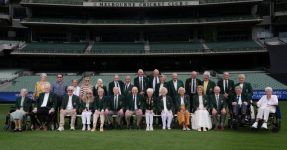
Melbourne 1956 Australian Olympic Team
The true originals who put Australia on the map as a sporting nation.
Today we celebrated their remarkable legacy on the hallowed turf of the MCG to mark the
70th anniversary of Australia's 1st home Games.
The
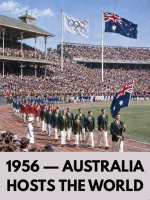
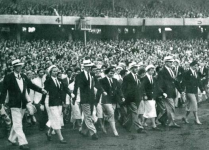
1956 Summer Olympics (Games of the XVI Olympiad) took place in Melbourne, Australia, from 22 November to 8 December 1956, marking the first time the Olympic Games were held in the Southern Hemisphere.
Key Facts & Logistics
Dates: 22 November – 8 December 1956 (equestrian events were held earlier in Stockholm, Sweden, from 11–17 June due to Australian horse quarantine rules).
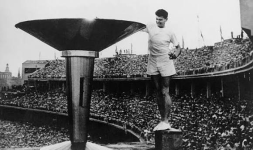
- Main Stadium: Melbourne Cricket Ground (MCG), with the cauldron lit by Ron Clarke.
- Scale: 3,314 athletes across 151 events and 17 sports.
- Australia's Haul: Finished 3rd overall with 35 medals (13 gold, 8 silver, 14 bronze).
Highlights & Legacy
- The "Friendly Games": Earned the nickname for local hospitality and introduced the tradition of athletes from all nations marching together in the closing ceremony.
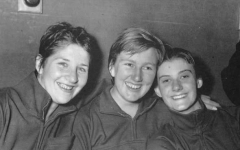
- Australian Breakout Stars: Launched major careers for Betty Cuthbert (3 gold), Dawn Fraser, Murray Rose, and Shirley Strickland.
Geopolitical Tensions: Overcast by the Hungarian Revolution—including the heated "blood in the water" water polo match—as well as the Suez Crisis and cold-war boycotts.
70th Anniversary: Celebrations and reunions—including events at the MCG with surviving 1956 Olympians such as Dawn Fraser—mark the 70-year milestone in November 2026.
View attachment 47104
View attachment 47107
View attachment 47108
.......................... and wait, there's more:
10 INTERESTING FACTS ABOUT THE 1956 OLYMPICS GAMES
The two Sundays of the Games were competition rest days. In that era, including the British Empire and Commonwealth Games, there was no competition on Sundays.
As the crowd dispersed Ron Clarke, who had lit the flame at the opening ceremony, was in the medical centre receiving treatment for burns. At a post ceremony press conference, he displayed a hand to shoulder bandage of his arm. Clarke, his girlfriend and parents headed off home – by train!
Prices for tickets to the opening ceremony varied from £ 3/4/-, most expensive, down to the cheapest of £ -/9/-. That is equal to $6.40 to 90 cents. Taking into 70 years of inflation those prices today would be $100 down to $14.
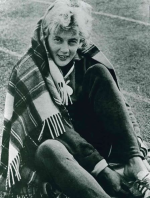
At age 18 years Betty Cuthbert remains the youngest Olympic 200m champion (men or women).
The newspaper headline after Betty Cuthbert won the Olympic 200m title, her second gold, read “Betty Cuthbert - Golden Girl.” Betty said: “I’m still not sure whether it was because of the colour of my hair, the gold medal I’d won or a combination of both. But it was a pseudonym I grew to be very, very proud of,” recalled Cuthbert.
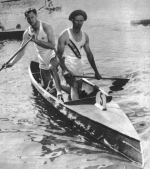
Using a boat built in their lounge room, Dennis Green and Walter Brown, competing in the men’s K2 10,000m, and won Australia’s first Olympic canoeing medal. Australia would wait 24-years, until 1980, for their second medal and have since won a medal at every Games.
Baseball was one of the exhibition sports selected for the 1956 Olympics. The match was between an American and an Australian team. The American team comprised military players stationed in the Far East. The American’s won 11-5.
The second demonstration sport of the Melbourne Olympics was an Australian Rules Football Game on the MCG. Future Olympic basketball legend, Lindsay Gaze, was a reserve for the game and his brother Barry, was a centre.
Australia placed third on the Athletics medal table behind America and the Soviet Union.
Australia dominated swimming and easily topped the medal table: Australia 8G/4S/2B = Total 14; USA 2G/4S/5B = Total 11, Japan 1G/4S/0B = Total 5