Now For Something Completely Different

  • Thread starter Thread starter Cobarcats
  • Start date Start date
Our overlords are here, and it's scary, not just for our current generations, but more importantly, for our future generations.

This is a fight between a human (albeit not a professional fighter) and a robot. The robot was controlled via a handheld console, however, Chinese manufacturers will use AI to control their robots going forward.

Welcome to the apocalypse.



Screenshot 2026-09-23 at 4.42.46 am.png
 
For 26 years, Satoru Takaba paid rent on an apartment he never set foot in, determined to preserve the exact scene where his wife, Namiko, was murdered in 1999. With no leads and the investigation stalled, the case went cold but Satoru refused to move on. He believed that one day science would advance enough to reveal the truth hidden in that room.
Month after month, year after year, he kept the lease. He left the bloodstains untouched, the footprints undisturbed, and the apartment frozen in time like a sealed time capsule. While most families try to escape the place where tragedy struck, Satoru held on, convinced that patience and technology would eventually expose the killer.
In late 2025, his faith finally paid off. Investigators returned with modern DNA tools and analyzed the preserved evidence that had sat untouched for decades. The results pointed to Kumiko Yasufuku, Satoru’s former high school classmate, who had harbored a long‑standing grudge after he rejected her romantic advances. After 26 years of waiting, Satoru’s devotion brought justice to his wife’s memory.


1790383715504.png
 
For 26 years, Satoru Takaba paid rent on an apartment he never set foot in, determined to preserve the exact scene where his wife, Namiko, was murdered in 1999. With no leads and the investigation stalled, the case went cold but Satoru refused to move on. He believed that one day science would advance enough to reveal the truth hidden in that room.
Month after month, year after year, he kept the lease. He left the bloodstains untouched, the footprints undisturbed, and the apartment frozen in time like a sealed time capsule. While most families try to escape the place where tragedy struck, Satoru held on, convinced that patience and technology would eventually expose the killer.
In late 2025, his faith finally paid off. Investigators returned with modern DNA tools and analyzed the preserved evidence that had sat untouched for decades. The results pointed to Kumiko Yasufuku, Satoru’s former high school classmate, who had harbored a long‑standing grudge after he rejected her romantic advances. After 26 years of waiting, Satoru’s devotion brought justice to his wife’s memory.


View attachment 44415

He has my full respect and i hope he can enjoy the rest of his life after his terrible loss.
 
Moving through the jungle unseen, watching the enemy and reporting back, they became known to Japanese soldiers as the Green Shadows.

Soldiers of the Papuan Infantry Battalion (PIB) ranged ahead of Australian forces during the Second World War. In the dense jungle of New Guinea, their scouting and knowledge was vital.

Their first clash came on 23 July 1942, when 35 PIB soldiers ambushed Japanese troops advancing towards Kokoda. They went on to fight alongside Australians through the Kokoda campaign.

The PIB proved so valuable that more battalions were raised, and by 1945 they formed the Pacific Islands Regiment. Around 3,500 Papua New Guineans served in the regiment, fighting in almost every Australian campaign in the area.

At least 51 died. Today their names are on the Roll of Honour here at the Australian War Memorial.
The regiment lives on as the Royal Pacific Islands Regiment, the core of the Papua New Guinea Defence Force.


1790385115469.png
 
WW2 Lifesavers.

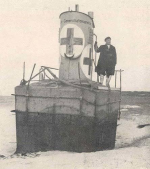
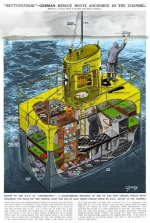
At first glance, it looks like little more than a giant yellow fishing float bobbing in the sea. In reality, it was a German Luftwaffe rescue buoy, designed to give downed airmen a fighting chance of survival in the English Channel.

Anchored securely in position, the buoy contained a surprisingly well-equipped shelter. Despite having only around four square metres of floor space, improved versions could accommodate several airmen and contained bunks, dry clothing, food, drinking water, first-aid supplies and emergency lighting.
There were even cigarettes, games, alcohol and chocolate to help exhausted aircrew while they waited to be rescued.

Painted bright yellow and prominently marked with Red Cross symbols, these strange little shelters became a distinctive feature of the Channel during the Battle of Britain.

Imagine ditching in the freezing Channel and then spotting one of these!


1790385511910.png


1790385529449.png
 
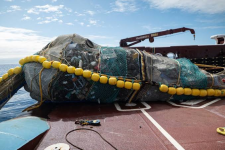
What started as one teenager’s idea is now pulling millions of kilograms of plastic out of the world’s oceans.
Founded in 2013 by Dutch inventor Boyan Slat, The Ocean Cleanup now deploys massive floating barriers across polluted waters, including the Great Pacific Garbage Patch, where ocean currents naturally concentrate plastic waste.
The project also uses solar-powered Interceptors in rivers to stop trash before it ever reaches the sea.
So far, the organization says it has removed more than 60 million kilograms of plastic from oceans and waterways worldwide.
What began as one young inventor’s ambitious idea has grown into a global operation involving more than 150 engineers and scientists, all working toward an even bigger goal: reducing floating ocean plastic by 90% by 2040.
60+ million kilograms removed. 150+ engineers and scientists. One mission: stop plastic before it takes over our oceans


1790388314606.png
 
Switzerland’s largest supermarket chain, Migros, follows an unusual business philosophy established by founder Gottlieb Duttweiler nearly a century ago.
The company does not sell alcohol or tobacco, and when members voted on whether to change the alcohol policy in 2022, they chose to keep the ban.

Migros is also owned by more than 2 million members rather than outside investors.
Instead of paying dividends, Migros reinvests its profits into the business and customers.

When profits exceed 5%, the company says the surplus is used to lower prices, while around 1% of annual revenue supports social and cultural projects across Switzerland, including education and the arts.


1790388479086.png
 
On December 31, 2016, a Michigan farmer known as Bob slipped while stepping outside his home and suffered a severe neck injury, leaving him paralyzed in freezing temperatures.

Unable to reach help, he lay in the snow for nearly 20 hours while his golden retriever, Kelsey, stayed beside him. She lay across his body for warmth, licked his face and hands to keep him conscious, and barked continuously through the night.

By morning, Bob had lost his voice and eventually became unconscious, but Kelsey continued barking until a nearby neighbor heard her.
Bob was rushed to the hospital, where doctors discovered a serious spinal injury and dangerously low body temperature. He survived emergency surgery, and his surgeon credited Kelsey’s warmth with helping prevent frostbite.


1790388690794.png
 
In 2017, Frankfurt police made an unusual discovery when they found a car that had been missing since 1997. The vehicle had remained untouched for nearly two decades, leaving authorities puzzled by its long disappearance.
The mystery became even stranger when they traced the car back to its 76-year-old owner. He reportedly had simply forgotten where he had parked it almost 20 years earlier.

The 76-year-old German man originally filed a theft report two decades prior when he couldn't remember where he had parked his Volkswagen Passat.
The vehicle sat completely untouched and hidden from view inside an old industrial building's garage for 20 years.
It was only uncovered when a demolition crew cleared the building and found the vehicle obstructing their work.
After tracking down the owner using the VIN and license plates, municipal police drove the man and his daughter to the site for a bittersweet reunion.

Due to 20 years of neglect, rust, and fluid breakdown, the car was no longer functional and was ultimately sent to the scrap heap.


1790389189084.png
 
It truly is an incredible engineering marvel and the ultimate bucket-list journey for train enthusiasts. Spanning a massive 9,289 kilometres (5,772 miles), the classic route connects Moscow to Vladivostok, crossing eight time zones and taking about seven full days of non-stop travel to complete.


1790390195806.png
 
Back
Top