And today is .......

Today is 38 years since I realised that this is the wrong day to celebrate our national day, and that it should be January 1st. The day we became Australia, a federation of states and territories.


Mate what I understand is that when they changed it to 26 January it was because in the late 1940's when they changed everyone from British Citizens in Australia to Australian citizens was on the 26 of January

That's why they have alot of citizenship ceremonys on that day
 
I consider myself first nations as I was born here!

Couldn't disagree more.

This is our history and when Australia was born.

I am deeply offended by my flag being burnt by people that rely on my country to feed them.

I, as a minimum 3rd generation Australian from a single grandparent born in the 19th century and multiple of that from others, all immigrants of British descent, have not mentioned the flag. That said, I have no issues with anyone burning it or any other flag for that matter as an expression of speech.

Those are the freedoms that my forbears fought for at Gallipoli and elsewhere.
 
Mate what I understand is that when they changed it to 26 January it was because in the late 1940's when they changed everyone from British Citizens in Australia to Australian citizens was on the 26 of January

That's why they have alot of citizenship ceremonys on that day

I am all for those citizenship ceremonies, which they would continue to carry out and celebrate on any day that is designated as Australia day.

For a somewhat parallel, the US celebrate on July 4th, not the day that the Mayflower arrived some 150 years earlier. As such, federation is most appropriate for mine, at least until we become a republic, which would become another option and probably the best.

Plus, like Anzac day in recent years (for NSW, VIC and the ACT), it is celebrated on that date without a replacement Monday public holiday when it falls on a weekend.
 
I, as a minimum 3rd generation Australian from a single grandparent born in the 19th century and multiple of that from others, all immigrants of British descent, have not mentioned the flag. That said, I have no issues with anyone burning it or any other flag for that matter as an expression of speech.

Those are the freedoms that my forbears fought for at Gallipoli and elsewhere.
It’s absolutely atrocious to burn our national flag , we should be striving to be a nation for All of us to be proud of moving forward .We cannot change the past and does anyone think changing the date will stop the shit show , maybe change the name of the country next
 
It’s absolutely atrocious to burn our national flag , we should be striving to be a nation for All of us to be proud of moving forward .We cannot change the past and does anyone think changing the date will stop the shit show , maybe change the name of the country next

Agreed, we cannot change the past, but we can learn from it, with a process of honest government led education system at the forefront to move forward. Germany and Japan are perfect examples.

Flag wise, the opposite is a nation that rips that apart, along with pre-eminent institutions such as the Smithsonian and Kennedy Center which is happening as I write. A nation that righteously fought a civil war against enslavement in the 1860's, then belatedly, for their civil rights a century later. Only to have the first ever Confederate ones enter the Capitol building in 2021, flying alongside others emblazoned with the name of a fascist as part of an insurrection. Five years later we see masked agents of that authoritarian oligarchical regime murdering its citizens that are peacefully protesting to "stop the shit show" in their neighbourhoods.

Flags, dates and symbols, along with the history behind them are important, good and bad.
 
Last edited:
January 28


Data Privacy Day is securely locked in each year on 28 January.

In an increasingly interconnected world, safeguarding our digital footprint becomes paramount. Cherishing personal information ensures trust, security, and peace of mind for all.

Most people are unaware of and uninformed about how their personal information is being used, collected or shared in our digital society. Data Privacy Day aims to inspire dialogue and empower individuals and companies to take action.

This year’s Data Privacy Day theme, “Take control of your data” reminds us that protecting data online should be a priority for both individuals and organisations.

Our online habits create a profile of us, and no matter how much we try to restrict it, we can’t control every bit of information companies and organisations collect.

This information could include our health data, location details and even purchasing preferences.

Based on this data, companies and organisations can assume things about us like where we live and how much we earn. Sometimes this information can be sold to other companies.

As the line between our offline and online lives continues to blur, Data Privacy Day on January 28 is the little nudge we need at the beginning of each new year to make safeguarding our personal information a priority. Although we live in an increasingly digital world, most of us give little thought to data privacy until after our personal data has been compromised.

Our increased reliance on digital technologies to manage every facet of life necessitates the need to rethink what we share about ourselves, when and where we share it, and who we are sharing it with.

Data privacy is not the same thing as data security, although the two are intimately connected and intertwined. The analogy we like best that helps understand the difference describes data security like putting bars on windows to make it difficult for someone to burglarize your home. Data privacy is more like pulling down the window shades so no one can look inside to see what you are wearing, who lives with you, what you are cooking for dinner tonight, or what movie you are watching.

As end-users on the technology spectrum, few among us pay attention to data privacy beyond knowing not to share our passwords with anyone. We trust software and data services providers to be the guardians of the personal data they collect and require from us in exchange for the right to use their products and services. But the personal information collected by companies today is not regarded as private by default, with few exceptions.

The unpleasant truth is that most people who have access to our personal data do not need it. These digital strangers with legitimate access to our personal data are the very people we should be preventing from accessing our personal information because they do not need it. Data Privacy Day is an important wake-up call for anyone who is ‘on the grid,’ meaning, they use any type of digital device for any reason, and thinks having spam software and firewalls are keeping their data safe.

Data Privacy Day reminds us to treat personal information like money. It has value and we need to protect it as if our lives depended on it because sometimes, they do.

It’s never too late to control our data privacy. First and foremost, if we are not already diligently safeguarding our personal information, our mission, today, should we decide to accept it — and we should, is to begin taking data privacy seriously. Make the commitment today to learn one new thing each day about data privacy and then take the steps necessary to ensure the privacy of our personal information.

Take time today to research how all the digital devices connected to our personal “Internet of Things'' interconnect with each other and with the vast digital universe. This includes our smartphone, modems, TVs, cars, refrigerators, home heating and air conditioning systems, smoke alarms, baby monitors, and home alarm systems. All these digital devices make life easier to synchronize on our personal ‘internet of me.’

And how? Make sure your computer and mobile devices are running the latest version of operating systems and software. Regularly review and update your web browser’s privacy preferences, delete any cookies, and clear the cache. We each should create different passwords for each of our online accounts.

And we need to protect ourselves: Shred hard (paper) copies of invoices, financial records, tax documents, legal papers, magazine labels, envelopes, purchase receipts — any paper that has any information about you, because not all data thieves work on the internet. Hack before you get hacked, so to speak.


Fun Fact about Data Privacy:
  1. Nearly 80% of public domain data is analysed by enterprises. We will all be bombarded, either way.
  2. It’s very easy to contract a computer virus. Just turn on the computer and wait.
  3. By the time you finish reading this, another cyber-attack will have occurred and another one will have begun. The cycle never ends.


“Passwords are like underwear: change them often”

“Two-factor authentication walked into a bar… it needed verification”

“Software updates are like punchlines… timely”

“All parents know what a VPN is. It’s a Very Private Nap”



1769546025821.png


1769546046685.png


1769546065423.png


1769546079908.png
 
January 29


National Colin Day is roll-called each year on 29 January.

Calling all Colins!

Calling all Colins!

Today, we honour all the Colins in our life on January 29 for National Colin Day. This day celebrates anyone with the name Colin, which has Celtic origins and means "youthful" or "victorious". The name gained popularity in the 20th century and is now commonly used around the world. So today we appreciate all the amazing Colins out there – from our friends and family, to celebrities and historical figures.

It’s all about the love to all things Colin! Let's face it, anyone named Colin is automatically cool. From famous Colins like Colin Firth and Colin Kaepernick, to regular blokes with the name - we can all agree that Colins bring a certain charm and charisma to any situation. It is considered a classic, simple, and enduring name, although we Aussies might better relate to Col, Collie, or Cole.

Colin was particularly popular during the mid-20th century in Australia and other Commonwealth countries. While less common for newborns today, it remains a recognized, and timeless name. The choice of Colin as a name has transitioned from a highly common choice to a "classic" that avoids dramatic fluctuations in popularity.

Here are some of the most famous Colins who’ve made their mark in Australia:

  • Colin Friels (Actor): One of Australia’s most acclaimed actors, known for his roles in Malcolm, Water Rats, Halifax f.p., and Mystery Road.
  • Colin Lane (Comedian): Known as 'Lano' from the popular comedy duo Lano & Woodley, he is a prominent TV host, comedian, and performer.
  • Colin Thiele (Author/Educator): A famous South Australian author known for children's classics, most notably Storm Boy and Blue Fin.
  • Colin Fassnidge (Chef/TV Personality): An Irish-born Australian chef and author, known for being a judge on My Kitchen Rules and for appearing on Better Homes and Gardens.
  • Colin Hay (Musician): Former frontman of the band Men at Work, who emigrated to Melbourne and is a well-known singer-songwriter.
  • Colin Bond (Motorsport): A racing legend who won the 1969 Bathurst 1000 and was inducted into the V8 Supercars Hall of Fame.
  • Colin Buchanan (Musician/Children's Performer): A country singer-songwriter and former Play School presenter, famous for his children's music.
  • Col Campbell (Gardening Expert): A long-time presenter on Gardening Australia and a beloved Brisbane radio personality.
  • Colin McEwan (Actor/Radio Host): A popular figure on 1960s–80s TV and radio, known for The Naked Vicar Show and Kingswood Country.
  • Colin Burgess (Musician): The original drummer for the rock band AC/DC.
  • Dr Colin Dillon (Indiginous champion and Police): Elder of the Kumbumerri peoples of the Yugambeh Nation and Australia’s first Indigenous police officer.
  • Colin Firth (Actor): Best known as Mark Darcy in Bridget Jones’ Diary.
  • Col'n Carpenter: comedy actor and beloved character from The Comedy Company.
  • Colin "Funky" Miller: Former Australian cricketer who played in 16 consecutive Test wins.
  • Colin Scotts (American Football): The first Australian to be drafted into the NFL.
  • Colin Hayes (Horse Racing): Acclaimed trainer in the Australian Racing Hall of Fame
  • Colin Coates (Speed Skating): A pioneering winter Olympian who competed in six consecutive games from 1968 to 1988.
  • And all the other Colins out there – the quiet majority of Cols everywhere.
So today, we stop and raise a glass to all the Cols we know, we admire, and we love. Just because they’re a ” Colin.”

Fun Fact about the name Colin:
  1. It is thought to also be derived from the Old Irish/Scottish Gaelic word cuilén or cailean, which means "pup," "cub," or "young hound," often used to signify a young warrior.
  2. Beyond its Celtic roots as a "pup," it also has roots as a medieval French diminutive of the name Nicholas, meaning "victory of the people".


"Colin wins the internet!"

“It’s said that the name Colin gives you a responsible, self-sufficient, and dependable nature”

“The Scottish version of the name Colin is pronounced KA-lehn”

“The name Colin represents roughly 1 in 1,451 newborn baby names in Australia (stats – 2021)”


1769631637491.png


1769631653404.png
 
What about Colin Powell, although whenever his name was mentioned in the American media it sounded like they pronounced his name as Colon Powell and I always assumed they called him "Colon" because they thought he was full of Sh&t.
 
January 30


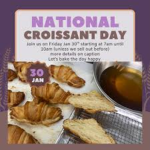
National Croissant Day flakes into our life each 30 January. It’s time to enjoy a delicious pastry treat from the local bakery, pair with sweet and savory fillings alike, or make your own buttery batch at home.

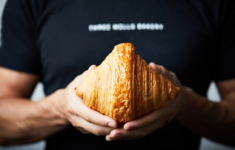
Tender and buttery, moist but not mushy, flaky but not crumbly, the slight chewy croissant is perfect when it just melts in the mouth.

Eaten on its own, or accompanied by some chocolate, or made into a sandwich, this delectable baked good is so delicious that it has earned its own day of the year–and it is certainly worth learning about and celebrating. Whatever way you like ‘em, it’s time for National Croissant Day!

Croissants are immensely popular in Australia, with a thriving, competitive, and high-quality artisan scene. Renowned for buttery, flaky, and creative, high-end pastry, the Australian market is highlighted by world-class, cult-favourite, and, at times, incredibly expensive options.

Beyond traditional French butter croissants (croissant au beurre), progressive Australian bakers are known for creative, modern variations, including almond, ham and cheese, pandan, yuzu, and Nutella.

Our Aussie bakers frequently push the boundaries of traditional French pastry with unique shapes and local flavours:
  • Croissant Shapes: You can find "croissant wheels," "croissant cubes" (crubiks), and even "croissant tacos" or "croissushi".
  • Australian Flavours: Local twists include Lamington croissants (coconut and chocolate) and croissants used for Vegemite-cheese scrolls.
Croissants are made with a light buttery rich yeast dough that can have either a sweet (jam, marzipan, chocolate) or savoury (cheese, ham, chicken, mushrooms) filling. Traditionally enjoyed in France for breakfast with coffee and milk. Croissants that are made with butter are called “croissant au beurre” and any croissant containing other types of fat (usually margarine) must be called “croissants.”

How many layers are there in a croissant? Different bakers make their croissants with a different number of folds and turns. But most fold their croissant dough into thirds at each turn before spreading it with a roller and folding it again into thirds for a total of 3 or 4 turns. So if a baker folds his dough 3 times each turn for a total of 3 turns, the resulting croissant dough will have 27 layers while 4 turns results in a croissant dough with 81 layers. After the laminating process, bakers cut the croissant dough into triangles and roll the dough into their famous crescent shape, increasing the number of layers in the croissant by two for each roll. Most recipes recommend 3 or 4 rolls. Laminated dough with 81 layers, rolled 4 times, will result in a croissant with 649 layers. Mind blowing, isn’t it?

The croissant is synonymous with a crunchy texture and an irresistible taste, qualities that have made it a product that few can resist. A crescent-shaped bun that you always desire.

So, we have the basic croissant, one of the most successful pastry items in the world. And then, there’s pain au chocolat croissant. Although the phrase translates literally as ‘bread with chocolate’, it is fundamentally a croissant variation and is commonly sold alongside croissants in bakeries and supermarkets. Like croissants, they are also typically eaten for breakfast, despite the chocolate content. Did someone say brunch?


"Life is short, make it flaky."

“Current mood flaky and fabulous.”

“Happiness wrapped in flaky hugs.’

“Croissant whispers love in French.”


1769714796985.png


1769714867666.png


1769714834966.png
 
January 30


National Croissant Day flakes into our life each 30 January. It’s time to enjoy a delicious pastry treat from the local bakery, pair with sweet and savory fillings alike, or make your own buttery batch at home.

Tender and buttery, moist but not mushy, flaky but not crumbly, the slight chewy croissant is perfect when it just melts in the mouth.

Eaten on its own, or accompanied by some chocolate, or made into a sandwich, this delectable baked good is so delicious that it has earned its own day of the year–and it is certainly worth learning about and celebrating. Whatever way you like ‘em, it’s time for National Croissant Day!

Croissants are immensely popular in Australia, with a thriving, competitive, and high-quality artisan scene. Renowned for buttery, flaky, and creative, high-end pastry, the Australian market is highlighted by world-class, cult-favourite, and, at times, incredibly expensive options.

Beyond traditional French butter croissants (croissant au beurre), progressive Australian bakers are known for creative, modern variations, including almond, ham and cheese, pandan, yuzu, and Nutella.

Our Aussie bakers frequently push the boundaries of traditional French pastry with unique shapes and local flavours:
  • Croissant Shapes: You can find "croissant wheels," "croissant cubes" (crubiks), and even "croissant tacos" or "croissushi".
  • Australian Flavours: Local twists include Lamington croissants (coconut and chocolate) and croissants used for Vegemite-cheese scrolls.
Croissants are made with a light buttery rich yeast dough that can have either a sweet (jam, marzipan, chocolate) or savoury (cheese, ham, chicken, mushrooms) filling. Traditionally enjoyed in France for breakfast with coffee and milk. Croissants that are made with butter are called “croissant au beurre” and any croissant containing other types of fat (usually margarine) must be called “croissants.”

How many layers are there in a croissant? Different bakers make their croissants with a different number of folds and turns. But most fold their croissant dough into thirds at each turn before spreading it with a roller and folding it again into thirds for a total of 3 or 4 turns. So if a baker folds his dough 3 times each turn for a total of 3 turns, the resulting croissant dough will have 27 layers while 4 turns results in a croissant dough with 81 layers. After the laminating process, bakers cut the croissant dough into triangles and roll the dough into their famous crescent shape, increasing the number of layers in the croissant by two for each roll. Most recipes recommend 3 or 4 rolls. Laminated dough with 81 layers, rolled 4 times, will result in a croissant with 649 layers. Mind blowing, isn’t it?

The croissant is synonymous with a crunchy texture and an irresistible taste, qualities that have made it a product that few can resist. A crescent-shaped bun that you always desire.

So, we have the basic croissant, one of the most successful pastry items in the world. And then, there’s pain au chocolat croissant. Although the phrase translates literally as ‘bread with chocolate’, it is fundamentally a croissant variation and is commonly sold alongside croissants in bakeries and supermarkets. Like croissants, they are also typically eaten for breakfast, despite the chocolate content. Did someone say brunch?


"Life is short, make it flaky."

“Current mood flaky and fabulous.”

“Happiness wrapped in flaky hugs.’

“Croissant whispers love in French.”


View attachment 33156


View attachment 33158


View attachment 33157
bon appétit 🥰
 
A small part - about 4 secomds -of a story about invasion day protests on last nights news showed a flag being burnt and many cheering (idiots had soaked it in petrol or something it went up quick hope they got injured)
But it was just so matter of fact...almost like its accepted these days....ironic part was a story later about ineffective hate speech laws which went on for several minutes.
Id say burning the Aussie flag is an act of hatred...but naah thats ok...just dont burn another races flag.
Weve gotten very soft.
Yep burn our flag and zero happens , burn another flag like a Jewish one specially in Bondi and look out your in trouble , very weak system we have in place , I would ban any burning of any flag with the same penalty applied no matter what flag it is , when will we ever get away from rules for some , and I don’t care if it’s an elder , political leader , Aussie Joe , or other the same rule should apply , burn a flag do 2 years in jail min , no parole ,
 
I don’t really understand why people cling to the date as if it’s like Anzac Day and memorialising something from 100 years ago . It only came in in the 1980s.
I’d be happy for a February date that’s fine to me . Whatever day to celebrate our amazing country ! Wear a flag in pride !
The issue is though , these professional protesters straight outta Sydney Uni via Newtown , will hijack the new date .
It would probably make more sense as well. Have the 26th be reallocated to be a day of mourning for the indigenous people . Then a few days/weeks later , have a new date to celebrate how that day led to the greatest country in the world . As messy as it is .
1818: Governor Lachlan Macquarie established the first official public holiday (in NSW) to mark the 30th anniversary of the colony.
1935: All states and territories adopted the term "Australia Day" for 26 January.
1938: The date commemorates the arrival of the First Fleet in 1788, but is now also viewed as a "Day of Mourning" by many Indigenous Australians.
Changing the date doesn’t guarantee the new date will not also be a day of mourning for some.
We can’t change history and the white fella can’t be continually forced into guilt about past conflicts like forest creek etc. Australia is crying out for leaders who can stop playing politics with this issue and bring Australians together. Are our political leaders up to the challenge?
 
What about Colin Powell, although whenever his name was mentioned in the American media it sounded like they pronounced his name as Colon Powell and I always assumed they called him "Colon" because they thought he was full of Sh&t.
Please don't forget about Colin McRae, the former world champion rally driver
 
It’s absolutely atrocious to burn our national flag , we should be striving to be a nation for All of us to be proud of moving forward .We cannot change the past and does anyone think changing the date will stop the shit show , maybe change the name of the country next
That's right. Top left corner is who we bow to. I Say that as a kiwi with the same part.
Really if burning the flag was a prison sentence that part should not be there.
Canada 🇨🇦 had the right idea
 
I consider myself first nations as I was born here!

Couldn't disagree more.

This is our history and when Australia was born.

I am deeply offended by my flag being burnt by people that rely on my country to feed them.
Burning the flag is just as bad as vandalizing a war memorial. Worthy of a jail sentence.
 
Back
Top