And today is .......

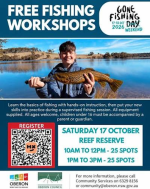
Gone Fishing Day casts onto our calendars this week-end, 17 and 18 October.

Organised nationally by the Australian Recreational Fishing Foundation (ARFF), this annual celebration highlights the joys and health benefits of recreational fishing, encouraging families, beginners, and seasoned anglers to head outdoors.

Whether you’re a seasoned angler or someone who just likes a good fish tale, fishing is full of surprises. It’s a world full of bizarre creatures, extreme destinations, eccentric techniques, and stories that would regale even the most sceptical landlubber.

Recreational fishing in Australia involves about 1 in 5 adults (roughly 3.3 to 4.2 million people) annually, contributing over $11 billion to the national economy and supporting more than 100,000 full-time equivalent jobs.

Most fishing happens in coastal, estuarine, and marine waters, though freshwater river fishing is popular in regions like Victoria and NSW.

Line fishing is the dominant method, with a mix of shore-based and boat-based angling.

A significant percentage of caught fish (often 48% to over 50% depending on the region and species) are safely released.

Gone Fishing Day is about celebrating all that we love about fishing and what it gives to Australian communities.

Aussie anglers of all ages know all-too-well the benefits that recreational fishing and enjoying the outdoors can bring to our health and wellbeing, and that’s before we mention the thrill of “the bite” and the size of the catch!

For many, fishing is a simple leisure activity; for some it’s a sport, for others it’s a way of life. For all of us who fish, it’s a chance to disconnect our devices and reconnect with nature, Australia’s unique environments, and leave your troubles behind.

This year’s Gone Fishing Day aims to bring the joy of fishing to young and old. Whether you’re a seasoned angler or have never casted a line in your life, everyone is welcome to get out and simply try your luck.

The fish are always calling!
All that’s needed are:
  • Fishing gear and tackle.
  • Some bait.
  • Hat, sunscreen and insect repellent.
  • Drink bottle and snacks.
  • Closed-toe shoes
  • Smiles, enthusiasm and a fisher’s optimism
All fishing experience levels are more than OK just don’t always stay in the one place – there’s lots of places everywhere, as there are fish.

And this year, the Minns Labor Government is encouraging people across the State to grab a rod, head outdoors and celebrate recreational fishing as Gone Fishing Day expands into the first-ever Gone Fishing Weekend, on Saturday 17 and Sunday 18 October 2026.

The expanded event across NSW features free fishing activities, community events and family-friendly experiences, giving more people the opportunity to enjoy a popular outdoor pastime.

Whether you're an experienced angler or trying fishing for the first time, Gone Fishing Weekend is about connecting with family and friends, while enjoying the state's lakes, beaches and waterways.

Across NSW there are major and small events for Gone Fishing Weekend:
  • Major events at Sydney, Lake Illawarra, Lake Macquarie, Grafton, Lake Wallace (Lithgow), Lake Oberon, Lake Windamere and Mudgee featuring experiences such as:
  • Mort Bay community fishing event featuring popular online fishing personality Shroom.
  • Lake Illawarra community fishing event featuring fishing legend Steve 'Starlo' Starling.
  • Fantastic prizes targeting some bumper tagged Tiger trout in Lake Wallace.
  • These free events offer fishing sessions, expert advice, casting practice, and giveaways, with activities designed to help people of all ages and experience.
  • In addition, 67 fishing clubs and organisations are also hosting local Gone Fishing Weekend events in their communities and have received fishing packages to help run family-friendly activities
  • Packages include rod and reel sets, goodie bags, circle hooks, fish measuring rulers, giveaways and educational resources.
The Government is working with community led groups like fishing clubs to deliver welcoming and family-friendly events that encourage participation in recreational fishing.

Gone Fishing Weekend is a collaborative initiative between the Minns Government and the Australian Recreational Fishing Foundation and is supported by the Recreational Fishing Trusts.

Recreational fishing continues to be one of the state's most popular outdoor activities, providing social, health and well-being benefits while contributing to regional economies.

And there’s more Gone Fishing Day events including:
  • New South Wales (Gone Fishing Weekend): Expanded for the first time into a full two-day celebration across 17-18 October 2026 by the NSW Department of Primary Industries and Regional Development (DPIRD). Major state-hosted free events include sessions at Mort Bay Park (Sydney), Lake Wallace (Lithgow), Lake Illawarra, Lake Macquarie (Wangi Wangi), Grafton Memorial Park, Lake Oberon, Lake Windamere, and Mudgee (Lawson Park).
  • Shoalhaven Gone Fishing Day: Saturday 17 October 2026, Time: 8:00am – 2pm
    Venue: Burrill Lake, NSW
  • OzFish/Bredbo Fishing Club: Date: Saturday 17 October 2026, Time: 8am – 2:30pm, Venue: Bredbo NSW 2626
  • Shellfish Reef deployment and Fishcare Victoria fishing clinic: Date: Saturday 17 October, Time: 9am – 11am, Venue: Mornington Pier, VIC
  • Tasmania: Held on Sunday, 18 October 2026, acting as a licence-free day for the trout fishery. Features regional community events such as the Inland Fisheries Service Tasmanian Trout Expo at Brumby Creek, Cressy.
  • Victoria & National Chapters: OzFish Unlimited and local community groups are hosting regional expos, catch-and-release clinics, and family fishing days throughout October, including events in locations like Port Albert.
So no excuses, OK!
The fish are waiting.
Let’s get hooked!


Fun Facts about Recreational Fishing:
  • Humans have been fishing for at least 23,000 years. The oldest fishing hooks were made from the shells of sea snails. They were found in Sakitara Cave in Okinawa Island, Japan, and were estimated to be between 22,280 and 22,770 years old.
  • The Giant Murray Cod: The Murray cod is one of Australia's largest freshwater fish and lives in the massive Murray-Darling river system. They can grow bigger than a grown-up is tall!
  • Not Many Freshwater Fish: Even though Australia is huge, it only has about 281 known native freshwater fish species because so much of the land is dry.
  • Pumping Nippers: Kids in Australia love digging in the wet sand at low tide to catch "nippers" (small ghost shrimp) to use as fish bait.
  • Australia is an amazing place with over 5,000 different kinds of fish! About a quarter of these fish are endemic, which means they are found nowhere else in the world. Fishing for both ocean and freshwater fish is very popular here. Australia also has big industries for catching seafood and raising fish, and these are carefully managed.


"A bad day fishing is better than a good day at work"

"Carpe Diem" does not mean 'fish of the day'"

“I go fishing not to find myself but to lose myself”

"Fishing is unquestionably a form of madness but, happily, for the once-bitten there is no cure"




1792272897476.png


1792272918488.png


1792272935867.png


1792272951246.png


1792272966419.png
 
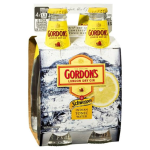
International Gin and Tonic Day pours onto our calendars each October 19.

Gin and tonic is the most popular cocktail in the world and one of the easiest drinks to make.

This simple yet sophisticated cocktail has a rich history, evolving from a medicinal necessity to a beloved classic. With just two main ingredients, gin and tonic, the magic lies in the quality and the perfect balance.

The idea of mixing bitter tonic with fragrant gin came to the British in the 18th century, when they were fighting on the territory of India. In those days, soldiers treated malaria with a bitter drink. To make it more pleasant to drink, they started mixing tonic with gin. Then it cost a penny and was considered a drink of the poor. And just think where it’s landed today – everywhere!

With so many amazing gins on the market, from all over Australia and around the world, and increasing numbers of incredible tonics, why not work on some different combinations and thrill your guests with a different and enticing combination of this classic drink.

In Australia, mid-October brings warm spring weather, making a crisp, refreshing G&T a popular choice at local bars, distilleries, or home gatherings.

Australia is home to over 160 registered gin distilleries, with acclaimed local producers like Four Pillars, Archie Rose, and Ginworth gaining national and global recognition.

Australian distillers frequently use native botanicals (such as lemon myrtle, river mint, and pepperberry) alongside unique seasonal infusions like Shiraz gin. The use of local botanicals, such as lemon myrtle, wattleseed, and pepperberry, gives the gin a distinct taste that sets it apart from its international counterparts. Australian gin makers often draw inspiration from the country’s diverse flora and fauna, resulting in gins that are rich in flavour and character.

Australian-made gin is often produced in small batches, using locally sourced ingredients, making it a more sustainable and eco-friendly choice. The use of local ingredients, the trend towards locally sourced and produced products, the rise of the craft gin movement, and the strong sense of identity and culture associated with Australian-made gin have all contributed to its success.

Sharing a gin and tonic with friends is not just about the drink itself, but also the social experience that comes with it. It provides an opportunity to gather, connect and celebrate with friends while enjoying a classic cocktail. So next time you're enjoying a gin and tonic, be sure to share it with friends and create a memorable experience together.

Premixed and canned gin and tonic products have surged in quality and popularity, with local creations like Young Henrys' Canned Gin & Tonic earning major international awards.

Many drinkers view gin and tonic as a lighter, more refreshing alternative to heavier cocktails or high-sugar drinks, while social media and vibrant visual presentations continue to drive its appeal among younger demographics.

Enjoyed the world over, this simple cocktail takes only moments to create. The gin and tonic is an uncomplicated cocktail.

While the Gin and Tonic is simple, mastering it requires attention to detail. Here are a few key tips:

  • High-Quality Ingredients: Opt for a premium gin and a quality tonic water. The better the ingredients, the better the drink.
  • Keep it Cold: Ensure both your gin and tonic are well-chilled. Use plenty of ice to keep the cocktail refreshingly cold.
  • Garnish Wisely: Let the botanicals in your gin guide your garnish choices. Classic options include a lime wedge, but consider using other citrus fruits, herbs, or spices that complement the gin's flavour profile.

Today, serve up one of these delicious drinks for yourself. Make gin and tonics for all your family and friends. Have your own gin and tonic party. If you’re not sure how to make one, here’s a good recipe to try:

Ingredients:

4 ice cubes
2 ounces of gin
4 ounces tonic water
1 measure of fresh lime juice (optional)
1 lemon or lime wedge

Place ice cubes in a glass. Pour gin, tonic water, and lime juice over the ice. Stir well. Garnish with the lime wedge and serve.

So, gather your favourite gin, chill your tonic, and raise a glass to the timeless appeal of the Gin and Tonic!

And then it’s simple: enjoy!

Oh, and of course, drink responsibly.


Fun Facts about Gin and Tonic:
  • If you take a Gin and Tonic into a room with UV black light, the drink will emit a vibrant, neon-blue glow. This striking visual trick happens because quinine naturally absorbs ultraviolet light and re-emits it, making it fluoresce under the right lighting conditions.
  • It won't freeze: Because of its high alcohol content, a bottle of gin can stay liquid even when stored in a standard freezer.
  • It never expires: Unopened gin does not go bad, though very old bottles may slowly lose a bit of their sharp botanical flavour.
  • With almost 40 percent of alcohol and no added sweeteners, gin has the fewest calories, so it doesn’t cause weight gain.


Alexa, "set a reminder for gin o'clock. everyday"

“When life gives you lemons… make a G&T!”

“Gym? I thought you said gin!”

“Size does matter. No-one wants a small gin and tonic”


1792359132978.png


1792359153735.png


1792359168310.png


1792359186625.png
 
International Chefs Day serves up onto our calendars each October 20.

A chef is a person who cooks food for a living. They work in places like restaurants, hotels, or even schools. In a big professional kitchen, the word "chef" usually means the person in charge of everyone else. This main chef is often called the executive chef.

The head chef is responsible for almost everything about the food. They buy the food, hire and train kitchen staff, and create the menus. They also decide on the recipes, which are the detailed instructions for how to cook each dish.

Today, we celebrate the culinary profession and the next generation around the theme of ingredient exploration: "Food Explorers". Today’s ICD 2026 celebration centres on ingredients, with a strong focus on ingredients, encouraging people of all ages to explore what goes into their food, where it comes from, how it is grown or harvested, and why it matters.

Behind all great chefs is someone who took the time to teach, challenge, encourage or simply believe in them. Someone who passed on more than recipes and techniques - they passed on knowledge, standards, confidence and leadership.

Every chef, in every corner of the world, has something to teach. By sharing your knowledge, skills, and passion for food, you can help future chefs become curious, confident Food Explorers.

Today we highlight the culinary profession and recognize the contributions of chefs worldwide. It is an opportunity to appreciate the creativity, hard work, and dedication that chefs bring to the culinary industry. We also celebrate all of the chefs-to-be currently studying and undertaking their apprentices, remembering:
  • Where food comes from: Exploring how ingredients are grown, harvested, and produced.
  • Interactive learning: Encouraging children and future chefs to become curious "Food Explorers" through cooking adventures and balanced meals.
  • Sustainability: Teaching environmental care, local sourcing, and reducing food waste.

Australian Events for International Chefs Day 2026
  • Melbourne Event (ACF Victoria)
    • Date & Time: Tuesday, October 20, 2026, from 7:00 pm – 9:00 pm
    • Location: Angliss Restaurant, William Angliss Institute, Melbourne
    • Details: Led by emerging young chefs who will cook, serve signature dishes, and discuss their trade experiences, mentoring, and travel. Emerging young chefs will cook and serve their signature dishes and talk about where the trade has taken them so far, including mentoring, competitions, Worldchefs Congress and international travel
  • Adelaide Event (Australian Culinary Federation - S.A.); Hosted by: Chefs of Adelaide Oval; Details: International Chefs Day Dinner featuring canapés and a three-course meal.
  • Sydney-based chefs, culinary schools, and hospitality groups typically observe the day via local kitchen workshops, school outreach, and the free Worldchefs Food Explorers Toolkit.
2026 Global Theme:
  • Worldchefs and Nestlé Professional are running the Food Explorers campaign, focusing on ingredient origins, harvesting, and sustainable food education.
  • Leadership Campaign: Kitchen leadership coach Glenn Flood is marking the day with his "Pass the Sauce" campaign, offering his book Secret Sauce – The Proven Recipe for Kitchen Leadership at a special promotional rate on October 20.
Today it’s all about the tucker.
Carry on eating.
And wassail the chefs, at home or wherever you’re having a feed.
As they say, we all survive on what’s in the tummy!


Fun Facts about Chefs:
  • The first cookbook was written in the 5th century BC by a Greek author named Archestratus.
  • The world's oldest known recipe is for beer, and it dates back to the year 3500 BC.
  • The world's most expensive spice is saffron, which can cost up to $10,000 per pound.
  • Ancient Egyptians were the first to use sugar in cooking, and one of the oldest known recipes is a honey-sweetened cake.
  • A chef's primary tool is deeply personal, and most possess a prized knife that they maintain, sharpen obsessively, and rarely let anyone else touch.
  • Working next to open flames, active grills, and high-heat ovens for 12-to-16-hour shifts means a professional kitchen gets blistering hot, making intense physical labor a daily workout.
  • The traditional pleated chef's hat (called a toque blanche) originally indicated rank, and tradition says the number of pleats represented the number of ways a chef could prepare an egg.


“If you are a chef, it's not good cooking for yourself; the joy is in cooking for others”

“There's no great chef without a great team”

“If you want to become a great chef, you have to work with great chefs”

“Where’s the sauce?”


1792441142921.png


1792441158789.png


1792441175574.png


1792441207194.png
 
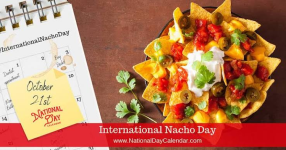
International Day of the Nacho crunches onto our calendars each October 21.

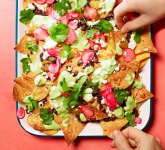
Nachos are a super popular snack food! They are made with crispy tortilla chips, usually covered in melted cheese. Sometimes, people add other yummy toppings like spicy jalapeños, different kinds of sauce, or even meat. They are a favourite at parties, sports games, and restaurants all over the world.

There are few foods that inspire instant joy quite like nachos. Whether you find them in a stadium, a taqueria, or your own kitchen, the first crunch of a chip covered in melted cheese is pure satisfaction. Nachos are one of those rare dishes that bridge casual snacking and communal celebration, a food that feels just as appropriate at a game as it does on a family table.

Australians love nachos because they fit right into our local pub culture, social gatherings, and a fondness for casual, high-flavour comfort food, enjoyed by families everywhere.
  • Pub and Social Staple: Nachos are a permanent fixture on Australian pub menus and casual eateries, making them an easy go-to for sharing with friends over drinks.
  • Sensory and Flavour Appeal: The combination of salty corn chips, warm melted cheese, and spicy salsa or jalapeños hits the brain's pleasure centres with an ideal mix of fat, salt, and crunch.
  • DIY Culture: Aussies have embraced a home-grown, budget-friendly version. This usually means layering corn chips, salsa, and grated cheese in the microwave, oven, or even using shortcut ingredients like baked beans or corn kernels, then topping it with sour cream – and always YUMMY!
Classic Australian-style beef nachos feature a base of crisp corn chips layered with seasoned beef mince, kidney beans, and melted cheese, finished with fresh avocado, tomato salsa, and sour cream. Here is a typical recipe:

Ingredients
  • 1 tbsp olive oil
  • 1 large brown onion, finely chopped
  • 500g lean beef mince
  • 300g can red kidney beans, drained and rinsed
  • 1 tsp Mexican chilli powder (or taco seasoning)
  • 35g sachet taco seasoning mix
  • 2 tbsp tomato paste
  • 1/4 cup water
  • 230g packet corn chips
  • 1 cup grated cheddar or tasty cheese
  • 1/2 cup tomato salsa
  • 1 avocado, diced
  • 1/2 cup sour cream
  • Fresh coriander (cilantro), chopped, to serve
Step-by-Step Method

  1. Heat the oven: Preheat your oven to 200°C (180°C fan-forced).
  2. Cook the onion and beef: Heat the olive oil in a large non-stick frying pan over medium heat. Add the onion and cook for about 2 minutes until soft. Add the beef mince and cook for 5 minutes, breaking it up with a wooden spoon until browned.
  3. Simmer the sauce: Stir in the kidney beans, chilli powder, taco seasoning mix, tomato paste, and water. Reduce the heat to medium-low and simmer for 5 minutes until the sauce thickens. Stir through half of the chopped coriander.
  4. Layer and bake: Arrange the corn chips in a heatproof dish or baking tray. Spoon the hot beef mixture over the chips and generously sprinkle with grated cheese.
  5. Melt the cheese: Bake in the oven for 10 to 15 minutes until the cheese is completely melted and golden.
  6. Add fresh toppings: Remove from the oven and top with tomato salsa, diced avocado, sour cream, and the remaining fresh coriander before serving.
  7. Then, one more step: ENJOY!
Nothing more to add – I’ve got the “munchies” so now I’m off to taste test the nachos recipe ……


Fun Facts about Nachos:
  • Nachos were invented in Mexico when wives of US soldiers stationed in Eagle Pass, Texas crossed the border on a shopping trip and arrived at a restaurant after closing. The maître d’ named Ignacio “Nacho” Anaya threw together fried tortilla triangles, melted cheese, and jalapeños for a group of hungry military wives - you guessed it - nachos. The year was 1943 and the city was Piedras Negras.
  • The original recipe for nachos was super simple – freshly fried tortilla chips, shredded cheese and sliced pickled jalapenos. That’s it…no beans and no meat
  • Nachos can take on many different forms, including nacho lasagna, chocolate nachos, and even spicy nacho-flavoured beer. Although the original recipe is rigid, modern takes can be a lot more creative.
  • Child-friendly nacho toppings focus on mild flavours, fun textures, and easy-to-handle items that avoid overwhelming spice or soggy chips.


1792525840517.png


1792525854850.png


1792525873709.png


1792525891864.png
 
Wombat Day nuzzles onto our calendars each October 22.

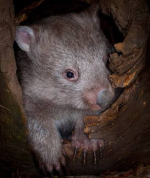
Wombats are known to be sturdy, short-legged Australian marsupials famous for their incredible digging skills. A wombat's pouch opens backward so that dirt doesn't shovel into it while they dig underground. They have strong claws and teeth that never stop growing to carve out massive underground tunnels called warrens.

Today is dedicated to raising awareness about these fascinating animals and celebrating their existence in our world.

There are three surviving species of wombats in Australia:
  • Common (Bare-nosed) Wombat Found in the cool, wet forests and sub-alpine areas of southeastern Australia, Victoria, New South Wales, South Australia, and Tasmania.
  • Southern Hairy-nosed Wombat Found in the semi-arid and dry grassland regions of South Australia and parts of Western Australia.
  • Northern Hairy-nosed Wombat A critically endangered species with a very small remaining population in Queensland.

Key Traits & Characteristics

Size:
They grow up to 1 meter in length and weigh between 20 kg and 40 kg.

Burrowing & Speed: They are powerful diggers that construct large underground tunnel systems (warrens) and can run up to 40 km/h over short bursts.

Cube-Shaped Scat: They produce distinct cube-shaped droppings, which they use to mark territories and rocks without rolling away.

Backwards Pouch: Their pouches face backward to prevent dirt from piling onto their young while digging.

Rump Defense: Their hindquarters are shielded by thick, tough skin and a hard cartilage plate, which they can use to crush or block predators against the roof of their burrow.

Sleep Schedule: They sleep up to 16 hours a day and are primarily nocturnal or crepuscular herbivores (eating grass, roots, and bark)


We Aussies are so proud of our wombats, for their stout, charismatic appearance, quirky behaviours, and deep cultural roots and folklore. Despite their tough and stubborn reputation, their viral videos - including fast "zoomies" and clumsy play - make them internet favourites.

And they have a proper life-balance – eat, sleep, dig, repeat.
Just another reason Down-Under is special.
But the golden rule applies to all wombats – look and don’t touch.
But that’s not to say not to love them.


Fun Facts about Wombats:


  • A wombat can live up to 15 years in the wild and 20 years in human care. They're very solitary marsupials that can only be found right here in Australia.
  • Wombats are extreme diggers that can shovel several feet of hard soil at night. Their backwards pouch allows them to dig without kicking dirt into their pouch, where a joey may just be sleeping.
  • An adult wombat usually grows to about a metre long – the same as a medium-sized dog. They can weigh up to 40 kilograms, and have wide, strong feet which are great for digging!
  • These clever critters spend their nights foraging for food, or digging new tunnels, entrances, or exits for their ever-expanding burrows! They are herbivores, so most of their time is spent grazing on native grasses.
  • Good luck stopping a rampaging wombat! These animals can move quickly when they need to and can sustain this speed for up to 90 seconds. There are even reports of humans being knocked over by charging wombats!
  • Wombats often mark their territory using their poo, and so scientists believe the square-sided shape stops the poop from rolling away, ensuring the smelly signals stay put!


“My vibe today is chubby, fuzzy, and ready for a nap”

“Be the wombat in a world full of hurry”

“Don’t sweat the small stuff. Just dig around it”

“Down under and loving every minute”


1792642758112.png


1792642771548.png


1792642784967.png
 
Wombat Day nuzzles onto our calendars each October 22.

Wombats are known to be sturdy, short-legged Australian marsupials famous for their incredible digging skills. A wombat's pouch opens backward so that dirt doesn't shovel into it while they dig underground. They have strong claws and teeth that never stop growing to carve out massive underground tunnels called warrens.

Today is dedicated to raising awareness about these fascinating animals and celebrating their existence in our world.

There are three surviving species of wombats in Australia:
  • Common (Bare-nosed) Wombat Found in the cool, wet forests and sub-alpine areas of southeastern Australia, Victoria, New South Wales, South Australia, and Tasmania.
  • Southern Hairy-nosed Wombat Found in the semi-arid and dry grassland regions of South Australia and parts of Western Australia.
  • Northern Hairy-nosed Wombat A critically endangered species with a very small remaining population in Queensland.

Key Traits & Characteristics

Size:
They grow up to 1 meter in length and weigh between 20 kg and 40 kg.

Burrowing & Speed: They are powerful diggers that construct large underground tunnel systems (warrens) and can run up to 40 km/h over short bursts.

Cube-Shaped Scat: They produce distinct cube-shaped droppings, which they use to mark territories and rocks without rolling away.

Backwards Pouch: Their pouches face backward to prevent dirt from piling onto their young while digging.

Rump Defense: Their hindquarters are shielded by thick, tough skin and a hard cartilage plate, which they can use to crush or block predators against the roof of their burrow.

Sleep Schedule: They sleep up to 16 hours a day and are primarily nocturnal or crepuscular herbivores (eating grass, roots, and bark)


We Aussies are so proud of our wombats, for their stout, charismatic appearance, quirky behaviours, and deep cultural roots and folklore. Despite their tough and stubborn reputation, their viral videos - including fast "zoomies" and clumsy play - make them internet favourites.

And they have a proper life-balance – eat, sleep, dig, repeat.
Just another reason Down-Under is special.
But the golden rule applies to all wombats – look and don’t touch.
But that’s not to say not to love them.


Fun Facts about Wombats:


  • A wombat can live up to 15 years in the wild and 20 years in human care. They're very solitary marsupials that can only be found right here in Australia.
  • Wombats are extreme diggers that can shovel several feet of hard soil at night. Their backwards pouch allows them to dig without kicking dirt into their pouch, where a joey may just be sleeping.
  • An adult wombat usually grows to about a metre long – the same as a medium-sized dog. They can weigh up to 40 kilograms, and have wide, strong feet which are great for digging!
  • These clever critters spend their nights foraging for food, or digging new tunnels, entrances, or exits for their ever-expanding burrows! They are herbivores, so most of their time is spent grazing on native grasses.
  • Good luck stopping a rampaging wombat! These animals can move quickly when they need to and can sustain this speed for up to 90 seconds. There are even reports of humans being knocked over by charging wombats!
  • Wombats often mark their territory using their poo, and so scientists believe the square-sided shape stops the poop from rolling away, ensuring the smelly signals stay put!


“My vibe today is chubby, fuzzy, and ready for a nap”

“Be the wombat in a world full of hurry”

“Don’t sweat the small stuff. Just dig around it”

“Down under and loving every minute”


View attachment 45553


View attachment 45554


View attachment 45555
There is nothing cuter than a baby wombat chewing at your Sorrels.
 
Global Champagne Day bubbles onto our calendars each October 23.

Champagne has been part of so many celebrations throughout various seasons of life. But this is the day to not only celebrate something with champagne, but to actually celebrate champagne.

Classic elegance and effervescence, it's the only way to toast to good times.

Champagne is more than just a drink - it’s a symbol of celebration, history, and craftsmanship. From the moment Champagne starts its journey in the vineyard to the expertise of a cellar master crafting each bottle, every sip tells a story.

Australians love to celebrate. From horse races to everyday get-togethers Australians will pop the cork on a bottle of bubbles with the merest excuse.

Australia ranks as one of the top global markets for Champagne, frequently placing around the 6th largest export market by volume and boasting some of the highest per-capita consumption outside of Europe.

Several key factors drive this love affair:

  • Celebration Culture: Australians naturally link sparkling wine and Champagne with social gatherings, milestones, casual catch-ups, and major events (from summer barbecues to horse racing carnivals).
  • Lifestyle and Climate: The warm Australian climate and outdoor-focused social lifestyle create strong demand for crisp, cold, refreshing carbonated drinks.
  • Post-Lockdown Indulgence: Recent years have seen a massive surge in "treat yourself" consumer spending, where sparkling wine and Champagne became popular self-rewards and luxury indulgences.
  • Strong Brand Awareness: Major French Champagne houses (such as Moët & Chandon, Veuve Clicquot, and Mumm) have built deep, long-standing visibility across Australian hospitality, sporting events, and retail promotions.
  • Appreciation for Bubbles Overall: Australia's enthusiasm extends broadly across the entire sparkling category - fuelling both imported French Champagne and local sparkling makers like Domaine Chandon in the Yarra Valley, or alternative options like Prosecco.

Australia confidently holds its place as the fifth largest champagne market per head of population, and the only country outside Europe in the top seven overall, exceeded only by France, Belgium, Switzerland and the UK. The growth of champagne in Australia in the past decade has been phenomenal; we are drinking more than three times as much as we were seven or eight years ago.

Venues and prominent wine experts across Australia are hosting special tastings, masterclasses, and dinners around this date.

  • The Art of Sabrage with the Champagne Goddess:
Location: Bonnibel at lyf Bondi Junction, Sydney, NSW
Date & Time: Friday, 23 October 2026 from 6:00 pm to 9:00 pm
Details: Learn the dramatic art of opening a bottle with a sabre alongside the "Champagne Goddess".

  • A Century of Champagne Masterclass:
Location: St Germain Wine Bar, Hawthorn, Melbourne, VIC
Date: Saturday, 24 October 2026
Details: Renowned expert Kyla Kirkpatrick (The Champagne Dame) hosts a 3-course lunch featuring five remarkable cuvées tracking a century of champagne history from 1926 to today.

  • World Champagne Day with Veuve Clicquot at The Paddock:
  • Location: 422 Binna Burra Rd, Beechmont, Scenic Rim, QLD
    Date: Friday, 23 October 2026 - A premium destination experience celebrating the day with Veuve Clicquot pairings.
  • Global Champagne Day at Mr Percival's:
Location: Howard Smith Wharves, Brisbane, QLD
Date: Running for 10 days from Thursday, 15 October to Sunday, 26 October 2026
Details: A multi-day riverfront celebration featuring $3 Sydney Rock oysters alongside champagne specials and a live soundtrack of disco and house music.

  • Ciao Papi

Date & Time: Thursday, October 15 to Sunday, October 25, 2026

Venue: Brisbane

Details: Extended Champagne celebrations across the venue.

  • Champagne Day Tasting at Innaloo:
Location: The Morris, 2 Morris Road, Innaloo, Perth, WA
Date & Time:
Thursday, 22 October 2026 from 6:30 pm to 8:00 pm

  • Global Champagne Day Paint & Sip

  • Details: Bubbles, brushes and a whole lot of bites! Celebrate Global Champagne Day with us at Walkabout Lodge. There's no better way to toast Global Champagne Day than with a glass of bubbles in one hand and a paintbrush in the other. Come along to Walkabout Lodge Restaurant on Friday 23 October from 6pm for an evening of fresh Australian seafood, flowing champagne and a relaxed paint session, all supplies included.
  • Location: Walkabout Lodge, Nhulunbuy, Northern Territory
  • Date: Friday, October 23, 6 PM - 8 PM

With the warmer months on us and months of cold-packed lockdown pent-up demand needing to be serviced, it will come as no surprise that Aussies are ready to celebrate small freedoms and grand occasions with Champagne.

We are drinking a great variety of champagne wines, famous brands and small producers and are well aware of Champagne’s extraordinary versatility as a drink.

Champagne suits any occasion.

It’s just a matter of Pop, Fizz and Share!
But: Champagne isn’t just about taste - it’s about creating unforgettable moments.
Cheers!


Fun Facts about Champagne:

  • High Pressure: The internal pressure is around 90 psi (6 atmospheres), which is three times the pressure of a car tire.
  • Flying Corks: A cork popped from a bottle can reach speeds between 40 km/h (24.8 mph) and nearly 105 km/h (65 mph), with record flights reaching 177 feet.
  • Flutes vs. Coupes: Flutes retain carbonation and bubbles much longer than shallow coupe glasses.
  • Strict Geography: True Champagne can only come from the designated Champagne region in northeastern France under AOC rules.
  • The Big Three Grapes: Production relies almost exclusively on three grape varieties: Chardonnay, Pinot Noir, and Pinot Meunier.
  • There Are About 49 Million Bubbles in One Bottle - The characteristic bubbles form when carbon dioxide is released during fermentation. The more bubbles, the more effervescence in your glass!
  • Think James Bond’s drink of choice is a martini? Not quite! While he does enjoy a “shaken, not stirred” cocktail, he actually drinks more Champagne in both the books and movies.
  • Good news for those watching their calories! A glass of Champagne usually has fewer calories than red or white wine. A standard flute of bubbly has about 80–90 calories, while a glass of red wine can have 120–150. Champagne, especially extra brut, has even less sugar, making it a better drink if you want something lighter.
  • That satisfying loud pop! when you open a bottle? It’s actually as loud as a gunshot—around 100 decibels! That’s why Champagne corks can be dangerous if you’re not careful.
  • A flying cork can travel up to 40 km/h (25 mph) and has 90 pounds of pressure per square inch behind it. That’s a lot of force!


“Champagne is one of the elegant extras in life”

“Come quickly, I am tasting the stars!”

“Let's get fizz-ical”

“Champagne fixes Mondays”


1792697917497.png


1792697933542.png


1792697951225.png


1792697970854.png
 
(early 'cause I'm away from internet)


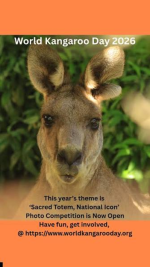
World Kangaroo Day hops onto our calendars each October 24 and promotes the care and protection of these animals as part of a larger effort to care for nature and the planet in sustainable, environmentally-friendly ways.

Kangaroos are the world's largest marsupials, native to Australia and known for their powerful hind legs, ability to hop at high speeds, and forward-opening pouches.

Australia has an estimated 30 million to 50 million kangaroos, a number that regularly exceeds the country's human population of roughly 27 million to 27.8 million. Populations rise and fall sharply based on weather. Good rainfall increases vegetation and boosts baby numbers, while severe droughts cause numbers to drop.

Kangaroos are the world’s largest marsupials. A Red Kangaroo can weigh 90 kg and can grow two metres tall. Black Wallaroos, at around 20 kg, are the smallest species.

All kangaroos have short hair, powerful hind legs, small forelimbs, big feet and a long tail. They have excellent hearing and keen eyesight. Depending on the species, their fur coat can be red, grey or light to dark brown.

Their muscular tail is used for balance when hopping, and as another limb when moving about.

Kangaroos are famous for their forward-opening pouch, where the joey (baby kangaroo) develops and suckles. A female kangaroo is known as a ‘flyer’ or a ‘doe’ and a male kangaroo a ‘buck’ or a ‘boomer’ (hence the nickname of the Australian men’s basketball team, the Boomers).

Red Kangaroos are found over most of arid Australia, preferring flat open plains. Eastern Greys are found from Cape York to Tasmania; Western Greys have an equally wide distribution, from Western Australia to Victoria (both species prefer denser vegetation).

Antilopine Kangaroos live across northern Australia in monsoonal tropical woodlands, and Common Wallaroos are found over most of Australia, especially around rocky outcrops.

Kangaroos are most active between dusk and dawn, as they search for their favourite foods: grass, as well as leaves, ferns, flowers, fruit and moss. Like cattle, they regurgitate their food, chewing it twice before it passes through their chambered stomach. They need free water to survive; however, when desperate they’re known to dig holes a metre deep in search of water.

  • Size and Weight: Large males like the Red Kangaroo can grow up to 2 meters tall and weigh around 90 kg, while smaller species like wallaroos weigh about 20 kg.
  • Movement: Kangaroos cannot hop backwards and use their muscular tails for balance and support. They can reach speeds up to 60 km/h and clear over 8 meters in a single bound.
  • Reproduction: Female kangaroos give birth to tiny, underdeveloped joeys (about the size of a grape) that crawl into the mother's pouch to nurse and develop for several months. They can also pause pregnancies through a process called embryonic diapause.


Mobs: Kangaroos live in social groups called mobs, troops, or herds, which are often led by a dominant male.

Population: Millions of kangaroos inhabit the wild across Australia, with government estimates in commercial harvest areas tracking tens of millions of animals depending on seasonal rainfall and environmental conditions.

Cultural Status: The kangaroo is an iconic national symbol featured on the Australian coat of arms, currency, and Qantas branding.


Wildlife authorities are scheduled to conduct their next extensive aerial and ground survey of kangaroo populations in late 2026. This dataset will be vital for assessing how wildlife numbers are holding up following high control rates driven by drought conditions in previous years.

For me, the Kangaroos always are in my heart – the Aussie Rugby League team to be precise!
(Mind you, it used to be “Skippy!”) 😉


Fun Facts about Kangaroos:

  • Big Leaps: A kangaroo can jump up to 25 feet (about 7.6 meters) in a single bound.
  • High Speed: They can hop as fast as 40 to 50 miles per hour (65 to 70 kilometers per hour) over short distances.
  • No Walking Backwards: Their big legs and heavy tails make it impossible for them to walk backward.
  • Grape-Sized Babies: A newborn baby kangaroo (called a joey) is tiny—only about the size of a grape or jellybean (2.5 centimetres long).
  • The Pouch Ride: The joey crawls through its mother's thick fur into her belly pouch, where it stays safe and drinks milk for several months.
  • The Fifth Leg: When moving slowly on the ground, a kangaroo uses its strong muscular tail like a third leg or balancing pole.
  • "The Flying Kangaroo": A famous nickname and branding associated with Qantas Airways, representing Australian national identity and aviation.


"A spider, a snake, and a kangaroo walk into a bar… It's a normal day in Australia"

"Take a running jump"

“Jump first, plan later”

“Roo-ted in happiness”


1792698159152.png


1792698176729.png


1792698193361.png


1792698210715.png
 
(early 'cause I'm away from internet)


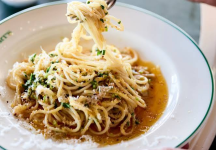
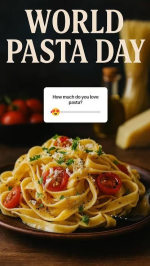
World Pasta Day al dente's onto our calendars each October 25 as part of a global celebration of the dish that unites generations and cultures.

People like pasta because it is a comforting, versatile and budget-friendly food that triggers positive emotional responses - we simply love it!


Reasons People Love Pasta
  • Brain Chemistry and Mood: Complex carbohydrates in pasta give the brain energy and help release serotonin, a chemical that makes you feel happy and relaxed.
  • Infinite Versatility: Pasta acts as a blank canvas or a convenient vehicle for endless combinations of sauces, meats, vegetables, and cheeses. Different shapes—like tubes, shells, or ribbons—are designed to catch and hold specific types of sauces.
  • Comfort and Tradition: Eating pasta is strongly tied to family gatherings, warmth, and nostalgia.
  • Convenience and Affordability: Dry pasta is inexpensive, has a long shelf life, and is very easy to cook with just a pot of boiling water.
  • Texture and Taste: Cooking pasta al dente (firm to the bite) gives it a chewy, satisfying mouthfeel that avoids becoming mushy.

We’ve all got our favourite pasta dish that we cook again and again.
Pasta is an absolute staple of modern Aussie cuisine representing a massive culinery shift from its status as an "exotic" migrant food to a weekly, common, much-enjoyed weekly pantry essential.

Driven heavily by postwar Italian immigration, Australians now consume over 30 million kilograms of pasta each year, seamlessly blending traditional Italian techniques with premium, local Australian ingredients.


Contemporary Style: A Focus on Fresh Seafood & Native Flavours

Contemporary Australian restaurant pasta focuses heavily on fresh, hyper-local ingredients, often leaning into Australia's world-class coastlines and unique native botanicals.
  • Seafood-heavy menus: Signature Aussie pasta dishes frequently highlight Queensland spanner crab or blue swimmer crab tossed with spaghettini, chilli, garlic, and fresh herbs, or Taglierini with blue swimmer crab, chilli, garlic, salmon roe, and chives, or prawn, chorizo, and corn spaghetti or linguine with prawn bisque.
  • Native and local fusion: Modern chefs are increasingly incorporating ingredients like saltbush, macadamia nuts, and native greens into traditional pasta shapes. Or Chestnut confettura cannelloni featuring macadamia nut or gnocchi with Warrigal Greens.
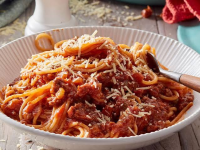
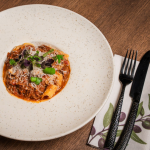
  • The Pub Classics: Casual Australian dining frequently features rich Spaghetti Bolognaise (often dubbed "Spag Bol"), creamy chicken and avocado penne, and seafood marinaras featuring local mussels and squid.
  • The Quirky Home Fusions: In home kitchens, you will even find playful icons like Vegemite Pasta (using the famous yeast extract to create a rich, umami, buttery sauce).
  • Everyday Family Classics: Cheesy bakes and weeknight staples like creamy French onion chicken pasta bake, chorzio pasta.

Types of pastas

There are so many types of pastas on the supermarket shelves today, both fresh and dried, white, wholewheat, legume and gluten free varieties. Here are the different types to choose from:
  • Fresh pasta
  • Regular white pasta dried
  • Wholegrain/Wholewheat pasta
  • Legume based- Lentil/Chickpea
  • Gluten free/alternative flour like buckwheat/brown rice or corn
  • Added protein/added fibre varieties
  • Green veggie pasta (new to Coles)

Pasta is a massive part of Australian food culture, with polling showing that roughly 61% of Aussie adults eat pasta at least once a week.

Today pasta is one of the fastest-growing categories in the Australian food industry.
The boom in pasta sales has attracted several big food manufacturers. Long-established local brands such as San Remo, Nanda and Vetta have been joined by a crush of imported rivals, plus new pasta-based products from marketing giants such as Unilever, Goodman Fielder Wattie and Nestle. The parade of new entries continues: two new pasta brands have appeared in Australian supermarkets in the past month.

Favorite Aussie Pasta Habits & Dishes

  • Spag Bol: Spaghetti Bolognese—affectionately shortened to "spag bol"—reigns supreme as a weekly staple in countless Australian households.
  • The Aussie Pasta Bake: Quick comfort meals like the viral French onion chicken pasta bake (frequently saved by home cooks on Taste) are go-to mid-week shortcuts.
  • Supermarket Staples & Local Makers: Iconic Australian-made brands like San Remo (operating since 1936) and ready-made freezer meals like the On The Menu or Artisano beef lasagnes (priced around 11.50 AUD to 13.80 AUD) are cart-fillers at supermarkets like Coles.
  • Restaurant Hotspots: From casual chains like Criniti's to acclaimed spots like Fabbrica Pasta Shop and Ragazzi in Sydney, fresh handmade pasta continues to surge in popularity.

Australian Twists on Pasta

  • Seafood Focus: Given Australia's coastline, local pasta dishes frequently star regional seafood such as Queensland king prawns, blue swimmer crab, mussels, and squid tossed in chilli, garlic, or light oil/tomato bases.
  • Native & Seasonal Ingredients: Modern Australian-Italian cuisine incorporates native flavors like saltbush, macadamia nuts, and local bush-harvested or farm-fresh produce.
  • The "Toowoomba Pasta" Phenomenon: Interestingly, Toowoomba pasta - a spicy, creamy prawn and mushroom pasta dish - originated in an Outback Steakhouse chain branch in South Korea and became a massive viral/convenience-store hit in Korea, despite not being a traditional dish in Toowoomba, Queensland.

Popular Australian Vegetarian Pasta Styles
  • Roast Pumpkin & Sage Bakes: Combinations of roasted pumpkin, spinach, Danish feta, flaked almonds, and pepitas baked with a creamy or tomato-herb base.
  • Mushroom & Lentil Ragu: Earthy Australian mushrooms (such as Swiss browns or pine mushrooms) or red/green lentils cooked down into a rich, meaty-textured plant-based bolognese.
  • Spring Green & Herb Pastas: Fresh orecchiette or spaghetti tossed with double-podded broad beans, cavolo nero, zucchini, lemon zest, and pecorino.
  • Zucchini & Ricotta Lasagne: Layered ribbons with local full-fat ricotta, sundried tomatoes, or a crispy pangrattato (herbed breadcrumb) topping.

Benefits of pasta

Pasta is an important wholegrain to be including in the diet in moderation. It can be included as part of your selection from the “Wholegrains” food group of the Australian Guide to Healthy Eating. This food group contains Wholegrains such as bread, pasta, rice and cereals. These are low GI carbohydrates that release glucose into your blood at a slower rate than carbohydrates like cakes, lollies, biscuits, and other high sugar foods which are high GI. Wholegrains are important not only for energy but also provide fibre for a healthy gut microbiome.
Pasta provides us with energy, fibre (more in wholewheat), nutrients and a small amount of protein (more in wholewheat).

Eat up, mangiare, essen, comer, есть, 食べる, ya'kulu ............
Timeless classics or creative twists?
Whatever way you say it, just do it.


1792698324103.png


1792699377360.png


1792699395957.png


1792699459853.png
 

Attachments

  • 1792700899058.png
    1792700899058.png
    700 bytes · Views: 0
  • 1792700899051.jpeg
    1792700899051.jpeg
    3.8 KB · Views: 0
  • 1792698458265.png
    1792698458265.png
    914.6 KB · Views: 0
(early 'cause I'm away from internet)


Austrian National Day (also known as ‘Nationalfeiertag’) marches onto our calendars each October 26.
Within Australia, the day is marked by the Austrian-Australian diaspora through various cultural events, community gatherings, and club functions.


How it is Celebrated in Australia

Because the date falls outside of Austria, local celebrations are driven by Australian-Austrian community groups, cultural clubs, and diplomatic channels:
  • Club Festivities: Organizations like the Austrian Club WA in Western Australia and similar cultural clubs in Melbourne and Sydney frequently host dedicated "Austrian Day" events. These usually feature traditional Austrian food (like schnitzel, strudel, and pretzels), Austrian beers, and live polka or folk music. Also, Austrian clubs and cultural organizations across Australia - such as the Austrian Club Sydney in Frenchs Forest and community groups in Canberra and Western Australia - host festive gatherings featuring traditional Austrian food, music, dancing (like the Geoff Power bands), and cultural performances around late October.

  • Austrian Diaspora: There are over 50,000 people with Austrian ancestry or heritage living in Australia, maintaining strong community ties through local embassies, cultural centers (such as Das Zentrum), and clubs.
  • Timing of Events: When October 26th falls on a weekday, community groups in Australia typically host their public festivals or luncheons on the closest Sunday to maximize attendance.
  • Diplomatic Receptions: The Austrian Embassy in Canberra and various consulates across major Australian cities often host official networking events and functions to mark the day with the expat community and local dignitaries.

And there's always a good laugh to share:

The "Austria vs. Australia" Mix-Up: The similar names of the two countries frequently lead to lighthearted confusion. A popular persistent myth claims that airports in Austria have a special help desk for confused travelers who accidentally booked a flight to Sydney or Melbourne instead of Vienna—though this is actually the result of a clever marketing joke.


1792702257014.png


1792702276188.png
 
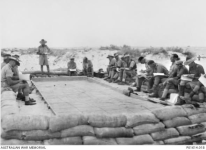
Today we commemorate the Second Battle of El Alamein on 23 October 1942, one of the major battles of the Second World War.
In the western desert of Egypt, the British Eighth Army, including the 9th Australian Division, faced off against Field Marshal Erwin Rommel’s forces, comprising four German and eight Italian divisions.
On 4 November 1942, Rommel began withdrawing his troops, marking the end of this brutal campaign, the last great imperial battle.
The cost was immense. Of the British Eighth Army’s total casualties, 2,694 were Australians from the 9th Division, killed, wounded or missing.
Today, we honour their courage and sacrifice.
Lest We Forget.
🌺


1792709431991.png


1792709446933.png


1792709475686.png


1792709492166.png
 
Back
Top