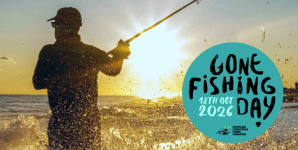
Gone Fishing Day casts onto our calendars this week-end, 17 and 18 October.
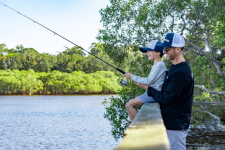
Organised nationally by the Australian Recreational Fishing Foundation (ARFF), this annual celebration highlights the joys and health benefits of recreational fishing, encouraging families, beginners, and seasoned anglers to head outdoors.
Whether you’re a seasoned angler or someone who just likes a good fish tale, fishing is full of surprises. It’s a world full of bizarre creatures, extreme destinations, eccentric techniques, and stories that would regale even the most sceptical landlubber.
Recreational fishing in Australia involves about 1 in 5 adults (roughly 3.3 to 4.2 million people) annually, contributing over $11 billion to the national economy and supporting more than 100,000 full-time equivalent jobs.
Most fishing happens in coastal, estuarine, and marine waters, though freshwater river fishing is popular in regions like Victoria and NSW.
Line fishing is the dominant method, with a mix of shore-based and boat-based angling.
A significant percentage of caught fish (often 48% to over 50% depending on the region and species) are safely released.
Gone Fishing Day is about celebrating all that we love about fishing and what it gives to Australian communities.
Aussie anglers of all ages know all-too-well the benefits that recreational fishing and enjoying the outdoors can bring to our health and wellbeing, and that’s before we mention the thrill of “the bite” and the size of the catch!
For many, fishing is a simple leisure activity; for some it’s a sport, for others it’s a way of life. For all of us who fish, it’s a chance to disconnect our devices and reconnect with nature, Australia’s unique environments, and leave your troubles behind.
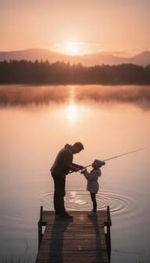
This year’s Gone Fishing Day aims to bring the joy of fishing to young and old. Whether you’re a seasoned angler or have never casted a line in your life, everyone is welcome to get out and simply try your luck.
The fish are always calling!
All that’s needed are:
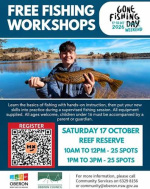
And this year, the Minns Labor Government is encouraging people across the State to grab a rod, head outdoors and celebrate recreational fishing as Gone Fishing Day expands into the first-ever Gone Fishing Weekend, on Saturday 17 and Sunday 18 October 2026.
The expanded event across NSW features free fishing activities, community events and family-friendly experiences, giving more people the opportunity to enjoy a popular outdoor pastime.
Whether you're an experienced angler or trying fishing for the first time, Gone Fishing Weekend is about connecting with family and friends, while enjoying the state's lakes, beaches and waterways.
Across NSW there are major and small events for Gone Fishing Weekend:
Gone Fishing Weekend is a collaborative initiative between the Minns Government and the Australian Recreational Fishing Foundation and is supported by the Recreational Fishing Trusts.
Recreational fishing continues to be one of the state's most popular outdoor activities, providing social, health and well-being benefits while contributing to regional economies.
And there’s more Gone Fishing Day events including:
The fish are waiting.
Let’s get hooked!
Fun Facts about Recreational Fishing:
"A bad day fishing is better than a good day at work"
"Carpe Diem" does not mean 'fish of the day'"
“I go fishing not to find myself but to lose myself”
"Fishing is unquestionably a form of madness but, happily, for the once-bitten there is no cure"
Organised nationally by the Australian Recreational Fishing Foundation (ARFF), this annual celebration highlights the joys and health benefits of recreational fishing, encouraging families, beginners, and seasoned anglers to head outdoors.
Whether you’re a seasoned angler or someone who just likes a good fish tale, fishing is full of surprises. It’s a world full of bizarre creatures, extreme destinations, eccentric techniques, and stories that would regale even the most sceptical landlubber.
Recreational fishing in Australia involves about 1 in 5 adults (roughly 3.3 to 4.2 million people) annually, contributing over $11 billion to the national economy and supporting more than 100,000 full-time equivalent jobs.
Most fishing happens in coastal, estuarine, and marine waters, though freshwater river fishing is popular in regions like Victoria and NSW.
Line fishing is the dominant method, with a mix of shore-based and boat-based angling.
A significant percentage of caught fish (often 48% to over 50% depending on the region and species) are safely released.
Gone Fishing Day is about celebrating all that we love about fishing and what it gives to Australian communities.
Aussie anglers of all ages know all-too-well the benefits that recreational fishing and enjoying the outdoors can bring to our health and wellbeing, and that’s before we mention the thrill of “the bite” and the size of the catch!
For many, fishing is a simple leisure activity; for some it’s a sport, for others it’s a way of life. For all of us who fish, it’s a chance to disconnect our devices and reconnect with nature, Australia’s unique environments, and leave your troubles behind.
This year’s Gone Fishing Day aims to bring the joy of fishing to young and old. Whether you’re a seasoned angler or have never casted a line in your life, everyone is welcome to get out and simply try your luck.
The fish are always calling!
All that’s needed are:
- Fishing gear and tackle.
- Some bait.
- Hat, sunscreen and insect repellent.
- Drink bottle and snacks.
- Closed-toe shoes
- Smiles, enthusiasm and a fisher’s optimism
And this year, the Minns Labor Government is encouraging people across the State to grab a rod, head outdoors and celebrate recreational fishing as Gone Fishing Day expands into the first-ever Gone Fishing Weekend, on Saturday 17 and Sunday 18 October 2026.
The expanded event across NSW features free fishing activities, community events and family-friendly experiences, giving more people the opportunity to enjoy a popular outdoor pastime.
Whether you're an experienced angler or trying fishing for the first time, Gone Fishing Weekend is about connecting with family and friends, while enjoying the state's lakes, beaches and waterways.
Across NSW there are major and small events for Gone Fishing Weekend:
- Major events at Sydney, Lake Illawarra, Lake Macquarie, Grafton, Lake Wallace (Lithgow), Lake Oberon, Lake Windamere and Mudgee featuring experiences such as:
- Mort Bay community fishing event featuring popular online fishing personality Shroom.
- Lake Illawarra community fishing event featuring fishing legend Steve 'Starlo' Starling.
- Fantastic prizes targeting some bumper tagged Tiger trout in Lake Wallace.
- These free events offer fishing sessions, expert advice, casting practice, and giveaways, with activities designed to help people of all ages and experience.
- In addition, 67 fishing clubs and organisations are also hosting local Gone Fishing Weekend events in their communities and have received fishing packages to help run family-friendly activities
- Packages include rod and reel sets, goodie bags, circle hooks, fish measuring rulers, giveaways and educational resources.
Gone Fishing Weekend is a collaborative initiative between the Minns Government and the Australian Recreational Fishing Foundation and is supported by the Recreational Fishing Trusts.
Recreational fishing continues to be one of the state's most popular outdoor activities, providing social, health and well-being benefits while contributing to regional economies.
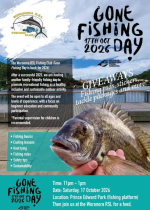
And there’s more Gone Fishing Day events including:
- New South Wales (Gone Fishing Weekend): Expanded for the first time into a full two-day celebration across 17-18 October 2026 by the NSW Department of Primary Industries and Regional Development (DPIRD). Major state-hosted free events include sessions at Mort Bay Park (Sydney), Lake Wallace (Lithgow), Lake Illawarra, Lake Macquarie (Wangi Wangi), Grafton Memorial Park, Lake Oberon, Lake Windamere, and Mudgee (Lawson Park).
- Shoalhaven Gone Fishing Day: Saturday 17 October 2026, Time: 8:00am – 2pm
Venue: Burrill Lake, NSW - OzFish/Bredbo Fishing Club: Date: Saturday 17 October 2026, Time: 8am – 2:30pm, Venue: Bredbo NSW 2626
- Shellfish Reef deployment and Fishcare Victoria fishing clinic: Date: Saturday 17 October, Time: 9am – 11am, Venue: Mornington Pier, VIC
- Tasmania: Held on Sunday, 18 October 2026, acting as a licence-free day for the trout fishery. Features regional community events such as the Inland Fisheries Service Tasmanian Trout Expo at Brumby Creek, Cressy.
- Victoria & National Chapters: OzFish Unlimited and local community groups are hosting regional expos, catch-and-release clinics, and family fishing days throughout October, including events in locations like Port Albert.
The fish are waiting.
Let’s get hooked!
Fun Facts about Recreational Fishing:
- Humans have been fishing for at least 23,000 years. The oldest fishing hooks were made from the shells of sea snails. They were found in Sakitara Cave in Okinawa Island, Japan, and were estimated to be between 22,280 and 22,770 years old.
- The Giant Murray Cod: The Murray cod is one of Australia's largest freshwater fish and lives in the massive Murray-Darling river system. They can grow bigger than a grown-up is tall!
- Not Many Freshwater Fish: Even though Australia is huge, it only has about 281 known native freshwater fish species because so much of the land is dry.
- Pumping Nippers: Kids in Australia love digging in the wet sand at low tide to catch "nippers" (small ghost shrimp) to use as fish bait.
- Australia is an amazing place with over 5,000 different kinds of fish! About a quarter of these fish are endemic, which means they are found nowhere else in the world. Fishing for both ocean and freshwater fish is very popular here. Australia also has big industries for catching seafood and raising fish, and these are carefully managed.
"A bad day fishing is better than a good day at work"
"Carpe Diem" does not mean 'fish of the day'"
“I go fishing not to find myself but to lose myself”
"Fishing is unquestionably a form of madness but, happily, for the once-bitten there is no cure"