And today is .......

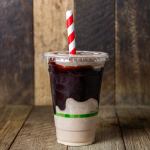
Chocolate Milkshake Day froths onto our calendars each September 12.

A milkshake is a yummy, cold, and sweet drink. People often just call it a shake. It's made by mixing milk, ice cream, and tasty flavours. Today’s all about chocolate flavour! Sometimes, people use milks like almond milk or soy milk instead of regular milk. You can also add things like fruit, nuts, candy, or cookies to make it even better!
You can make milkshakes in different ways. Restaurants and ice cream shops often use special milkshake machines. At home, most people use a blender. You can even mix one by hand with a spoon! You can use any flavour of ice cream you like. Many people add extra flavours too. Think about chocolate syrup or malted milk powder.

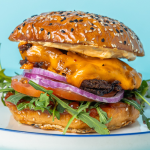
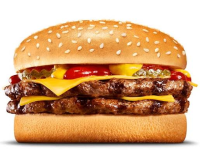
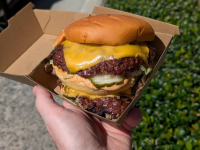
YUMM! Nothing beats a creamy, thick chocolate shake alongside a nice burger and fries.

Some fast food places have special machines. These machines don't mix ingredients one by one. Instead, they use a ready-made mixture. This mixture already has milk, flavour, and a thickener. These machines are a bit like soft-serve ice cream machines. But they keep the shake just right for drinking.

Aussies love chocolate milkshakes and flavoured milk because of a deep cultural history rooted in the iconic local milk bar tradition and a lifelong comfort with chocolate-flavoured dairy.

Surveys show that chocolate is the undisputed favourite flavour for Australian milkshakes, with over 41% of people picking it above all others.

Many fans develop a taste for chocolate milkshakes in childhood - often tied to iconic malt and chocolate powders like Milo - and simply never outgrow the habit.

Do you want a scoop?
Australians call a thinner, frothy drink made with milk, syrup, and only one or two scoops of ice cream a milkshake, while a much thicker version with three or more scoops is called a thickshake.
  • Milkshake: A lighter, frothy drink that is easy to sip through a straw. Traditionally, some milk bars or cafes made them with plain or choc flavoured milk and little to no ice cream, though opinions and regional practices vary.
  • Thickshake: A heavy, very thick drink packed with a large ratio of ice cream (usually three or more scoops) or soft serve. What North Americans typically know as a standard "milkshake" is closest to an Australian thickshake.
From a purely health aspect, a commercial or fast-food milkshake is widely considered junk food because it contains very high levels of added sugar, saturated fat, and calories with little nutritional balance. While milk does provide calcium and protein, the massive load of sugar and fat overshadows these minor benefits.

So, “enjoy in moderation” fits the bill.

But wait – there’s good healthy news too: In recent years, food scientists created healthier milkshakes’ recipes. These shakes had less sugar and fat. They also had extra fibre and nutrients. They were even good for some people who can't digest lactose. So times change as our dietary requirements evolve – and there are healthy solutions to be found.

Depending on your mood, milkshakes will tempt you and won’t let go! They might be the traditional chocolate flavoured classic milkshake; or maybe a classic malted version: or if you’re going a bit on the “wild side” there’s even crazy loaded freakshakes - featuring massive jars loaded with Nutella, brownies, whipped cream, and giant garnishes. These colossal chocolate milkshakes break all dietary rules by being stacked high with towering toppings like whole doughnuts, pretzels, whipped cream, brownies, and cascading chocolate fudge drips. WOW!

Be brave.
Choose wisely.
Did someone say The Chocoholic's Eclipse? Now that’s a Yummy Treat that has my name on it!


Fun Facts about Chocolate Milkshakes:
  • The CIA and Fidel Castro: In 1963, the CIA made an unsuccessful attempt to assassinate Cuban leader Fidel Castro using a poisoned chocolate milkshake.
  • What is a milkshake without a straw? Joseph Friedman invented the flexible straw after watching his daughter struggle with her milkshake in his brother’s fountain shop. His invention was patented September 28, 1937.
  • Fast food restaurants like to make up their own names for milkshakes. McDonald’s is famous for their McFlurries. McFlurries come in a variety of flavors, the most popular being Oreo, M&M, and Butterfinger. McFlurries were invented in October 1997.

“One chocolate milkshake equals instant happiness”

“Sip, slurp, smile”

“Straw power activated: sweet sip, sweet life”

“Life is that what happens while enjoying a chocolate milkshake”


View attachment 43827


View attachment 43828


View attachment 43829


View attachment 43830

For any forum members who live in Sydney and want to celebrate Chocolate Milkshake Day or take the kids down for a treat, nothing beats Soul Burger.

Their chocolate shake with coconut ice cream is unreal, and it goes down beautifully with their beef brisket burger.

 
For any forum members who live in Sydney and want to celebrate Chocolate Milkshake Day or take the kids down for a treat, nothing beats Soul Burger.

Their chocolate shake with coconut ice cream is unreal, and it goes down beautifully with their beef brisket burger.


1789163624517.png


1789163655428.png
 
For any forum members who live in Sydney and want to celebrate Chocolate Milkshake Day or take the kids down for a treat, nothing beats Soul Burger.

Their chocolate shake with coconut ice cream is unreal, and it goes down beautifully with their beef brisket burger.

Those look so delicious. Sadly not near me.
 
Walk to Defeat MND Illawarra is happening from 10am on September 13 at Bulli Surf Club, Trinity Row, Bulli NSW.

The Jai Arrow focus brings a recent highlight to this insidious disease.

Motor neurone disease (MND) is a group of progressive neurological diseases that damage the nerves controlling our muscles.

What is MND?
  • Nerve damage: MND destroys motor neurons, which are the nerve cells in your brain and spinal cord that tell your muscles what to do.
  • Muscle weakness: When these nerves die, messages can no longer reach your muscles, causing them to weaken, waste away, and lose function.
  • Impact: The condition gradually affects everyday abilities like walking, talking, swallowing, and breathing.
Types of MND

MND is an umbrella term that includes several specific conditions:
  • Amyotrophic lateral sclerosis (ALS): The most common form of MND, sometimes called Lou Gehrig's disease.
  • Progressive bulbar palsy (PBP): Mainly affects the muscles used for speaking and swallowing.
  • Progressive muscular atrophy (PMA): A rare form causing gradual muscle weakness and wasting.
  • Primary lateral sclerosis (PLS): A rare, slow-progressing form causing muscle stiffness.
Today’s MND Illawarra Walk is approximately 5km and is wheelchair, stroller and dogs on lead friendly (please bring bags for any ‘doggy deposits’).

The Walk starts at 10am and finishes at Bulli Beach Reserve, just behind the Bulli Surf Club on Trinity Row.

This event is just one of a series of regular “charity walks” arranged by MND NSW. The Motor Neurone Disease Association of New South Wales is a registered charity.

This magnificent organisation provides information, support and education for people living with motor neurone disease, their families, friends and carers in NSW, ACT and NT. It also provides information and education about motor neurone disease for health, community and residential care professionals.

The purpose of Motor Neurone Disease New South Wales is given by the following Objects:
  • To provide benefits for and services to members of the Association with motor neurone disease, their families and carers without discrimination.
  • To distribute authoritative information and promotion of education to all people with motor neurone disease, their families, their carers, health professionals and the public.
  • To promote public awareness of motor neurone disease.
  • To assist by providing specialised equipment for patient use on a loan basis, where practicable.
  • To facilitate the formation and operation of branches and support groups.
  • To encourage and assist in the establishment of service organisations for patient treatment, support and care.
  • To promote the study of and research into the causes, treatment and cure(s) of motor neurone disease.
  • To encourage fundraising and to raise funds for allocation to research work by Motor Neurone Disease Research Australia, or other government recognised research organisations.
  • To inform members and the public about research being undertaken in Australia and overseas.
  • To promote, develop and accept membership into the Association from patients, their families, carers, health professionals, interested persons and the public.
  • To hold social, educational and support meetings of members - such meetings not being general meetings.
  • To promote co-operation among members and to represent their interests.
  • To provide a caring link between patients in order to reduce the feeling of isolation.
  • To co-operate with other self-help organisations and with other local, state, territory, national and international motor neurone disease Associations in the achievement of these Objects.
  • To establish, maintain and extend a comprehensive library of motor neurone disease and other requisite works.
  • To invest moneys of the Association not immediately required in approved interest bearing funds.
  • To raise funds and to promote fundraising by branches and support groups for patient services.
  • To do all other things as may be necessary to achieve the above mentioned Objects.
820 people living with MND receive assistance from MND advisors each year.

Time is vital.

Further information can be obtained at this website: https://www.mndnsw.org.au/

Any opportunity to help and support this magnificent charity will be (maybe) a tinsy step towards a miracle cure for those affected.


1789267096178.png


1789267110659.png


1789267125859.png


1789267153185.png
 
Raising money for MND research is so important.
The guardian today had an article that may interest people.

People in western NSW developing MND at four times global average

People across a vast swathe of Australia are developing a deadly disease at more than four times the global average, AAP has reported.

Researchers found a motor neurone disease (MND) incidence rate of 3.72 cases per 100,000 people annually across western NSW.

In some areas, the prevalence of MND was up to seven times higher than expected, with several higher-incidence regions overlapping with areas of more intensive agricultural activity.

The global burden of MND is increasing, and in 2021 the age-standardised prevalence and incidence were estimated at 0.77 cases per 100,000 people.

MND was also observed to be occurring at higher rates in women than in other areas, and the incidence of bulbar-onset MND was unusually high.
 
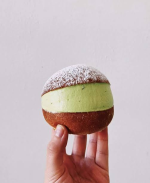
Cream Filled Donut Day fries onto our calendars each September 14, and specifically highlights custard, cream, and jam-filled varieties which are so popular all around our island home.

Australians love cream-filled and jam-and-cream doughnuts (often called "long cream donuts" or "Long Johns") because they combine nostalgic bakery traditions, a booming artisanal and gourmet food culture, and the pure sensory satisfaction of fresh dough and sweet fillings.

The enduring and growing popularity of cream-filled doughnuts across Australia spans several cultural and culinary factors:
  • Nostalgia and Classic Bakery Culture: Long-standing local bakeries and supermarket chains like Woolworths and Coles have stocked traditional jam-and-cream buns or Long John doughnuts for decades, making them a staple childhood treat.
  • The Gourmet and Artisanal Boom: Specialty doughnut shops in major hubs like Sydney and Melbourne (such as Shortstop and local favourites) have reinvented classic treats into high-end delicacies with unique flavours like Nutella, Biscoff, salted caramel, and matcha.
  • Texture and Flavour Contrast: As food writers note, the physical appeal lies in the contrast of a “first hit of crisp, golden exterior giving way to a pillowy-soft, airy centre before a gooey wave of rich filling takes over.”
  • Social Media and Viral Trends: Novelty creations—from giant 1kg jam-and-cream "monsters" at regional bakeries to coffee served inside hollowed-out doughnuts—frequently go viral on social media, drawing massive weekend crowds and keeping the treat front-of-mind.
In a tighter economic climate, consumer habits have shifted toward finding affordable everyday luxuries. Bakeries report that filled donuts are actively outselling frosted rings because they simply offer a more substantial, satisfying treat for the exact same price. A hollow ring with icing feels light, but a donut heavily weighted with cream or custard feels like a true dessert.

The Australian bakery scene has completely reimagined what a filled donut can be. Artisanal shops across Sydney and Melbourne have combined fluffy brioche or sourdough bases with premium, multicultural fillings like Italian bomboloni, vanilla bean crème brûlée, Filipino ube, and Thai milk tea cream.

Aussies are obsessed with "texture mash-ups"—specifically the sensory contrast of a crisp, golden, fried dough exterior breaking away into an incredibly soft, gooey, pillowy centre. Bakeries have gone massively viral online by capitalizing on this exact craving, drawing massive crowds for their giant 1kg jam and cream-filled "monster" donuts.

And we all have our favs..........

Like the classic jam and cream donuts, alongside popular twists like Boston creme, salted caramel, and newer viral matcha or Biscoff cream flavours.
  • Jam & Cream: A timeless bakery favourite featuring a fluffy doughnut split or filled with real fresh cream and a dollop of strawberry or raspberry jam, often dusted with icing sugar.
  • Boston Creme: A staple choice filled with rich custard and topped with a smooth chocolate glaze.
  • Long Johns / Cream Fingers: Elongated yeast donuts filled with whipped cream and sometimes iced with chocolate or vanilla, commonly found in local bakeries and supermarkets.

Data of donut consumption varies because of the vast number of bakeries and outlets that produce them, but estimates are that nationally we consume maybe close to 9 million cream donuts annually. Progressive bakers balance what their loyal customers love and what might also be tempting with an evolving range of innovative fillings.

OK, enough of this talkin’ about ‘em.

I’m out to get me some……..


Fun Facts about Cream-Filled Donuts:
  • Most donut shops use custards and whipped toppings vs pastry cream and whip cream/mousse fillings because they are cheaper.
  • Bakeries fit so much cream inside a solid pastry by using a high-pressure filling gun forces the cream inside, collapsing the tiny internal carbon dioxide pockets to create one giant, delicious cavity.


“Cream-filled donuts are like hugs, but better because you can eat them”

“Cream donuts: because sometimes you just need a little sweetness in your life”

“Cream donuts are cheaper than therapy”

“You need to understand the difference between want and need. Like I want abs, but I need cream donuts”


1789332790343.png


1789332809237.png


1789332824837.png


1789332851904.png
 

Latest posts

Back
Top